Parkinsonia, Genus, florida, Species,
- Genus & species
blue palo verde
Overview
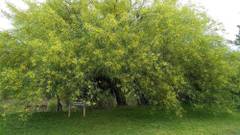
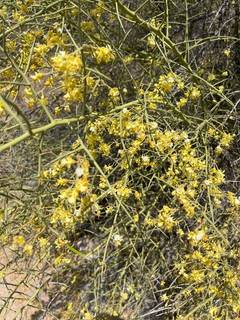
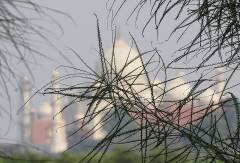
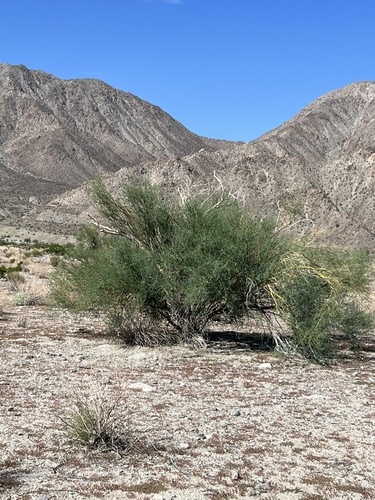
Parkinsonia florida, blue palo verde, is a small deciduous desert tree in the pea family, reaching 15-30 ft (4.5-9 m) tall with an equal spread and a broad, open crown. Its smooth bark and twigs are blue-green and carry out photosynthesis, allowing the tree to make food even after it drops its leaves in drought or cold. The tiny bipinnate leaves have only a few small leaflets and fall during dry spells, leaving the green branches bare. Short spines sit at the leaf nodes. In spring, from March to May, the canopy is covered in 0.5-0.75 in (1.5-2 cm) bright yellow, five-petalled flowers that draw bees and other insects. Flat seed pods 2-4 in (5-10 cm) long follow and ripen by early summer. The tree grows along desert washes, valley floors, and floodplains where roots can reach deep moisture, and its light shade shelters seedlings of saguaro and other desert plants. It tolerates intense heat and long drought but is brittle-wooded and can drop limbs in storms. It is native to the Sonoran Desert and differs from foothill palo verde Parkinsonia microphylla in its bluer bark and larger flowers.
Native Range
Parkinsonia florida is native to the Sonoran Desert of southern Arizona, southeastern California, and northwestern Mexico, including Baja California and Sonora. It grows along desert washes, valley bottoms, and floodplains below about 4,000 ft (1,200 m).Suggested Uses
Parkinsonia florida is used as a shade and specimen tree in desert and low-water landscapes, along streets, and in parking islands across the Southwest. Its spring bloom and green bark add seasonal interest, and it shelters wildlife and understory plants. It suits unirrigated desert gardens once established.How to Identify
Appearance
Size & Dimensions
Height15' - 30'
Width/Spread15' - 30'
Colors
Bloom Information
Flowering peaks from March to May, with the heaviest bloom after a wet winter. The bright yellow flowers cover the canopy for two to three weeks and draw many bees. Flat pods form afterward and ripen to tan by early summer.
Detailed Descriptions
Foliage Description
blue-greenGrowing Conditions
Sun Requirements
Requires 8-12 hours of direct sunlight daily
• Full Sun: 6+ hours of direct sunlight
• Partial Shade: 3-6 hours of direct sunlight
• Full Shade: Less than 3 hours of direct sunlight
Care & Maintenance
Care Guide
Parkinsonia florida grows in full sun on sharply drained sandy, gravelly, or rocky desert soils and needs deep but infrequent water once established. It withstands extreme heat, reflected sun, and long drought, dropping its leaves to conserve moisture. Hardy to about 15F (-9C), it suits USDA zones 8-11 and may be damaged by hard frost. Overwatering and rich soil cause fast, weak growth and brittle limbs. The green bark continues to photosynthesize through leafless periods. Deep, occasional irrigation produces stronger wood than frequent shallow watering.Pruning
Pruning is done in late spring or summer after bloom, removing dead, crossing, or low limbs to raise the crown and reduce wind resistance. The wood is brittle, so heavy or poorly placed cuts can lead to breakage. Light, regular shaping while young builds a stronger framework than hard pruning of mature trees.Pruning Schedule
Prune: June
summer