Parkinsonia, Genus, aculeata, Species,
- Genus & species
Mexican palo verde
Southwestern US, Mexico, Central and northern South America
Overview
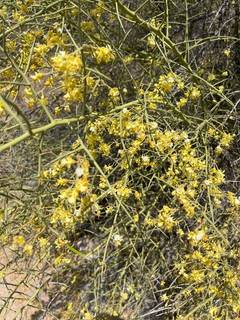
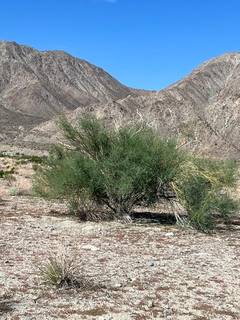
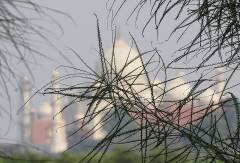
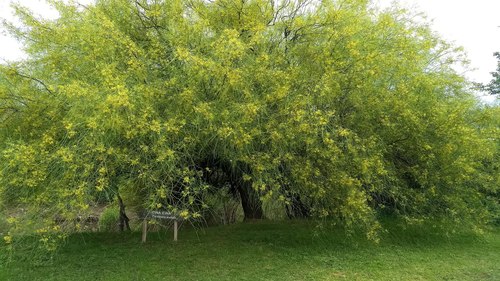
Parkinsonia aculeata is a deciduous to semi-evergreen tree or large shrub reaching 15-30 feet (4.6-9 m) tall and about as wide, with a short trunk and an open, spreading crown of slender, drooping green branches armed with spines. The smooth green bark photosynthesizes, helping the plant carry on when leaves drop in drought. Leaves consist of long flattened midribs 8-16 inches (20-40 cm) long bearing two rows of many tiny leaflets 0.1-0.2 inch (2-5 mm) long that fold and shed in heat or dryness. Clusters of yellow flowers about 0.7 inch (18 mm) across, one petal often spotted orange-red, open from spring into summer and again after rains. Flat constricted seed pods 2-4 inches (5-10 cm) long follow, narrowing between the seeds. Growth is fast, up to 3 feet (0.9 m) per year. The spines and suckering habit form dense thickets where it naturalizes.
Native Range
Native to the southwestern United States, Mexico, Central America, and northern South America, in deserts, thornscrub, washes, and disturbed ground. It tolerates heat, drought, and poor alkaline soils, and has naturalized and become invasive in parts of Australia, Africa, and the Pacific.Suggested Uses
Planted as a fast, light-shade tree in desert and dry-climate gardens and along streets, spaced 15-20 feet (4.6-6 m) apart. The filtered shade suits patios and courtyards in hot regions. Its spines, brittle wood, and weedy seeding limit use near pools and walkways.How to Identify
Appearance
Size & Dimensions
Height15' - 30'
Width/Spread15' - 30'
Bloom Information
Detailed Descriptions
Foliage Description
greenGrowing Conditions
Sun Requirements
Requires 6-12 hours of direct sunlight daily
• Full Sun: 6+ hours of direct sunlight
• Partial Shade: 3-6 hours of direct sunlight
• Full Shade: Less than 3 hours of direct sunlight
Care & Maintenance
Care Guide
Grows in full sun on dry, sandy, or alkaline soils with sharp drainage and tolerates intense heat and prolonged drought. It needs little water once established and drops its leaves in dry spells, carrying on through green bark. Overwatering and heavy soils shorten its life and cause root rot. It is killed by hard freezes below 20 F (-7 C). The wood is brittle and breaks in storms, and the tree is short-lived at 20-30 years. Spines and abundant seedlings can make it weedy.Pruning
Prune in late winter or early spring to raise the crown and remove dead or crossing branches; the brittle wood breaks if left crowded. Removing low spiny branches improves clearance along paths. Cut branches regrow quickly during warm weather.Pruning Schedule
Prune: February–March
winterearly spring