Parietaria, Genus, pensylvanica, Species,
- Genus & species
Pennsylvania pellitory
SunPart Shade – Full Shade
WaterMedium
Overview
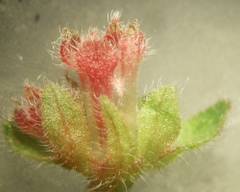
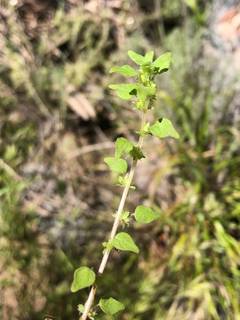
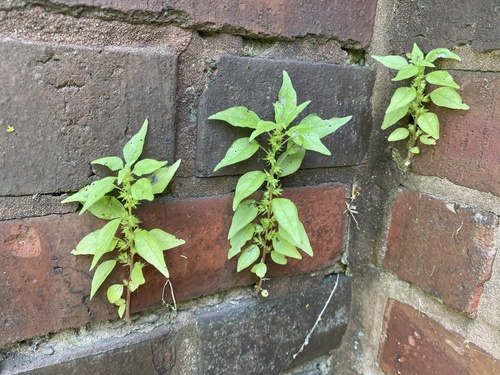
Parietaria pensylvanica is a small, slender annual herb in the nettle family, growing 4-16 in (10-40 cm) tall, with weak, often unbranched stems. Unlike true nettles, it lacks stinging hairs, though soft, short hairs cover the stems and leaves. The thin, lance-shaped to narrowly oval leaves are 1-3 in (2.5-7.5 cm) long, alternate, and three-veined. Tiny greenish flowers without petals cluster in the leaf axils, surrounded by narrow bracts, and are wind-pollinated. The species is native across much of North America, growing in shaded, often disturbed sites such as the bases of walls, cliff ledges, woodland edges, and urban lots, frequently in moist, rich soil. It grows in USDA zones 3 to 9 as a warm-season annual and completes its life cycle in one season. The plant is inconspicuous and weedy, and its wind-borne pollen contributes to seasonal allergies.
Native Range
Parietaria pensylvanica is native to much of North America, ranging across the United States, southern Canada, and into Mexico. It grows in shaded, often disturbed places such as cliff bases, wall footings, woodland edges, and city lots, usually in moist, rich soil.Suggested Uses
Rarely planted on purpose, it appears as a volunteer in shaded, disturbed ground and serves as a larval food source for several butterfly species, including commas and red admirals.How to Identify
Appearance
Size & Dimensions
Height4" - 1'4"
Width/Spread2" - 6"
Bloom Information
Flowering occurs through the warm season, roughly late spring into fall, generally May to October. The tiny greenish flowers are wind-pollinated and easy to overlook. Seed is produced over a long period and the plant dies at the end of the season.
Detailed Descriptions
Foliage Description
greenGrowing Conditions
Sun Requirements
Requires 2-4 hours of direct sunlight daily
• Full Sun: 6+ hours of direct sunlight
• Partial Shade: 3-6 hours of direct sunlight
• Full Shade: Less than 3 hours of direct sunlight
Water & Climate
Water Needs
Care & Maintenance
Care Guide
Parietaria pensylvanica grows in part shade to full shade and moist, rich soils with pH from 6.0 to 7.5, often in the shelter of walls, rocks, or trees. It is a warm-season annual hardy across USDA zones 3 to 9, completing its cycle in a single season and persisting through self-seeding. Water needs are moderate, with a preference for consistent moisture in shade. It self-sows readily and behaves as a weed in gardens and disturbed ground. It needs no special care and is rarely cultivated deliberately.Pruning
No structural pruning is needed for this small annual. Plants can be pulled or cut before seed sets to limit self-seeding and spread. Spent plants die back at the end of the growing season.Toxicity
Non-toxicPlanting Guide
Planting Methods & Timing
Planting Method
direct sow
Plant Spacing
6 inches