Overview
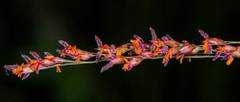
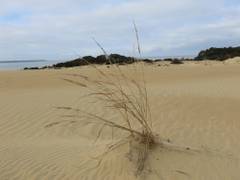
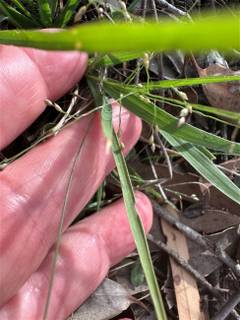
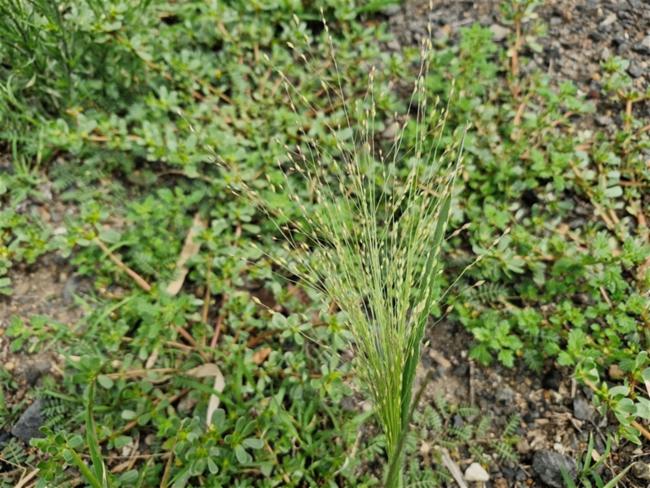
Panicum capillare is a warm-season annual grass native to North America, growing 8–30 inches (20–75 cm) tall in tufts of branching, often sprawling stems. The leaf blades and sheaths are densely covered with soft spreading hairs, and the blades are 4–10 inches (10–25 cm) long. At maturity each stem produces a large, diffuse panicle up to half the height of the plant, with hair-thin branches carrying tiny single spikelets. As the seed ripens in late summer and autumn, the whole panicle dries, breaks away at the base, and tumbles in the wind, scattering seed as it rolls. P. capillare grows in fields, gardens, roadsides, sandbars, and disturbed open ground across most of North America. It establishes quickly on bare soil and self-seeds abundantly, behaving as a weed in cultivated ground, and the sprawling summer growth gives little structure in ornamental plantings.
Native Range
Panicum capillare is native to North America and grows across most of the United States, southern Canada, and northern Mexico. It occupies fields, roadsides, sandbars, gardens, and other disturbed open ground.Suggested Uses
Used in naturalized and restoration plantings on disturbed or sandy ground, and as cover and seed for ground-feeding birds. Suited to open ground away from cultivated beds, where its heavy self-seeding makes it weedy.How to Identify
Appearance
Size & Dimensions
Height8" - 2'6"
Width/Spread8" - 1'6"
Bloom Information
Detailed Descriptions
Flower Description
greenish to purple-tinged spikeletsFoliage Description
greenGrowing Conditions
Sun Requirements
Requires 6-12 hours of direct sunlight daily
• Full Sun: 6+ hours of direct sunlight
• Partial Shade: 3-6 hours of direct sunlight
• Full Shade: Less than 3 hours of direct sunlight
Water & Climate
Water Needs
Drought Tolerance
Drought tolerant when established
Care & Maintenance
Care Guide
P. capillare grows in full sun in dry to moderately moist soil and tolerates sand, gravel, and disturbed ground of low fertility. Soil pH from 5.5 to 7.5 is suitable. It germinates readily on bare soil in warm weather and completes its cycle in one season. The grass self-seeds heavily and can spread into cultivated beds, where it is treated as a weed. It withstands heat and short drought once established. Little care is needed where it is wanted.Pruning
Cutting or mowing the seed heads before they ripen limits self-sowing and tumbling dispersal. As an annual, the plant dies after seeding and can be pulled or cleared in autumn. No other pruning is needed.Toxicity
Non-toxicPlanting Guide
Planting Methods & Timing
Planting Method
direct sow
Direct Sow Timing
Late spring on warm bare soil
Plant Spacing
12 inches