Osmorhiza, Genus, claytonii, Species,
- Genus & species
hairy sweet cicely
Overview
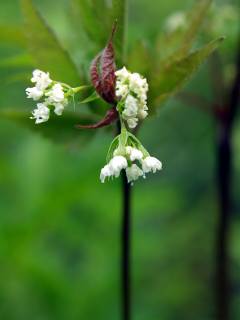
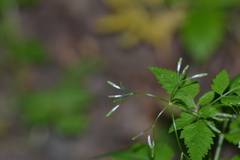
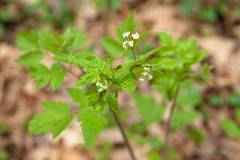
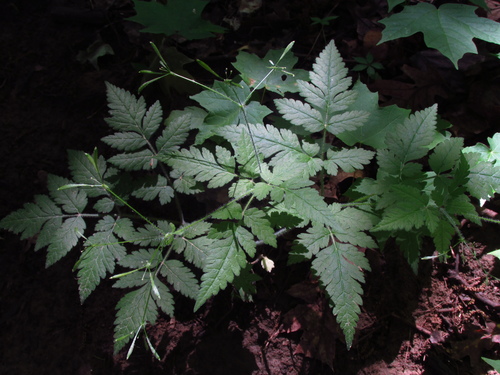
Osmorhiza claytonii is a clump-forming woodland perennial in the carrot family, growing 1.5-3 feet (45-90 cm) tall. The stems and leaves are softly hairy, and the foliage is twice or three times divided into toothed leaflets, giving a lacy, fern-like outline. From April to June it carries small white flowers in open, sparsely branched compound umbels held above the leaves; each umbel has only a few flowers, so the bloom reads as airy rather than showy. The flowers are followed by narrow, club-shaped fruits 0.6-0.9 inch (15-22 mm) long, ribbed and tipped with stiff bristles that cling to fur and clothing. Crushed roots and stem bases carry a faint anise scent, weaker than that of the related O. longistylis. It grows in rich, moist deciduous woodland and shaded slopes across eastern North America. The plant spreads by seed and can colonize bare woodland soil, though its quiet flowering and clinging fruit give it limited ornamental presence.
Native Range
Osmorhiza claytonii is native to eastern North America, from Quebec and Ontario south to Georgia and Alabama and west to the Dakotas, Nebraska, and Arkansas. It occurs throughout the eastern deciduous forest region.Suggested Uses
Used in shade and woodland gardens, native plant borders, and naturalized plantings beneath deciduous trees. It pairs with other spring woodland herbs in rich, moist soil. The lacy foliage fills gaps between larger shade perennials.How to Identify
Appearance
Size & Dimensions
Height1'6" - 3'
Width/Spread1' - 2'
Bloom Information
Small white flowers open from April to June, with peak bloom in May across most of the range. The umbels are short-lived and give way to ripening fruit by early summer. Flowering runs later in cooler northern woodland and at higher elevations.
Detailed Descriptions
Foliage Description
greenGrowing Conditions
Sun Requirements
Tolerates up to 4 hours of direct sunlight daily
• Full Sun: 6+ hours of direct sunlight
• Partial Shade: 3-6 hours of direct sunlight
• Full Shade: Less than 3 hours of direct sunlight