Osmorhiza, Genus, berteroi, Species,
- Genus & species
mountain sweet cicely
Western North America, with disjunct South American populations
Overview
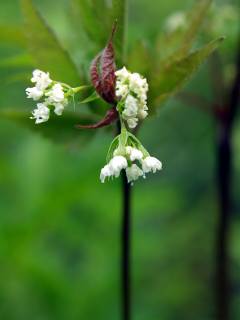
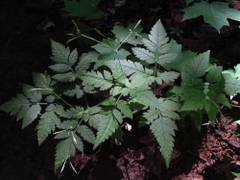
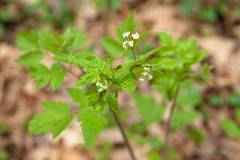
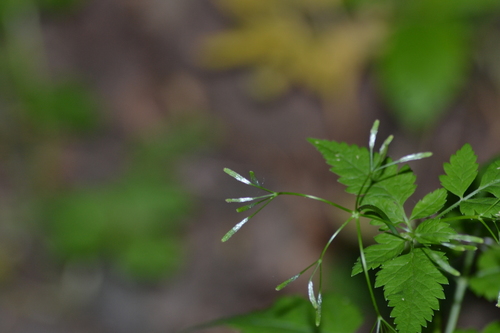
Osmorhiza berteroi is a slender herbaceous perennial in the carrot family, growing 1-3 ft (30-90 cm) tall from a taproot with an anise or licorice scent when crushed. The thin stems carry divided, fern-like leaves with toothed leaflets, and branch into open, sparse umbels of tiny greenish-white flowers. The flowers are followed by narrow, club-shaped fruits about 0.5-0.75 in (1.3-2 cm) long, tipped with stiff bristles that catch on fur and clothing, aiding seed dispersal. The species is native to western North America and also occurs in South America, growing in moist, shaded forests, streambanks, and canyon slopes. It grows in USDA zones 4 to 8 and is found in cool, humus-rich soils in shade. The flowers are small and the open umbels are inconspicuous. It can spread by seed into a weed in shaded garden beds.
Native Range
Osmorhiza berteroi is native to western North America, from Alaska and western Canada south through the western United States, with disjunct populations in South America. It grows in moist, shaded coniferous and mixed forests, along streambanks, and on canyon slopes.Suggested Uses
Used in woodland and native shade gardens for fern-like foliage and anise-scented roots, spaced 12-18 in (30-45 cm) apart. The flowers attract small native bees and flies.How to Identify
Appearance
Size & Dimensions
Height1' - 3'
Width/Spread1' - 2'
Bloom Information
Detailed Descriptions
Foliage Description
greenGrowing Conditions
Sun Requirements
Requires 2-4 hours of direct sunlight daily
• Full Sun: 6+ hours of direct sunlight
• Partial Shade: 3-6 hours of direct sunlight
• Full Shade: Less than 3 hours of direct sunlight
Care & Maintenance
Care Guide
Osmorhiza berteroi grows in part shade to full shade and cool, moist, humus-rich, well-drained soils with pH from 5.5 to 7.0. It is hardy in USDA zones 4 through 8 and grows naturally in the dappled light of forest understories. Water needs are moderate, with consistent moisture during the growing season. The clinging, bristly seeds spread readily, and the plant can self-sow into a weed in shaded beds. Few pests affect it in suitable woodland conditions.Pruning
Cut spent flowering stems before the bristly fruits ripen to limit unwanted self-seeding. Foliage can be cut back after it yellows in late summer. No other pruning is needed.Pruning Schedule
Prune: July–August
summer