Orchis, Genus, anthropophora, Species,
- Genus & species
man orchid
Western and southern Europe, North Africa
Overview
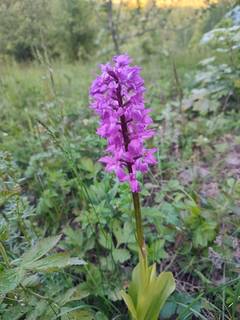
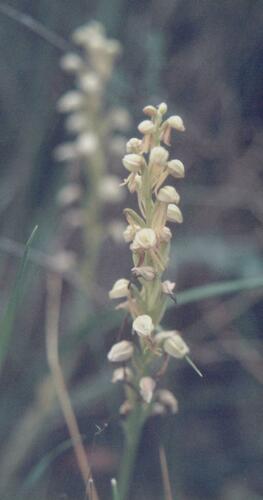
Orchis anthropophora is a terrestrial orchid reaching 8-16 inches (20-40 cm) tall, growing from a pair of underground tubers. It produces a basal rosette of 4-8 oblong leaves 2-5 inches (5-12 cm) long, with a slender unbranched flower spike rising above. The spike carries 15-90 small flowers, each with a hood of yellow-green sepals and petals edged in reddish-brown. The pendant lip is 0.5-0.6 inch (12-15 mm) long and divided into a narrow central strap and two thread-like side lobes, giving the outline of a human figure that supplies the common name. Plants grow in calcareous grassland, scrub margins, and old quarries on chalk and limestone. The species ranges across western and southern Europe into North Africa, reaching its northern limit in southern England, where colonies are scattered and legally protected. Like most terrestrial orchids it depends on soil fungi for germination and establishment, so moving mature plants rarely succeeds. Flowering occurs in late spring, and seed is shed as dust-like particles carried by wind. It was long classified as Aceras anthropophorum before molecular studies placed it within Orchis. Populations vary from year to year, and individual plants may stay dormant below ground through a season without flowering, which complicates monitoring.
Native Range
Native to western and southern Europe, extending into North Africa and east toward the Caucasus. In Britain it reaches its northern range limit in the chalk grassland of southern England.Suggested Uses
Grown in chalk grassland restoration and conservation plantings rather than general borders. In specialist orchid and alpine collections it is kept in calcareous soil mixes. It is used as an indicator of well-managed calcareous grassland.How to Identify
Appearance
Size & Dimensions
Height8" - 1'4"
Width/Spread4" - 6"
Colors
Bloom Information
Flowers open from May to June on spikes that elongate as the lowest blooms mature first. Each spike stays in flower for roughly three to four weeks. The greenish, reddish-edged flowers are faintly scented and pollinated by small beetles and flies.
Detailed Descriptions
Flower Description
yellow-green with reddish-brown marginsFoliage Description
greenGrowing Conditions
Sun Requirements
Requires 6-10 hours of direct sunlight daily
• Full Sun: 6+ hours of direct sunlight
• Partial Shade: 3-6 hours of direct sunlight
• Full Shade: Less than 3 hours of direct sunlight