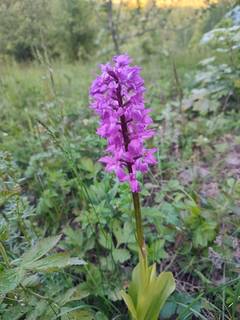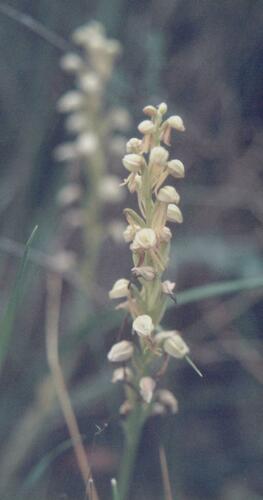
Orchis, Genus, spp., Multiple species,
- Genus
- Multiple species
orchid
Europe, North Africa, and temperate Asia
Overview
Orchis is a genus of terrestrial orchids in the family Orchidaceae, native to Europe, North Africa, and temperate Asia, and the genus from which the orchid family takes its name. After recent reclassification the genus holds roughly 20 species, several once placed here having moved to Anacamptis and Neotinea. Plants grow from rounded underground tubers, the paired shape of which gave the genus its name, and produce a basal rosette of smooth or spotted strap-shaped leaves. In spring to early summer each plant sends up an erect stem 15-60 cm (6-24 in) tall topped with a dense spike of many small flowers in shades of pink, purple, white, or pale yellow, often with a spotted, lobed lip and a backward-pointing spur. Most species grow in grassland, scrub, and open woodland on neutral to lime-rich soils, and many depend on mycorrhizal fungi, especially as seedlings, which makes them slow to establish and hard to transplant. Several species are legally protected and are declining with the loss of traditional grassland. Pollination is by bees and other insects, sometimes by deception, with no nectar reward.
Native Range
Orchis is native to Europe, North Africa, and temperate Asia, with the greatest diversity around the Mediterranean. Species grow in unimproved grassland, garrigue, scrub, and open woodland, mostly on neutral to lime-rich soils.Suggested Uses
Orchis species are grown by specialist orchid and alpine enthusiasts and are features of species-rich meadows, chalk grassland, and nature reserves. They are valued in grassland conservation as indicators of long-established, unimproved turf.How to Identify
Appearance
Size & Dimensions
Height6" - 2'
Width/Spread4" - 10"
Bloom Information
Detailed Descriptions
Flower Description
pink, purple, white, or pale yellowFoliage Description
green, sometimes spottedGrowing Conditions
Sun Requirements
• Full Sun: 6+ hours of direct sunlight
• Partial Shade: 3-6 hours of direct sunlight
• Full Shade: Less than 3 hours of direct sunlight