Olearia, Genus, ramulosa, Species,
- Genus & species
twiggy daisy-bush
Overview
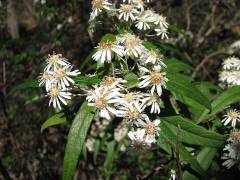
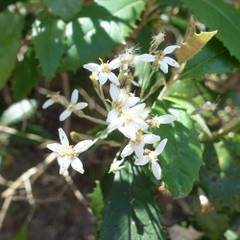
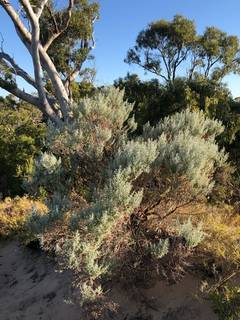
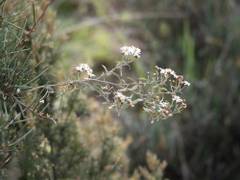
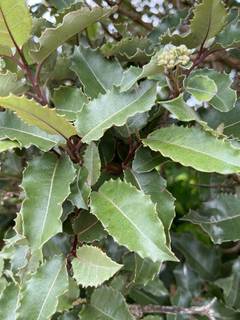
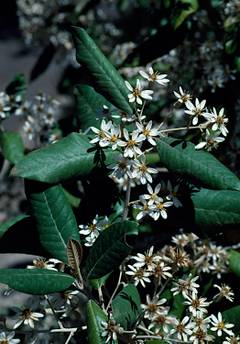
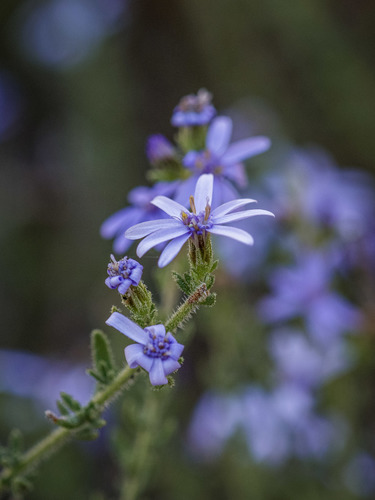
Olearia ramulosa is a twiggy, evergreen shrub 0.5-2 m (20-79 in) tall with many slender, wiry, much-branched stems. The small, narrow leaves are 3-10 mm (0.1-0.4 in) long, crowded along the twigs, dark green above and paler and softly hairy beneath, with rolled-under margins. In late winter and spring the shrub is covered in numerous small daisy flowers about 1 cm (0.4 in) across, white to pale mauve with a yellow centre, borne singly along the twigs. Light, dry seed with a tuft of bristles follows. It grows in heath, mallee, coastal scrub, and dry woodland across southern Australia on sandy or gravelly, well-drained soils, tolerating wind, salt, and drought. The twiggy framework can become woody and open at the base with age, and the plant is relatively short-lived, often needing replacement or hard pruning after several years to stay dense.
Native Range
Native to southern Australia, occurring in New South Wales, Victoria, Tasmania, South Australia, and Western Australia.Suggested Uses
Used as an informal hedge, filler, or massed flowering shrub in native, coastal, and low-water gardens. Suited to exposed and seaside positions and to habitat plantings for pollinating insects. Also grown among other small shrubs for its spring daisy display.How to Identify
Appearance
Size & Dimensions
Height1'8" - 6'7"
Width/Spread1'8" - 4'11"
Bloom Information
Numerous small daisy flowers, white to pale mauve with yellow centres and about 1 cm (0.4 in) across, cover the twigs in late winter and spring. The flowers draw bees, butterflies, and other insects. Light bristle-tipped seeds follow and disperse on the wind.
Detailed Descriptions
Flower Description
white to pale mauve with yellow centreFoliage Description
dark greenGrowing Conditions
Sun Requirements
Requires 5-9 hours of direct sunlight daily
• Full Sun: 6+ hours of direct sunlight
• Partial Shade: 3-6 hours of direct sunlight
• Full Shade: Less than 3 hours of direct sunlight
Care & Maintenance
Care Guide
Grows in full sun to light shade on free-draining sandy or gravelly soils with a pH of about 5.5-7.5. It is drought- and wind-tolerant once established and suits exposed and coastal positions. Heavy, wet soils cause root rot and shorten its life. It tolerates light to moderate frost. Light pruning after flowering keeps the twiggy framework dense and delays the open, woody base that comes with age. Little supplemental water is needed in suitable soils once the plant is settled.Pruning
Light pruning immediately after flowering keeps the shrub compact and encourages dense branching. Cutting back into older wood is done cautiously, as recovery from bare stems can be slow. Regular light trimming extends the useful life of this short-lived shrub.Pruning Schedule
Prune: October–November
spring