Overview
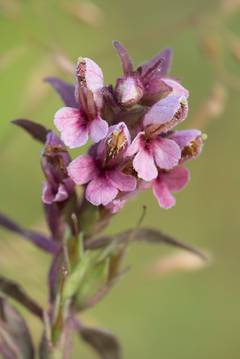
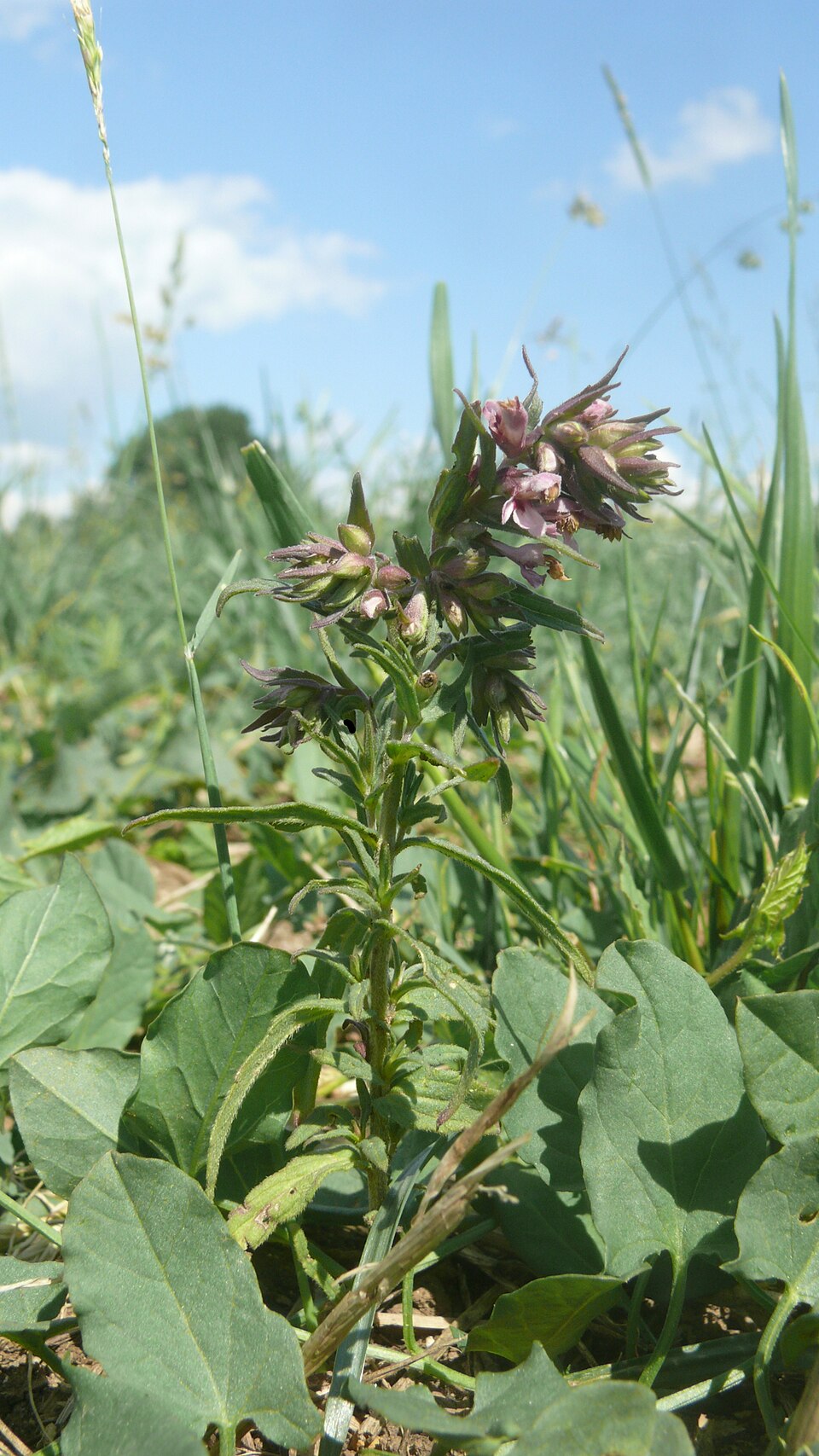
Odontites vernus is a slender, branching annual 4-20 inches (10-50 cm) tall, semi-parasitic on the roots of grasses and other plants. The whole plant is roughly hairy and often flushed dull red or purplish, with narrow, toothed, stalkless leaves set in opposite pairs. From midsummer into autumn it bears one-sided leafy spikes of small, two-lipped, dull pinkish-purple flowers about 0.3-0.4 inch (8-10 mm) long, each nodding slightly and backed by a leaf-like bract. It grows in rough grassland, arable margins, tracksides, and disturbed ground, and draws part of its water and nutrients from neighbouring roots, so it does poorly without host plants. Because it is an annual hemiparasite it cannot be grown as a normal border plant and depends on grasses around it. The plant self-seeds and can appear in lawns and meadows, where it stays small and unobtrusive. It dies completely once seed is set, leaving thin brown stems. Bumblebees and solitary bees are its main pollinators.
Native Range
Odontites vernus is native across Europe and into western Asia, in meadows, grassy banks, field edges, and open disturbed ground. It has spread to North America and elsewhere as an introduced weed of grassland.Suggested Uses
Used mainly in meadow creation and grassland restoration, where its root parasitism weakens vigorous grasses and makes room for other wildflowers. It appears on its own in rough lawns, verges, and field margins rather than in cultivated beds.How to Identify
Appearance
Size & Dimensions
Height4" - 1'8"
Width/Spread4" - 10"
Bloom Information
Detailed Descriptions
Foliage Description
greenGrowing Conditions
Sun Requirements
Requires 5-12 hours of direct sunlight daily
• Full Sun: 6+ hours of direct sunlight
• Partial Shade: 3-6 hours of direct sunlight
• Full Shade: Less than 3 hours of direct sunlight
Water & Climate
Water Needs
Care & Maintenance
Care Guide
As an annual hemiparasite it is rarely cultivated and grows only where host grasses share the ground in open, sunny, moderately dry sites. It needs no feeding or watering and completes its cycle in a single season on poor to average soil. Seed is sown into existing grassland in autumn, as the seedlings must reach host roots early to grow well. It will not establish in bare, host-free borders or containers. In meadow restoration it is added to reduce grass vigour and open the sward for other wildflowers. Once seeding, it maintains itself from its own seed bank.Pruning
No pruning applies to this small annual. Plants are left to flower and set seed where they are wanted, or pulled before seeding where they are not. The thin stems die back fully at the end of the season.Toxicity: Not assessed
UnknownPlanting Guide
Planting Methods & Timing
Planting Method
direct sow
Direct Sow Timing
Sow into existing grassland in autumn