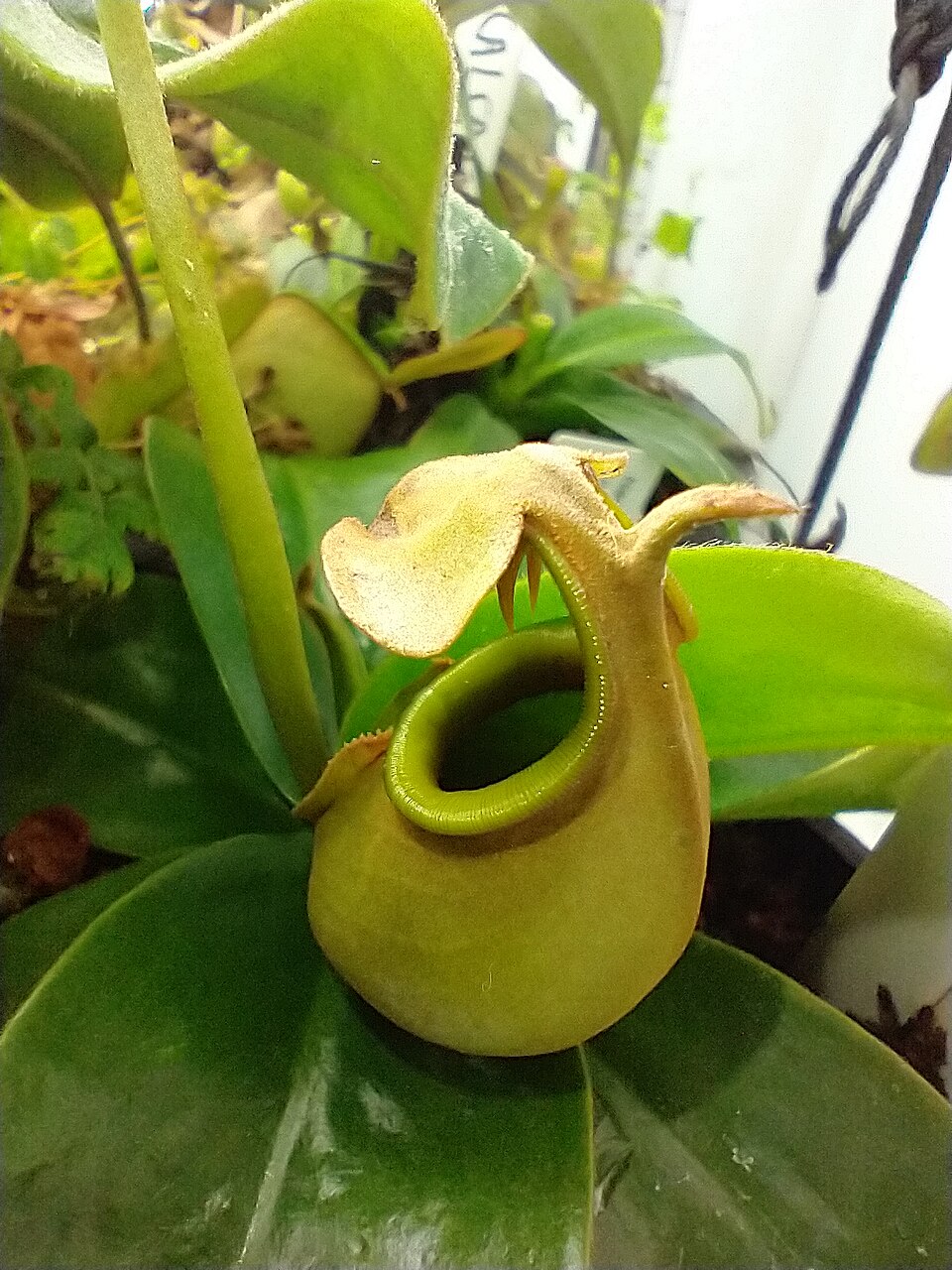
Nepenthes, Genus, spp., Multiple species,
- Genus
- Multiple species
tropical pitcher-plants
Tropical Southeast Asia, Madagascar, northern Australia
Overview
Nepenthes is a genus of about 170 species of carnivorous, mostly climbing plants in the family Nepenthaceae, native to the tropics of Southeast Asia, with outliers in Madagascar, the Seychelles, and northern Australia. Plants produce modified leaf tips that form hanging pitchers, each a fluid-filled trap with a slippery rim and a lid above the opening. The pitchers range from 1 in to over 12 in (2.5-30 cm) tall and capture insects, which drown and are digested for nutrients in the nutrient-poor soils where the plants grow. Stems climb by leaf tendrils to 30-50 ft (9-15 m) in some species, while others stay compact. Plants are dioecious, with small brown or green flowers on separate male and female plants. Lowland species need constant heat and humidity, while highland species require cool nights, so the two groups call for different conditions in cultivation. Many species are threatened by habitat loss and collection. The pitcher fluid is harmless to people but holds digestive enzymes.
Native Range
Nepenthes is native to the humid tropics of Southeast Asia, centered on Borneo, Sumatra, and the Philippines, with scattered species reaching Madagascar, the Seychelles, India, and northern Australia. Plants grow in nutrient-poor soils, from steamy lowland swamps to cool, misty mountain ridges. Many species are restricted to a single mountain or region.Suggested Uses
Grown in hanging baskets, greenhouses, and terrariums where humidity stays high, and as conservatory specimens. The dangling pitchers suit elevated containers where they hang free. Plants are grown by carnivorous-plant collectors and in tropical display houses.How to Identify
Appearance
Size & Dimensions
Height1' - 50'
Width/Spread1' - 3'
Bloom Information
Flowering can occur at any time of year in constant tropical conditions, producing tall spikes of small brown or green flowers. Male and female flowers grow on separate plants, so both are needed for seed. The flowers are inconspicuous next to the pitchers.
Detailed Descriptions
Flower Description
brown to greenFoliage Description
greenGrowing Conditions
Sun Requirements
Requires 3-6 hours of direct sunlight daily
• Full Sun: 6+ hours of direct sunlight
• Partial Shade: 3-6 hours of direct sunlight
• Full Shade: Less than 3 hours of direct sunlight
Care & Maintenance
Care Guide
Plants grow in bright, filtered light in an open, airy, low-nutrient mix of sphagnum and bark with a pH near 5.0 to 6.5. They are watered with rain or distilled water, as minerals in tap water damage the roots. Lowland species are kept warm day and night, while highland species need a night-time drop in temperature to grow well. High humidity supports pitcher formation, which falls off in dry air. The traps gather their own insects, so no soil fertilizer is needed.Pruning
Old, dead pitchers and yellowing leaves are trimmed away as they fade. Long vines are cut back to encourage branching and keep plants manageable, and the cut stems can be rooted. Spent flower spikes are removed once they brown.Container Growing
Suitable for container growing
Minimum container size: 2 gallons