Darlingtonia, Genus, californica, Species,
- Genus & species
cobra lily
Overview
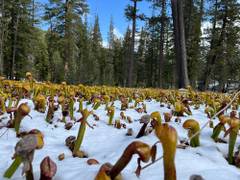
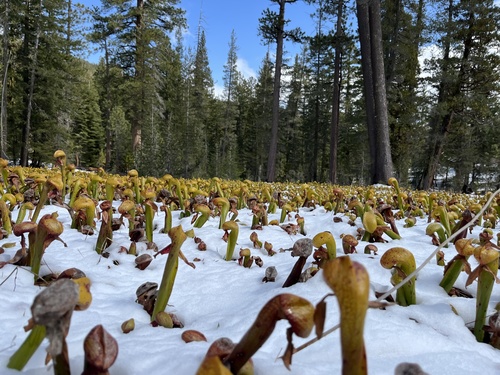
Darlingtonia is a genus in the pitcher-plant family (Sarraceniaceae) containing the single carnivorous species D. californica, the cobra lily or California pitcher plant. It grows from a creeping rhizome in cold mountain bogs and seeps of northern California and Oregon, forming clumps of hollow, tubular leaves 10-36 inches (25-90 cm) tall that twist as they rise and swell into an inflated, hooded dome at the top. Beneath the hood a pair of pointed lobes hangs like a forked tongue or fish tail, and pale translucent patches in the hood confuse trapped insects seeking an exit. Prey lured by nectar and colour fall into the tube, where downward-pointing hairs prevent escape, and are digested with the help of bacteria rather than the plant's own enzymes. A single nodding flower with yellow-green sepals and dark red petals rises on a tall stalk in spring. Darlingtonia grows in nutrient-poor, acidic, constantly wet ground fed by cold flowing water that keeps the roots cool even in summer heat. The plant traps insects to obtain nitrogen lacking in its boggy soil. It is grown by carnivorous-plant specialists, who reproduce its cold-root, pure-water needs.
Native Range
Darlingtonia californica is native to northern California and Oregon, where it grows in mountain bogs, fens, and seeps fed by cold spring water, often over serpentine soils. It is restricted to this part of the Pacific Northwest. The genus occurs nowhere else in the wild.Suggested Uses
Darlingtonia is grown in bog gardens, cool greenhouses, and specialist carnivorous-plant collections where its cold-water needs can be met. It is kept as a curiosity for its hooded, cobra-like pitchers rather than for garden display. The plant suits permanently wet, sunny bog plantings in cool-summer climates.How to Identify
Appearance
Size & Dimensions
Height10" - 3'
Width/Spread1' - 2'
Bloom Information
Darlingtonia flowers in spring, generally April to June, producing a single nodding flower on a tall stalk above the developing pitchers. The flower has yellow-green sepals and darker red petals. Seed ripens through summer in a capsule held on the upright stalk.
Detailed Descriptions
Foliage Description
yellow-green to redGrowing Conditions
Sun Requirements
Requires 4-10 hours of direct sunlight daily
• Full Sun: 6+ hours of direct sunlight
• Partial Shade: 3-6 hours of direct sunlight
• Full Shade: Less than 3 hours of direct sunlight
Care & Maintenance
Care Guide
Darlingtonia grows in full sun to part shade in constantly wet, nutrient-poor, acidic bog conditions and demands cold, pure water at the roots. In the wild cold spring water flows through the root zone, keeping it cool even when the foliage is in summer heat, and plants decline if the roots stay warm. Only rainwater, distilled, or other low-mineral water suits the genus, as tap-water salts are damaging. The plant feeds itself by trapping insects and is never given fertiliser. It is grown in a peat and sand or perlite mix kept permanently moist and flushed with cool water in hot weather. The genus is challenging and is grown mainly by carnivorous-plant specialists.Pruning
Pruning is limited to removing dead or blackened pitchers at the base in late winter or early spring as new growth appears. Tidying spent traps keeps the clump open and reduces rot. No other cutting is needed.Container Growing
Suitable for container growing
Minimum container size: 2 gallons