Nabalus, Genus, trifoliolatus, Species,
- Genus & species
three-leaved rattlesnake root
Overview
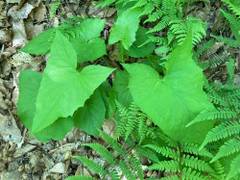
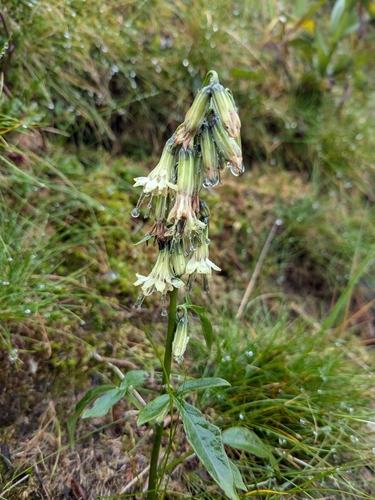
Nabalus trifoliolatus, formerly known as Prenanthes trifoliolata, is a herbaceous perennial in the sunflower family, native to eastern North America. It grows 1-5 feet (30-150 cm) tall on a smooth, often purplish stem rising from a deep root, with milky sap. The leaves are divided into three lobes or leaflets, the basis of the common name, and are larger and longer-stalked toward the base of the stem. In late summer and fall the upper stem branches into open, drooping clusters of small nodding flower heads, each head with about 8-12 cream to greenish-white ray florets and a bell-shaped base. The plant grows in cool woods, clearings, rocky slopes, and along trails and roadsides, often in the mountains and northern parts of its range. It spreads slowly and dies back to the root each winter. The milky sap is bitter, and the roots were once used in folk remedies, the source of the name rattlesnake root.
Native Range
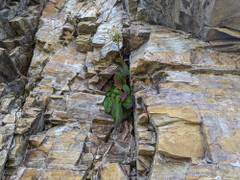
Nabalus trifoliolatus is native to eastern North America, from Newfoundland and Quebec south through New England and the Appalachians to Georgia. It grows in cool woods, clearings, rocky slopes, and roadsides, often at higher elevations southward.Suggested Uses
Nabalus trifoliolatus is used in woodland and native plant gardens, shaded borders, and naturalized cool woods. Its tall stems and nodding fall flowers suit the back of shaded plantings. It draws bees and other insects late in the season.How to Identify
Appearance
Size & Dimensions
Height1' - 5'
Width/Spread1' - 2'
Bloom Information
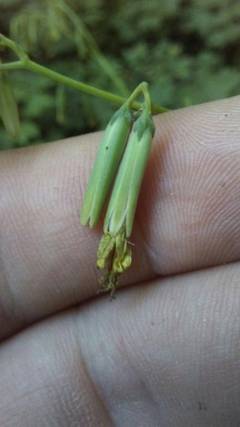
Small nodding cream to greenish-white flower heads open in late summer and fall (August-October) in open, drooping clusters at the top of the stem. The heads hang downward and open over several weeks. Wind-dispersed seeds with pale bristles follow.
Detailed Descriptions
Flower Description
cream to greenish-whiteFoliage Description
greenGrowing Conditions
Sun Requirements
Requires 3-8 hours of direct sunlight daily
• Full Sun: 6+ hours of direct sunlight
• Partial Shade: 3-6 hours of direct sunlight
• Full Shade: Less than 3 hours of direct sunlight