Nabalus, Genus, altissimus, Species,
- Genus & species
tall rattlesnake root
Overview
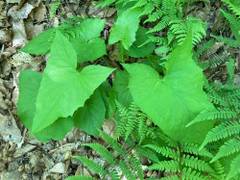
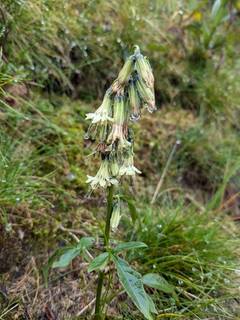
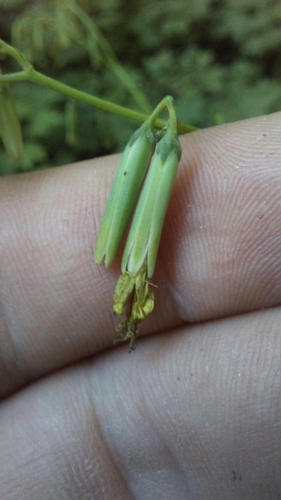
Nabalus altissimus is a tall herbaceous perennial of the aster family, growing 2-7 feet (0.6-2.1 m) tall on a single slender, often zigzag stem. The leaves are variable, the lower ones broadly triangular to heart-shaped and long-stalked, 3-6 inches (8-15 cm) long, the upper leaves smaller and narrower. Cut stems and leaves release a milky white latex. From late summer into fall the upper stem branches into a narrow open panicle of nodding flower heads, each holding five to six pale greenish-white to cream tubular florets surrounded by green to purplish bracts. The heads hang downward and give way to tufted, wind-borne seeds. Native to moist deciduous and mixed woodlands of eastern North America, it grows in shade to part shade on rich, humus-laden soil. Plants arise from a short rootstock, do not spread aggressively, and tend to occur as scattered individuals rather than dense stands. Hardy in USDA zones 3-8, the foliage dies back each winter. It tolerates deep shade but flowers more freely with some light, and declines in dry or compacted ground. The slender stems may lean and sometimes need support in open sites.
Native Range
Native to eastern North America, from Quebec and Ontario south through New England and the Appalachians to Georgia, and west to the Great Lakes region. It grows in rich, moist deciduous and mixed forests, woodland edges, and shaded clearings.Suggested Uses
Used in woodland and native plant gardens, shaded borders, and naturalized forest edges, spaced 18-24 inches (45-60 cm) apart. Suited to shaded, moist ground where its tall flowering stems rise above lower groundcovers.How to Identify
Appearance
Size & Dimensions
Height2' - 7'
Width/Spread1' - 2'
Bloom Information
Detailed Descriptions
Flower Description
greenish-white to creamFoliage Description
greenGrowing Conditions
Sun Requirements
Requires 2-5 hours of direct sunlight daily
• Full Sun: 6+ hours of direct sunlight
• Partial Shade: 3-6 hours of direct sunlight
• Full Shade: Less than 3 hours of direct sunlight
Care & Maintenance
Care Guide
Grow in part shade to full shade on rich, moist, humus-rich soil that drains freely. Steady woodland moisture suits it; the plant tolerates clay and loam but fades in dry or compacted ground. No feeding is needed in leaf-littered soil. Tall stems may lean and can be staked in more open positions. Cut back spent stems in late fall or early spring. Hardy in USDA zones 3-8, it resprouts from the rootstock each spring.Pruning
Remove faded flowering stems after seed dispersal, or leave them through winter for the seed heads. Cut old growth to the ground in early spring before new shoots rise. No routine pruning is otherwise required.Pruning Schedule
Prune: March & November
fallearly spring