Myriophyllum, Genus, spp., Multiple species,
- Genus
- Multiple species
milfoils
Overview
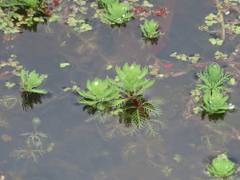
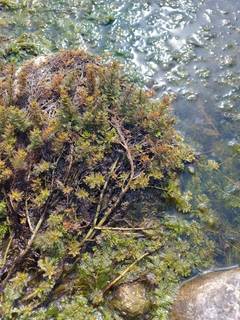
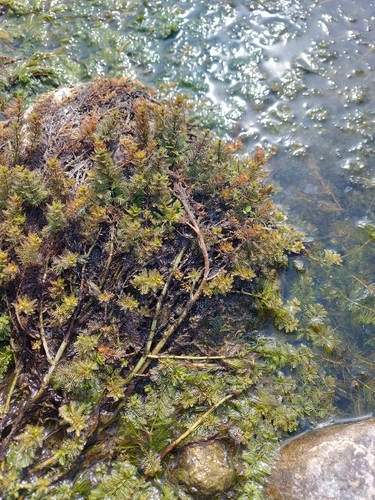
Myriophyllum is a genus of about 70 aquatic and semi-aquatic perennials in the watermilfoil family, found in fresh water worldwide. Most species are rooted in the bed of ponds, lakes, and slow streams, with long, limp stems that grow up through the water and can reach 3-10 feet (0.9-3 m) in length. The submerged leaves are finely divided into thread-like segments arranged in whorls around the stem, giving a feathery, comb-like look; emergent shoots above the surface may bear smaller, stiffer leaves. Tiny flowers are held in slender spikes that rise just above the water in summer, mostly wind-pollinated and easy to miss. Plants spread rapidly by stem fragments and runners, and a few species, notably M. spicatum, Eurasian watermilfoil, and M. aquaticum, parrot feather, are aggressive invaders of waterways outside their native range, forming dense mats that crowd out other plants and impede water flow. Several species oxygenate the water and shelter fish and aquatic insects. Foliage dies back in cold water and may overwinter as turions or root crowns. Across the genus, plants range from clear lakes to muddy ditches.
Native Range
The genus Myriophyllum occurs in fresh water on every continent except Antarctica, with species native to North America, Eurasia, Africa, and Australia. M. aquaticum comes from South America and M. spicatum from Europe and Asia, both now naturalized far beyond their native ranges. Plants grow in ponds, lakes, slow rivers, ditches, and marsh pools, rooted in mud in still or slow-moving water.Suggested Uses
Native species are grown as submerged oxygenating and cover plants in garden ponds and aquariums, planted in pots of aquatic soil or weighted bunches at about 1 plant per 1-2 square feet (0.1-0.2 m2). Used to shade water, take up nutrients, and shelter fish and invertebrates. The invasive species such as M. spicatum and M. aquaticum are not planted and are removed where they appear.How to Identify
Appearance
Size & Dimensions
Height3' - 10'
Width/Spread1' - 10'
Bloom Information
Flowers in summer, generally June through August, when slender spikes rise above the water surface bearing tiny pinkish or whitish flowers. The flowers are mostly wind-pollinated and inconspicuous. Much of the plant reproduction is vegetative, through fragmenting stems and runners rather than seed. Flowering and growth are heaviest in warm, nutrient-rich water.
Detailed Descriptions
Flower Description
pinkish to whitish, inconspicuousFoliage Description
green to blue-green, featheryGrowing Conditions
Sun Requirements
Requires 4-10 hours of direct sunlight daily
• Full Sun: 6+ hours of direct sunlight
• Partial Shade: 3-6 hours of direct sunlight
• Full Shade: Less than 3 hours of direct sunlight
Care & Maintenance
Care Guide
Grows rooted in the bed of ponds and slow water in full sun to part shade, in still or gently moving water up to several feet deep. Plants spread quickly in warm, nutrient-rich water, and broken stem fragments root and form new plants, so cuttings and trimmings are kept out of natural waterways. Native species oxygenate ponds and shelter wildlife, while the invasive species choke water bodies and are regulated or banned for sale in many regions. Excess nutrients and warm water drive heavy growth. In cold climates top growth dies back and the plant overwinters as dormant buds or root crowns. Thinning keeps growth in check in ornamental ponds.Pruning
Thin and rake out excess growth through the growing season to keep ornamental ponds open, removing trimmings well away from natural water, as fragments root readily. Cut back top growth in autumn as it dies down. No other pruning is needed. All cuttings are composted away from waterways to prevent spread.Container Growing
Suitable for container growing