Myosotis, Genus, scorpioides, Species,
- Genus & species
water forget-me-not
Europe and western Asia (species origin); naturalized in North America, Australia, New Zealand
Overview
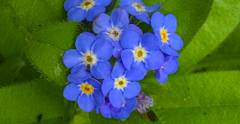
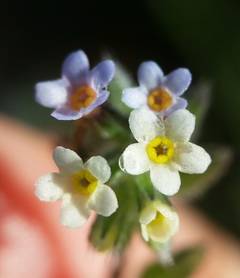
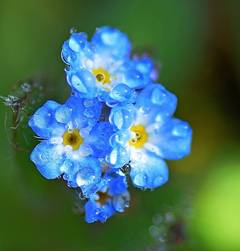
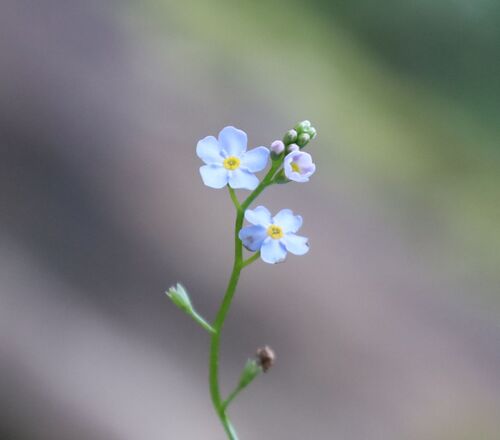
Myosotis scorpioides is a semi-evergreen rhizomatous perennial in the family Boraginaceae growing 6-12 inches (15-30 cm) tall and spreading by creeping stems that root at nodes to form loose mats 12-24 inches (30-60 cm) wide. Stems are decumbent to ascending and softly hairy. Leaves are alternate, oblong-lanceolate, 1-3 inches (2.5-8 cm) long, bright green, with a slightly rough surface. Flowers are 0.3-0.4 inch (8-10 mm) across, five-petaled, sky blue with a yellow center (eye), borne in one-sided coiled cymes (scorpioid cymes, the basis for the epithet) that uncoil progressively as flowers open. Flower color may include pink buds that open blue; white-flowered forms also occur. The species is native to Europe and western Asia, growing in wet habitats: stream banks, ditches, pond margins, and wet meadows. It is naturalized across much of North America and is the species generally identified by the name 'forget-me-not' in European tradition. Spreads vigorously by rooting stems in moist to wet soil; self-seeds readily. Can become weedy in small water garden settings. Tolerates partial shade and seasonal flooding. Susceptible to powdery mildew in dry conditions and to slug damage on young growth.
Native Range
Myosotis scorpioides is native across Europe, from the British Isles and Scandinavia south to the Mediterranean and east through Russia, the Caucasus, and into western Central Asia. Naturalized widely in North America, Australia, and New Zealand.Suggested Uses
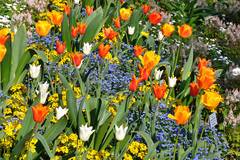
Planted along pond margins, stream banks, and in rain gardens, spaced 8-12 inches (20-30 cm) apart. Naturalized in wet meadows and under deciduous trees near water. Combines with Caltha palustris, Cardamine pratensis, and Iris pseudacorus in spring-flowering wet plantings. The sky blue flowers are a long-established component of cottage garden and water garden plantings. Not suited to dry conditions or rapid drainage.How to Identify
Appearance
Size & Dimensions
Height6" - 1'
Width/Spread1' - 2'
Bloom Information
Flowers open from May through August with peak bloom in June. The scorpioid cymes uncoil progressively, producing new flowers over a 6-10 week period. Deadheading encourages continued bloom through summer. Pollinated by bees, hoverflies, and butterflies.
Detailed Descriptions
Flower Description
Sky blue with yellow center (eye); five-petaled 0.3-0.4 inch (8-10 mm); in scorpioid (coiled one-sided) cymes; pink buds that open blue; white forms also occurFoliage Description
Bright green; alternate oblong-lanceolate 1-3 inches (2.5-8 cm); slightly rough surface; semi-evergreenGrowing Conditions
Sun Requirements
Requires 4-8 hours of direct sunlight daily
• Full Sun: 6+ hours of direct sunlight
• Partial Shade: 3-6 hours of direct sunlight
• Full Shade: Less than 3 hours of direct sunlight
Care & Maintenance
Care Guide
Sited in full sun to partial shade in consistently moist to wet soil at pH 5.5-7.0. Spaced 8-12 inches (20-30 cm) apart. Tolerates standing water to 2 inches (5 cm) deep. In rain gardens, planted in the lowest moisture zone. Watered regularly; the species is not allowed to dry out. Fed lightly with a balanced fertilizer in spring. Spread is monitored; rooting stem sections at border edges are removed to contain colony expansion. In the Pacific Northwest, the species thrives in moist conditions and may self-seed prolifically near water features.Pruning
Sheared back by half after the first flush of bloom to encourage a fresh flush of foliage and flowers in late summer. Dead or tattered growth is cut back in late autumn. In spring, winter-damaged stems are removed. Division every 2-3 years keeps colonies vigorous.Pruning Schedule
Prune: July
summer
Container Growing
Suitable for container growing
Minimum container size: 2 gallons