Mutarda, Genus, nigra, Species,
- Genus & species
black mustard
Overview
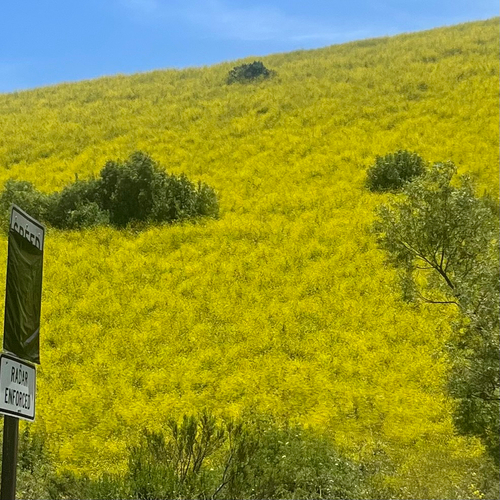
Mutarda nigra, black mustard, is a tall, fast-growing annual of the cabbage family, reaching 24-80 inches (60-200 cm) and sometimes more on rich ground. The lower stems carry stiff bristly hairs and large lyre-shaped leaves with a big end lobe and smaller side lobes, while the upper leaves are narrower, smoother, and stalked. From June to August the many branch tips bear loose spikes of bright yellow, four-petalled flowers about 0.3-0.5 inches (8-12 mm) across. The flowers give way to short, four-angled seed pods that are pressed close against the stem and tipped with a short beak, a habit that separates black mustard from related field mustards whose pods stand out from the stem. Each pod holds a row of dark reddish-brown to black seeds, the source of the mustard condiment and of mustard oil. It grows on disturbed, fertile ground, riverbanks, field edges, roadsides, and waste places, and has long been cultivated for its seed. It germinates in spring, grows quickly, flowers, sets abundant seed, and dies within the year. The crushed seeds and leaves are sharply pungent from mustard-oil compounds released when the tissue is damaged.
Native Range
Native to the Mediterranean region and temperate Eurasia. Through long cultivation for mustard it has spread across North America, South America, Africa, and Australia, where it grows as a naturalized weed of disturbed ground.Suggested Uses
Grown as a seed and condiment crop, as a fast green manure, and occasionally in pollinator and wildflower plantings on fertile ground. It suits open, sunny, cultivated plots. Its height and heavy self-seeding make it unsuited to small or tidy borders.How to Identify
Appearance
Size & Dimensions
Height2' - 6'8"
Width/Spread1' - 2'
Bloom Information
Bright yellow flowers open from June to August in branching spikes, opening from the base upward over several weeks. Bees and other insects visit for nectar and pollen. Short beaked pods follow, ripening to release the pungent dark seeds.
Detailed Descriptions
Foliage Description
greenGrowing Conditions
Sun Requirements
Requires 6-10 hours of direct sunlight daily
• Full Sun: 6+ hours of direct sunlight
• Partial Shade: 3-6 hours of direct sunlight
• Full Shade: Less than 3 hours of direct sunlight
Water & Climate
Water Needs
Care & Maintenance
Care Guide
Mutarda nigra grows in full sun on fertile, moisture-retaining but well-drained soil, pH about 6.0-7.5, growing tall and fast on rich ground. As an annual it is sown directly in spring where it is to grow, since it sets a taproot. It needs steady moisture during rapid growth and flowering but tolerates short dry spells once established. It self-seeds heavily, so plants often return year after year on cultivated land. No feeding is needed on already fertile soil, and tall plants may lean and need support in exposed sites. It is grown as a seed crop and sometimes as a green manure.Pruning
No pruning is needed. Plants can be pulled or cut once seed has set, or removed before seeding to limit spread on cultivated land. As a green manure it is cut and dug in before flowering.Toxicity
Non-toxicPlanting Guide
Planting Methods & Timing
Planting Method
direct sow
Direct Sow Timing
spring
Days to Maturity
80–110 days
Plant Spacing
6 inches
