Mutarda, Genus, arvensis, Species,
- Genus & species
charlock
Mediterranean, Europe, and western Asia
Overview
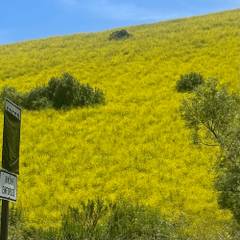
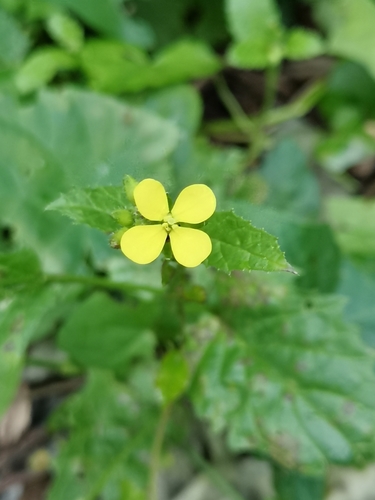
Mutarda arvensis is an erect, bristly annual 12-32 inches (30-80 cm) tall, branching above into loose heads of bright yellow flowers. The lower leaves are large, coarsely toothed and lyre-shaped with a big end lobe, while the upper leaves are smaller, narrower, and stalkless. The four-petalled yellow flowers are about 0.6 inch (1.5 cm) across and open in succession up the lengthening stems through spring and summer. They give way to slender, beaded seed pods 1-2 inches (2.5-5 cm) long, each ending in a stout, flattened beak and splitting to scatter small dark seeds. It is a vigorous weed of arable land, field margins, roadsides, and disturbed soil, especially on heavy, lime-rich ground, and can carpet bare fields yellow. The seeds are long-lived in the soil and can germinate after many years, so it returns readily wherever ground is cultivated. It hosts some of the same pests and diseases as crop brassicas, which makes it unwelcome in farmland. The plant is shallow-rooted and pulls up easily when young.
Native Range
Mutarda arvensis is native to the Mediterranean region, Europe, and western Asia, and has spread as a weed across North America, Australia, and much of the temperate world. It grows on cultivated land, field edges, roadsides, and disturbed ground, especially on heavy, lime-rich soils.Suggested Uses
Grown occasionally as a fast green manure, cover crop, or bee and pollinator plant on bare, open ground. More often it appears as a yellow-flowered weed of arable fields, gardens, and disturbed soil rather than a chosen ornamental.How to Identify
Appearance
Size & Dimensions
Height1' - 2'8"
Width/Spread8" - 1'6"
Bloom Information
Detailed Descriptions
Foliage Description
greenGrowing Conditions
Sun Requirements
Requires 6-12 hours of direct sunlight daily
• Full Sun: 6+ hours of direct sunlight
• Partial Shade: 3-6 hours of direct sunlight
• Full Shade: Less than 3 hours of direct sunlight
Water & Climate
Water Needs
Care & Maintenance
Care Guide
As an arable weed it grows without cultivation on disturbed, fertile, often heavy and lime-rich soil in full sun. Seed germinates from spring onward and after autumn cultivation, and plants complete flowering and seeding in one season. It needs no feeding or watering and self-sows heavily from a long-lived seed bank. Where it is unwanted in beds or crops, plants are hoed or pulled before the pods ripen. Cultivating the soil repeatedly brings up fresh flushes of seedlings. It is grown deliberately only as a quick green manure or bee plant on open ground.Pruning
No pruning applies to this annual. Plants are pulled or hoed off before the seed pods ripen where seeding is unwanted. The whole plant dies after seed is shed, leaving dry, beaded pods on wiry stems.Toxicity Warning
Toxic to petsPlanting Guide
Planting Methods & Timing
Planting Method
direct sow
Direct Sow Timing
Sow spring to early summer on open ground
Days to Maturity
60–90 days
Plant Spacing
6 inches