Murraya, Genus, paniculata, Species,
- Genus & species
Orange jessamine
Southern China, South and Southeast Asia, and northern Australia
Overview
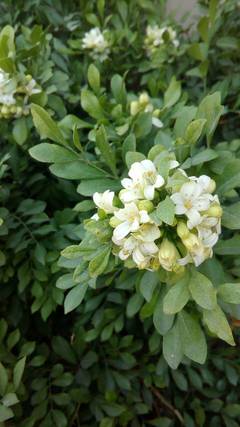
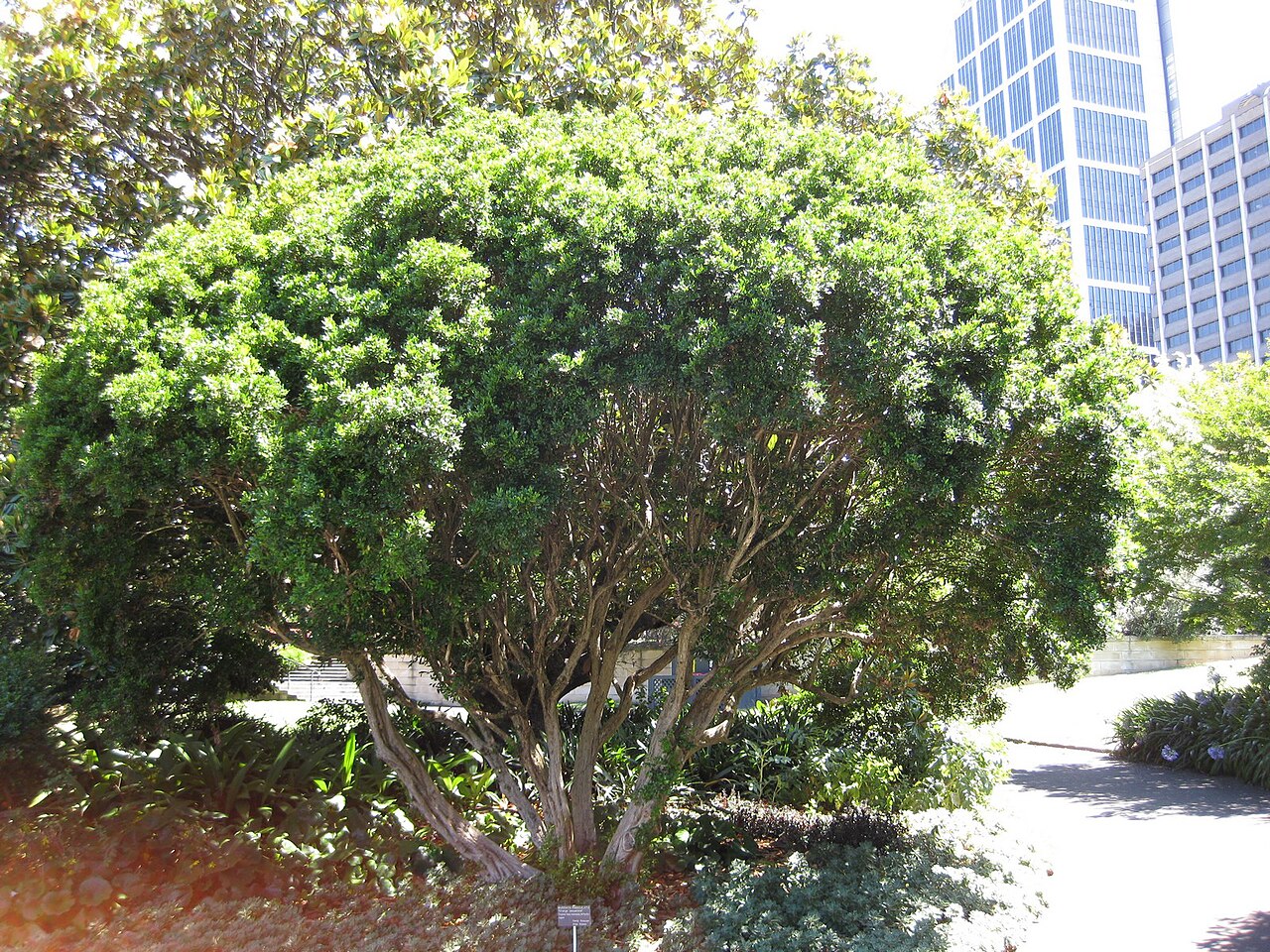
Murraya paniculata is an evergreen shrub or small tree reaching 6-15 feet (2-4.5 m) tall and 6-12 feet (1.8-3.6 m) wide, with a dense crown of arching branches and pale grey bark. Leaves are pinnate, 2-6 inches (5-15 cm) long, carrying 3-9 glossy dark green leaflets each 1-3 inches (2.5-7.5 cm) long and dotted with oil glands that release a citrus scent when crushed. Flowers are white and five-petalled, 0.6-0.8 inch (15-20 mm) across, held in clusters of 8-20 at the shoot tips and in the leaf axils, with a scent close to orange blossom that carries furthest at night. Flowering follows rain or deep watering by 7-14 days and repeats 3-6 times a year in frost-free climates, each flush lasting 5-10 days. Fruit is an ovoid berry 0.4-0.6 inch (10-15 mm) long, ripening from green to orange-red over 8-10 weeks and holding 1-2 seeds. Birds take the fruit and carry seed into bushland, and the species has naturalized in coastal Queensland, southern Florida, and parts of the Pacific. The plant is a primary host of the Asian citrus psyllid Diaphorina citri, the insect that spreads huanglongbing, and its sale and movement are regulated in citrus-producing states of the United States.
Native Range
Native from southern China and the Indian subcontinent east through Southeast Asia to New Guinea, and south into northern Australia in Queensland and the Northern Territory. Grows on rainforest margins, in monsoon vine thickets, and on limestone outcrops from sea level to 4,000 feet (1,200 m). The natural range spans seasonally dry monsoon country through to wet tropical forest.Suggested Uses
Planted at 2-3 foot (60-90 cm) spacing as a clipped hedge and at 8-10 foot (2.4-3 m) spacing as a screen or small tree in gardens across coastal Queensland, New South Wales, southern Florida, and Southeast Asia. Grown in containers of 15 gallons (57 L) or larger and moved under cover in regions where winter temperatures fall below 30F (-1C). Regulation as a host of the Asian citrus psyllid restricts planting in citrus districts of Florida, Texas, California, and parts of Queensland.How to Identify
Appearance
Size & Dimensions
Height6' - 15'
Width/Spread6' - 12'
Colors
Bloom Information
Flowering flushes follow rain or heavy watering by 7-14 days and repeat 3-6 times a year in USDA zones 10-11, falling mainly between spring and autumn. Each flush opens over 2-3 days and holds 5-10 days. In zones 9a and 9b, flowering is limited to one or two flushes between May and September. Night temperatures below 55F (13C) stop bud formation.
Detailed Descriptions
Foliage Description
Glossy dark greenGrowing Conditions
Sun Requirements
Requires 4-10 hours of direct sunlight daily
• Full Sun: 6+ hours of direct sunlight
• Partial Shade: 3-6 hours of direct sunlight
• Full Shade: Less than 3 hours of direct sunlight
Care & Maintenance
Care Guide
Water twice weekly through the first year, then weekly in summer; established plants tolerate 3-4 weeks without water but drop 20-30 percent of their leaves and skip the following flush. Free-draining soil from sandy loam to clay loam at pH 6.0-7.5 suits the species, and yellowing between the veins appears in waterlogged or strongly alkaline ground. Growth stops below 55F (13C), leaves are damaged below 30F (-1C), and plants die to ground level below 26F (-3C), regrowing from the base in zone 9. Root-knot nematodes stunt plants in sandy soils, while scale insects and sooty mold build up in still air inside dense hedges. Nitrogen at 2 ounces per square yard (60 g per square meter) split between spring and midsummer holds leaf color in sandy soils. Plants cut back to bare wood reshoot from dormant buds within 4-8 weeks in warm weather.Pruning
Hedges are cut two to four times a year through the growing season, taking 4-8 inches (10-20 cm) from each shoot, which removes flower buds and confines flowering to the gaps between cuts. Plants cut hard to a framework of bare branches 3-4 feet (0.9-1.2 m) tall reshoot within 4-8 weeks at temperatures above 70F (21C). Formative pruning to a single trunk over 2-3 years produces a small tree with a clear stem of 3-5 feet (0.9-1.5 m). Pruning in late autumn leaves soft regrowth exposed to cold damage below 30F (-1C).Pruning Schedule
Prune: April, June & August
late springsummer
Container Growing
Suitable for container growing
Minimum container size: 15 gallons