Image 1 of 9
1 / 9
© No machine-readable author provided. Jolle~commonswiki assumed (based on copyright claims)., some rights reserved (CC-BY-SA) · Wikimedia Commons
Murraya, Genus, koenigii, Species,
- Genus & species
Curry leaf tree
Overview
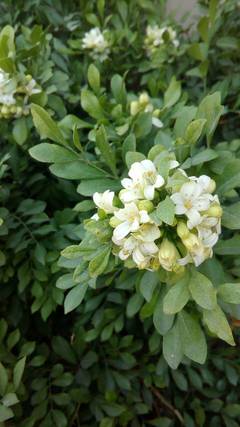
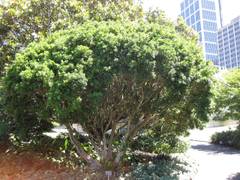
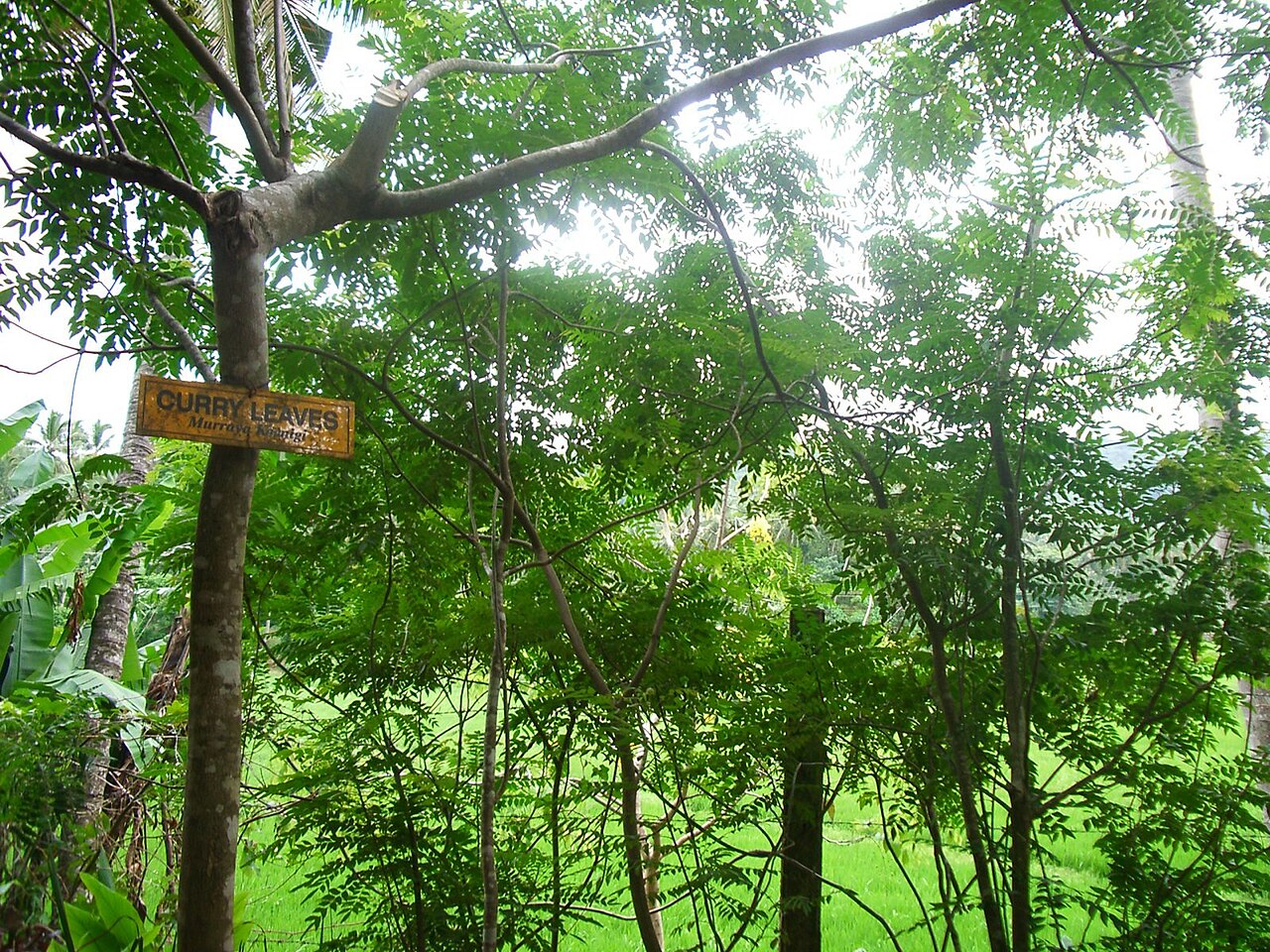
Murraya koenigii is a small, aromatic, semi-evergreen tree or large shrub in the citrus family (Rutaceae), growing 8–20 feet (2.4–6 m) tall and 6–12 feet (1.8–3.7 m) wide. The trunk is slender, with dark brown to gray bark that is shallowly fissured with age, and the crown is open and rounded. Leaves are pinnately compound, 6–12 inches (15–30 cm) long, with 11–25 alternate leaflets 1–2 inches (2.5–5 cm) long, glossy dark green, and strongly aromatic when crushed. Clusters of small white flowers 0.3 inch (8 mm) across, with five petals and a sweet fragrance, form at the stem tips in panicles 2–4 inches (5–10 cm) wide from April to July. Fruits are oval berries 0.4–0.6 inch (1–1.5 cm) long that ripen from green to shiny black in 3–4 months, with a single large seed. Leaves are used fresh and dried as a seasoning in South Asian cooking. Plants drop leaves in cool weather below 50°F (10°C) and are damaged by frost at 32°F (0°C). Suckers form around the base of mature plants in warm climates. Growth is slow, at 12–24 inches (30–60 cm) per year.
Native Range
Murraya koenigii is native to India and Sri Lanka, and its range extends to Bangladesh, Myanmar, and southern China. It grows in tropical and subtropical forests, forest edges, and scrub at elevations from sea level to 5,000 feet (1,500 m).Suggested Uses
Grown for fresh leaves used in South Asian cooking, in containers and in ground plantings in frost-free climates, spaced 6–8 feet (1.8–2.4 m) apart. Leaves are harvested from stems 2–3 years old. Flowers are visited by bees and butterflies, and berries are eaten by birds.How to Identify
Appearance
Size & Dimensions
Height8' - 20'
Width/Spread6' - 12'
Bloom Information
Detailed Descriptions
Foliage Description
Glossy dark greenGrowing Conditions
Sun Requirements
Requires 4-10 hours of direct sunlight daily
• Full Sun: 6+ hours of direct sunlight
• Partial Shade: 3-6 hours of direct sunlight
• Full Shade: Less than 3 hours of direct sunlight
Care & Maintenance
Care Guide
Grows in full sun to part shade in rich, well-drained, slightly acidic soil with a pH of 5.5–7.0. Hardy in USDA zones 9–11, with frost damage at 32°F (0°C), and plants are grown in containers that are brought indoors where winter temperatures fall below 50°F (10°C). Plants receive 1 inch (2.5 cm) of water per week, and soil that stays wet causes root rot. Container plants are repotted every 2–3 years into pots 14–18 inches (35–45 cm) in diameter. Aphids, scale, and leaf-eating caterpillars of Papilio demoleus occur on new growth. Fertilizer is applied monthly during the growing season from April to September.Pruning
Pruning takes place in spring, March–April, with branches cut back by one-third to promote branching and maintain a height of 6–8 feet (1.8–2.4 m). Flower panicles are removed on young plants to direct growth into leaves. Suckers around the base are cut at ground level to keep a single trunk.Pruning Schedule
Prune: March–April
early springlate spring
Container Growing
Suitable for container growing
Minimum container size: 5 gallons