Muraltia, Genus, spp., Multiple species,
- Genus
- Multiple species
Purplegorses
Cape Floristic Region of South Africa, extending to tropical East Africa
Overview
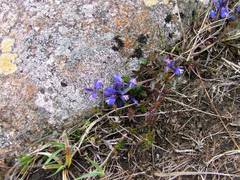
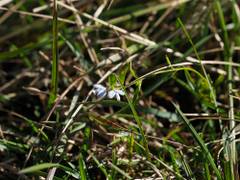
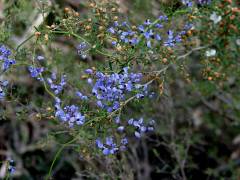
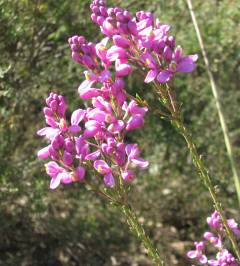
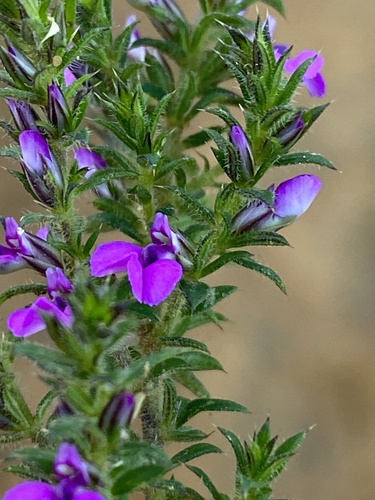
Muraltia is a genus of about 115 species of small, heath-like shrubs in the milkwort family (Polygalaceae). The great majority are endemic to the winter-rainfall fynbos of South Africa's Cape region, with a few species reaching tropical East Africa. Plants are wiry, much-branched ericoid shrubs, generally 0.2-1 m (8 in-3.3 ft) tall, though a few reach 2 m (6.5 ft). Many species carry rigid, spine-tipped branchlets, giving a gorse-like habit reflected in the common name purplegorses. The leaves are small, narrow, and often crowded or needle-like, 2-10 mm long, and persist year-round. Flowers are small, 4-8 mm across, and pea-like in outline although unrelated to true peas; they range through purple, mauve, pink, and white, with a fringed or crested keel petal typical of the milkwort family. Flowering occurs mainly in the southern-hemisphere autumn and winter. The fruit is a small capsule, in some species bearing horn-like projections. Muraltia grows on sandstone and granite slopes in nutrient-poor, acidic, sandy soils, and most species are adapted to dry summers and periodic fire. The genus is little grown outside specialist South African collections and is sensitive to frost and waterlogging.
Native Range
Native to southern Africa, with the centre of diversity in the Cape Floristic Region of the Western Cape, South Africa. A small number of species extend northward into the mountains of tropical East Africa.Suggested Uses
Grown in fynbos and Mediterranean-climate gardens, rockeries, and containers in cool greenhouses outside its native range. The spiny species form low, prickly groundcover and informal barriers on dry, sandy banks.How to Identify
Appearance
Size & Dimensions
Height8" - 6'7"
Width/Spread8" - 4'11"
Bloom Information
Across the genus, flowering peaks in the southern-hemisphere autumn through spring, roughly April to October. Many species flower most heavily after winter rains, and a few bloom intermittently year-round in mild conditions. In northern-hemisphere cultivation the flowering period shifts to spring and early summer.
Detailed Descriptions
Flower Description
purple, mauve, pink, or whiteFoliage Description
green to grey-greenGrowing Conditions
Sun Requirements
Requires 6-10 hours of direct sunlight daily
• Full Sun: 6+ hours of direct sunlight
• Partial Shade: 3-6 hours of direct sunlight
• Full Shade: Less than 3 hours of direct sunlight
Care & Maintenance
Care Guide
Muraltia needs full sun, sharp drainage, and a sandy, acidic, low-nutrient soil that mimics its fynbos origins. Water is needed through winter and spring, with a dry rest in summer; waterlogged or fertile soils cause root rot and rapid decline. The genus tolerates little frost, surviving only light, brief cold, and is grown under glass in temperate climates. Phosphorus-rich fertilisers harm these milkworts, so feeding is kept minimal. Propagation is from seed, often aided by smoke treatment, or from semi-ripe cuttings, both of which can be slow and erratic. Established plants are short-lived and are renewed every few years.Pruning
Light tip-pruning after flowering keeps plants bushy and contains the wiry growth. Old specimens become woody and sparse at the base and respond poorly to hard cutting into bare wood. Spent branchlets and dead spiny twigs can be thinned as they appear.Container Growing
Suitable for container growing
Minimum container size: 2 gallons