Muhlenbergia, Genus, reverchonii, Species,
- Genus & species
seep muhly
Native to the south-central United States — primarily Texas and Oklahoma — on limestone hills, rocky seeps, and dry calcareous prairies in the Edwards Plateau and Cross Timbers ecoregions
Overview
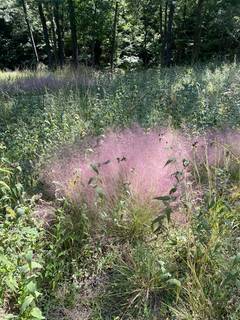
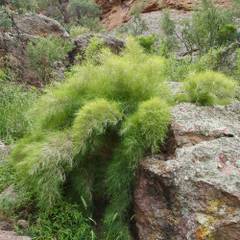
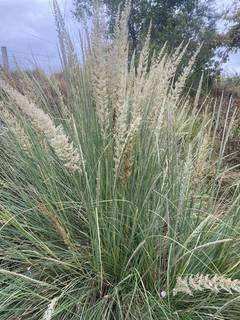
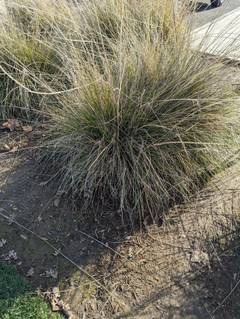
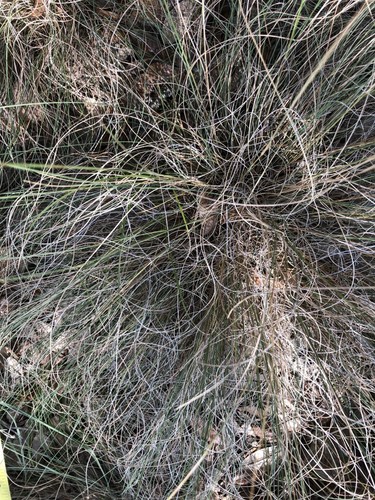
Muhlenbergia reverchonii is seep muhly — a compact Texas-native warm-season ornamental grass in the family Poaceae reaching 18–30 inches (45–75 cm) tall with plumes and 18–24 inches (45–60 cm) wide in a clumping habit. The species is named after Julien Reverchon, the French-born botanist who explored the Texas hill country in the 1800s and collected the type specimen. Blue-green to gray-green very narrow wiry foliage forms an undulating mound that moves through wide arcs in wind, giving the foliage a kinetic appearance that runs more pronounced than many other ornamental grasses. Pinkish-purple to rosy-mauve airy panicles appear from September through November across approximately 5 weeks. Compared with the better-known sibling species Muhlenbergia capillaris (pink muhly grass), M. reverchonii carries a more compact habit, bluer foliage, hardier zone rating (zone 5 versus zone 6), and stronger drought tolerance — adapted to the dry limestone hills of central Texas where rainfall runs unreliable. The trade-off: the fall plume display, while ornamental, runs less dramatically pink than the cotton-candy cloud effect of M. capillaris. The undulating motion in breeze runs distinct — the very narrow wiry foliage moves like flowing water rather than the stiffer movement of broader-leaved grasses. The cultivar 'Undulator' (sometimes sold under this name in the trade) emphasizes the flowing movement trait. Well-drained lean alkaline soil in full sun suits the species. Deer avoid the foliage. Not known to be toxic to pets or humans.
Native Range
Muhlenbergia reverchonii is native to the south-central United States — primarily Texas and Oklahoma — where the species grows on limestone hills, rocky seeps, and dry calcareous prairies in the Edwards Plateau and Cross Timbers ecoregions.Suggested Uses
Used in xeric and dry-climate gardens, limestone-soil gardens, mixed perennial borders, native prairie restorations, and containers of 5 gallons (19 liters) or more with sharp-drainage potting mix. The compact hardy drought-tolerant species runs as the muhly choice for northern gardens and dry conditions where M. capillaris runs unsuitable due to the colder hardiness zone or insufficient drainage. The undulating motion in breeze adds kinetic visual interest — the foliage moves more visibly than many other ornamental grass species and runs as a key trait for placement near walkways and seating areas where the wind movement registers at human scale. Pairs with other warm-season prairie grasses (Schizachyrium scoparium, Bouteloua) and prairie forbs (Liatris, Echinacea, Asclepias) in naturalistic prairie-style plantings.How to Identify
Appearance
Size & Dimensions
Height1'6" - 2'6"
Width/Spread1'6" - 2'
Bloom Information
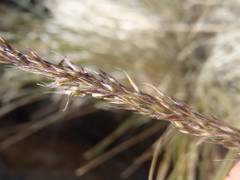
Flowering from September through November across approximately 5 weeks. Pinkish-purple to rosy-mauve airy panicles emerge from the foliage mound and persist through the fall season. The fall plume display catches low-angle autumn sunlight and adds a pink-purple cloud above the blue-green foliage during the fall garden window. Plants run wind-pollinated; insect activity at the flowers runs minimal compared to flowering forb species in the same garden. Plumes hold their structural form through winter standing-dormant in dry-climate gardens.
Detailed Descriptions
Flower Description
Pinkish-purple to rosy-mauve; airy panicles emerging from the foliage moundFoliage Description
Blue-green to gray-green; very narrow wiry leaf blades on undulating moundGrowing Conditions
Sun Requirements
Requires 6-12 hours of direct sunlight daily
• Full Sun: 6+ hours of direct sunlight
• Partial Shade: 3-6 hours of direct sunlight
• Full Shade: Less than 3 hours of direct sunlight
Care & Maintenance
Care Guide
Plant in full sun with at least 6 hours of direct light. Well-drained lean alkaline soil at pH 6.0–8.0 suits the species; the calcareous limestone-soil tolerance runs as a defining trait. The species runs strongly drought-tolerant once established and tolerates the alternating wet-dry seep conditions of its native habitat. No fertilization. Cut all foliage to 4 inches (10 cm) above ground in late February or March before new growth emerges; warm-season grasses emerge later in spring than cool-season grasses, and waiting for the new growth to start before cutting back avoids damage to the emerging shoots. Hardy to USDA zone 5, which extends the cultivation range further north than the better-known M. capillaris.Pruning
Cut all foliage to 4 inches (10 cm) above ground in late February or March before new growth emerges. Leave plumes standing through winter for structural interest and habitat value. No other seasonal pruning is needed.Pruning Schedule
Prune: February–March
winter
Container Growing
Suitable for container growing
Minimum container size: 5 gallons