Mitella, Genus, spp., Multiple species,
- Genus
- Multiple species
Bishop's cap
Overview
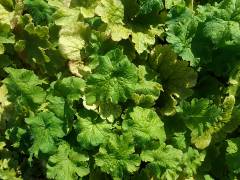
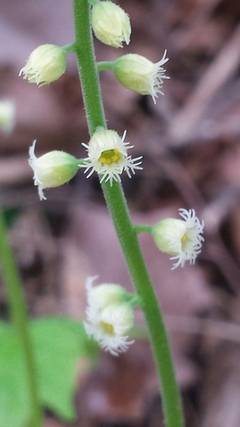
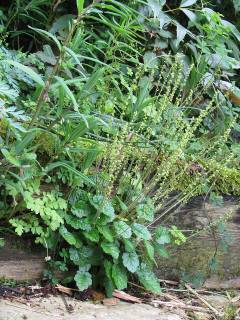
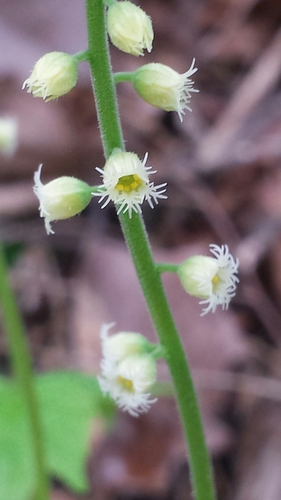
Mitella, the bishop's caps or miterworts, is a genus of small woodland perennials in the saxifrage family (Saxifragaceae), native to North America and eastern Asia; several species have been moved into related genera such as Pectiantia and Ozomelis. Plants grow from short rhizomes, forming low rosettes of long-stalked, heart-shaped to rounded, lobed and toothed leaves at the base. In spring and early summer slender, mostly leafless flowering stems rise 6-20 inches (15-50 cm), carrying narrow spike-like racemes of tiny flowers. Each flower is greenish-white, its petals finely pinnately divided into thread-like segments that look like miniature snowflakes or combs. After flowering, small cup-shaped capsules split open to reveal shining black seeds, the cup recalling a bishop's miter and giving the common name. The flowers are small and pollinated mainly by tiny flies and gnats. The genus grows in cool, moist, shaded woodland and along stream banks on humus-rich soils, spreading slowly to form a low ground layer beneath taller plants.
Native Range
Mitella is native to cool, moist woodlands of North America, on both the Atlantic and Pacific sides, and to eastern Asia. The species grow on shaded forest floors, seep edges, and stream banks.Suggested Uses
Grown in shade and woodland gardens, along shaded stream and path edges, and as a finely textured ground layer beneath shrubs and ferns. The fringed flowers add close-up interest in naturalistic shade plantings. The genus suits native-plant gardens on moist, humus-rich soils.How to Identify
Appearance
Size & Dimensions
Height6" - 1'8"
Width/Spread8" - 1'2"
Bloom Information
Detailed Descriptions
Foliage Description
GreenGrowing Conditions
Sun Requirements
Requires 1-5 hours of direct sunlight daily
• Full Sun: 6+ hours of direct sunlight
• Partial Shade: 3-6 hours of direct sunlight
• Full Shade: Less than 3 hours of direct sunlight
Care & Maintenance
Care Guide
Plants grow in partial to full shade on cool, moist, humus-rich soils that drain freely, reflecting the woodland habitat of the genus. Steady moisture suits the shallow rhizomes, while hot, dry, or sunny sites cause the foliage to scorch and fade. A mulch of leaf litter maintains the cool, damp conditions the plants need. Growth is slow, and clumps spread gradually by rhizome to form a low carpet. Plants are increased by division in spring or autumn and by seed sown fresh. Little feeding is needed on reasonable woodland soil.Pruning
Little pruning is needed. Spent flowering stems are removed after seeding unless seed is wanted, and faded leaves are cleared as the plant dies back. Congested clumps are lifted and divided in spring or autumn.Pruning Schedule
Prune: July & October
summerfall
Container Growing
Suitable for container growing
Minimum container size: 1 gallons