Mirabilis, Genus, nyctaginea, Species,
- Genus & species
wild four o'Clock
Central North America (Great Plains)
Overview
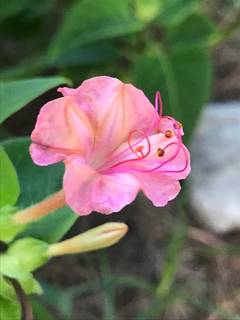
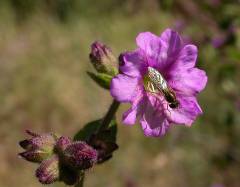
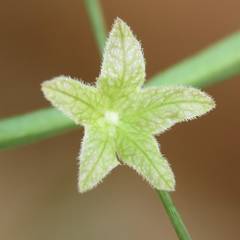
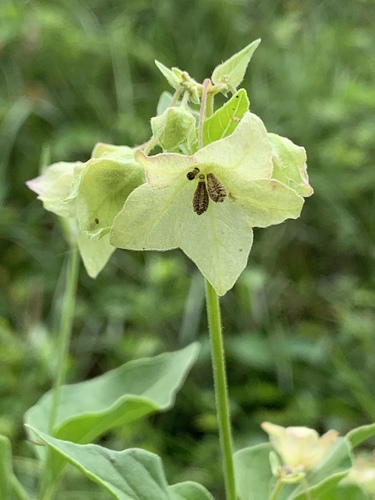
Mirabilis nyctaginea is an upright herbaceous perennial growing 1-4 ft (30-120 cm) tall from a thick, deep taproot, with smooth, branching stems that are swollen at the nodes. The opposite leaves are heart-shaped to triangular, 1.5-4 in (4-10 cm) long, on short stalks. Small pink to magenta flowers, about 0.3-0.4 in (8-10 mm) across, are grouped several together within a green, cup-shaped involucre that enlarges and becomes papery as the seeds develop. The flowers open in late afternoon and close by the following morning. The species is native to central North America, especially the Great Plains, and has spread eastward along roadsides, railways, and disturbed ground. It grows in USDA zones 3 to 8, tolerates drought and poor soils, and resprouts from its taproot, which makes it persistent and weedy where established. It self-seeds freely and can be difficult to remove once the taproot is set.
Native Range
Mirabilis nyctaginea is native to central North America, centered on the Great Plains from the Canadian prairies south into Texas and Mexico. It has spread east and west along roadsides, railways, and other disturbed ground beyond its original range.Suggested Uses
Used occasionally in prairie restorations and naturalistic dry plantings where its spread is acceptable, spaced 12-24 in (30-60 cm) apart. The late-day flowers attract moths and other evening pollinators.How to Identify
Appearance
Size & Dimensions
Height1' - 4'
Width/Spread1' - 2'
Bloom Information
Flowering occurs from late spring through late summer, roughly May to September. The pink to magenta flowers open in late afternoon and close the next morning, with new flowers opening over many weeks. The papery seed cups persist after bloom.
Detailed Descriptions
Flower Description
pink to magentaFoliage Description
greenGrowing Conditions
Sun Requirements
Requires 6-10 hours of direct sunlight daily
• Full Sun: 6+ hours of direct sunlight
• Partial Shade: 3-6 hours of direct sunlight
• Full Shade: Less than 3 hours of direct sunlight
Care & Maintenance
Care Guide
Mirabilis nyctaginea grows in full sun to part shade and a wide range of well-drained soils, including dry, rocky, and poor ground, with pH from 6.0 to 8.0. It is hardy in USDA zones 3 through 8 and tolerates heat and prolonged drought once established, drawing on its deep taproot. Water needs are low. It resprouts from the taproot each year and self-seeds freely, which makes it persistent and weedy in gardens and disturbed sites. The deep root makes established plants hard to dig out.Pruning
Cut back stems after flowering to limit prolific self-seeding before the seed cups ripen. Plants die back to the taproot in fall and resprout in spring. Pulling seedlings while young prevents the deep taproot from establishing.Pruning Schedule
Prune: September–October
fall