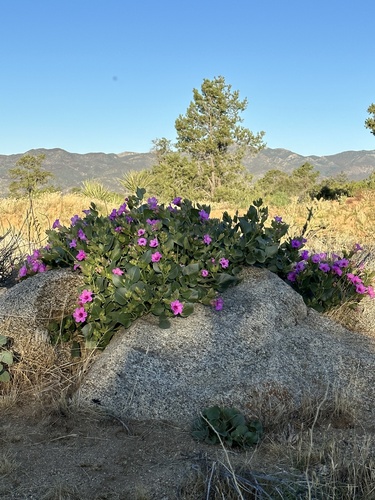
Mirabilis, Genus, spp., Multiple species,
- Genus
- Multiple species
four o'clocks
The Americas, centered in Mexico and the southwestern United States, extending through Central and South America
Overview
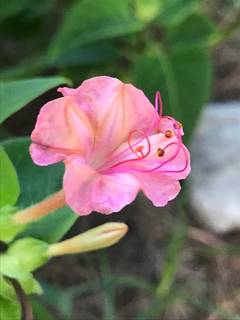
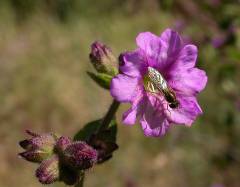
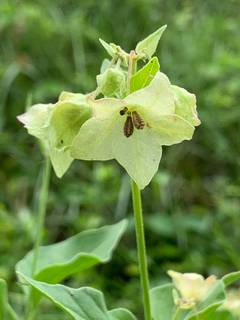
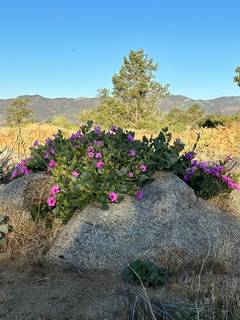
Mirabilis is a genus of about 60 species in the four o'clock family (Nyctaginaceae), native to the warmer parts of the Americas. The four o'clock seen most often in gardens, M. jalapa, forms a bushy mound of branching stems 1-4 ft (30-120 cm) tall and 1-3 ft (30-90 cm) wide, arising from a thick tuberous root that can persist for years in frost-free ground. Leaves are opposite, oval to heart-shaped, and 2-4 in (5-10 cm) long. The trumpet-shaped flowers, 1-2 in (2.5-5 cm) long, open in the late afternoon and stay open overnight, closing by the following morning, the habit that gives the genus its common name. Bloom color spans magenta, pink, red, yellow, and white, and a single plant can carry several colors at once, sometimes streaked or split within one flower. The flowers release a sweet scent at dusk that draws long-tongued moths and hummingbirds. Other species, such as the desert four o'clock M. multiflora of the southwestern United States, are lower and more drought-adapted. The seeds and tuberous roots of M. jalapa contain compounds that are poisonous if eaten. In cold regions the tops are killed by frost, and the plant is either lifted as a tuber or grown anew from seed each year.
Native Range
Mirabilis is native to the Americas, centered in Mexico and the southwestern United States with species reaching through Central America and into South America. M. jalapa originated in tropical South America and has naturalized in warm regions worldwide as a garden escape.Suggested Uses
Mirabilis grows in flower borders, cottage gardens, and large containers, and is planted near patios and entries where the evening scent carries. The bushy habit fills space as a temporary summer hedge or screen at 18-24 in (45-60 cm) spacing. M. multiflora and other desert species grow in dry gardens and naturalized plantings across the arid Southwest.How to Identify
Appearance
Size & Dimensions
Height1' - 4'
Width/Spread1' - 3'
Bloom Information
Flowers open from early summer until frost, roughly June to October, with each bloom lasting a single evening before fading by the next morning. New flowers open in the late afternoon day after day over the long season. The dusk opening and sweet scent draw hawkmoths and, in M. jalapa, hummingbirds.
Detailed Descriptions
Flower Description
magenta, pink, red, yellow, or white, often multicoloredFoliage Description
greenGrowing Conditions
Sun Requirements
Requires 6-10 hours of direct sunlight daily
• Full Sun: 6+ hours of direct sunlight
• Partial Shade: 3-6 hours of direct sunlight
• Full Shade: Less than 3 hours of direct sunlight
Care & Maintenance
Care Guide
Mirabilis grows in full sun and well-drained soil of average fertility at a pH of about 6.0 to 7.5. M. jalapa takes moderate water and tolerates heat and humidity, while desert species such as M. multiflora need sharp drainage and little water once established. In USDA zones 8-11 the tuberous root survives winter in the ground and resprouts; in colder zones the tuber can be lifted and stored, or the plant grown fresh from seed each year. Seeds sown after the last frost flower the first season. Plants self-seed freely and may spread where conditions suit them. Few pests affect the genus, though aphids and leaf-chewing insects occasionally appear.Pruning
Mirabilis needs little pruning. Pinching young stems once or twice in early summer encourages a denser, bushier mound. Cut frost-killed top growth to the ground in autumn, and shearing spent stems during the season limits the heavy self-seeding.Pruning Schedule
Prune: June & October
summerfall
Container Growing
Suitable for container growing
Minimum container size: 3 gallons