Mimulus, Genus, alatus, Species,
- Genus & species
sharpwing monkeyflower
Overview
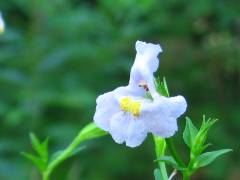
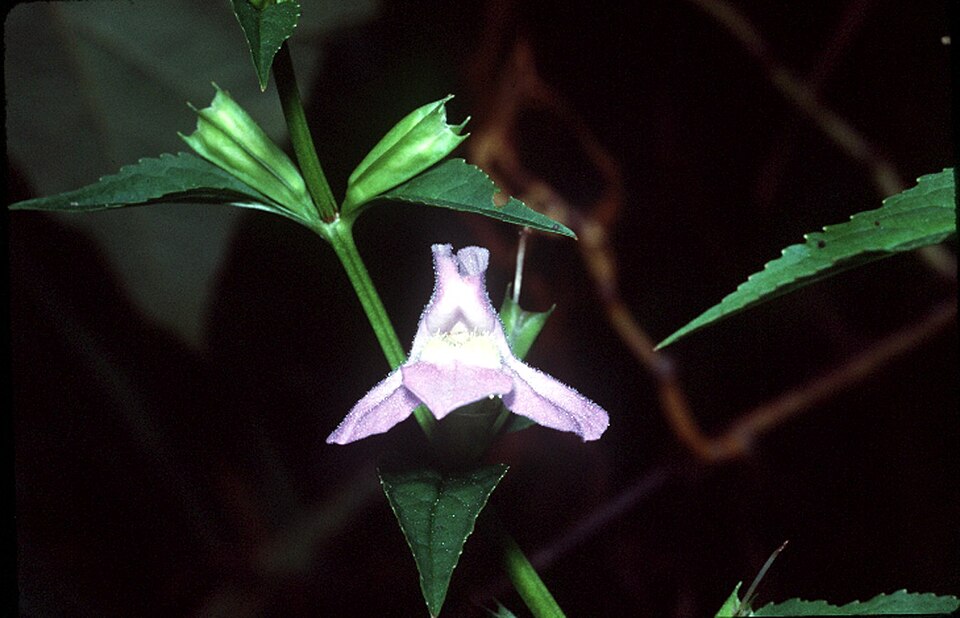
Mimulus alatus is a herbaceous perennial reaching 1-3 feet (30-90 cm) tall, forming colonies from short rhizomes. Stems are square in cross-section with narrow wings running along the four angles. Leaves are opposite, ovate to lance-shaped, 2-4 inches (5-10 cm) long, with toothed margins and petioles 0.4-1 inch (1-2.5 cm) long. Two-lipped flowers appear singly in the leaf axils on pedicels 0.2-0.6 inch (5-15 mm) long from June through September. Each flower is about 1 inch (2.5 cm) long, lavender to violet, with a paler throat marked yellow. The five-lobed corolla has two upper lobes and three lower lobes, the throat nearly closed by a raised palate. Flowers are followed by capsules enclosed in the tubular calyx, releasing numerous small seeds. Foliage dies back to the ground after the first hard frost. Growth is upright, with plants spreading 1-2 feet (30-60 cm) over two to three seasons. In standing water or saturated soil the species persists; in drier garden beds the lower leaves yellow and drop during summer dry spells, and flowering is reduced.
Native Range
Native to eastern and central North America from Ontario and Connecticut south to Florida and Texas. Grows in swamps, wet woodlands, stream banks, and marsh edges in saturated, mucky, or seasonally flooded soils at low elevations.Suggested Uses
Planted in rain gardens, pond and stream margins, and bog gardens at 12-18 inch (30-45 cm) spacing. Suited to consistently wet sites where many border perennials decline; not suited to dry beds. Spreads to fill saturated ground over two to three seasons.How to Identify
Appearance
Size & Dimensions
Height1' - 3'
Width/Spread1' - 2'
Bloom Information
Blooms June through September across most of its range, with peak flowering in July and August. Individual flowers last 2-4 days; the axillary flowers open progressively up the stem over 6-10 weeks. Flowering decreases where soil dries during summer.
Detailed Descriptions
Flower Description
lavender to violetFoliage Description
greenGrowing Conditions
Sun Requirements
Requires 4-8 hours of direct sunlight daily
• Full Sun: 6+ hours of direct sunlight
• Partial Shade: 3-6 hours of direct sunlight
• Full Shade: Less than 3 hours of direct sunlight
Care & Maintenance
Care Guide
Grows in consistently moist to saturated soil in full sun to part shade. Water to keep soil wet during establishment and through the growing season; foliage wilts and lower leaves drop during drought. Plants self-seed and spread by rhizomes, forming colonies in suitable wet sites. Aphids occasionally cluster on stem tips in spring. Powdery mildew develops on foliage in crowded plantings with poor air circulation late in the season. Cut back dead stems after frost or in early spring.Pruning
Cut stems to ground level after the first hard frost or in early spring before new growth emerges. No other pruning is needed. Removing spent flower stalks during the season reduces self-seeding.Pruning Schedule
Prune: March
early springfall