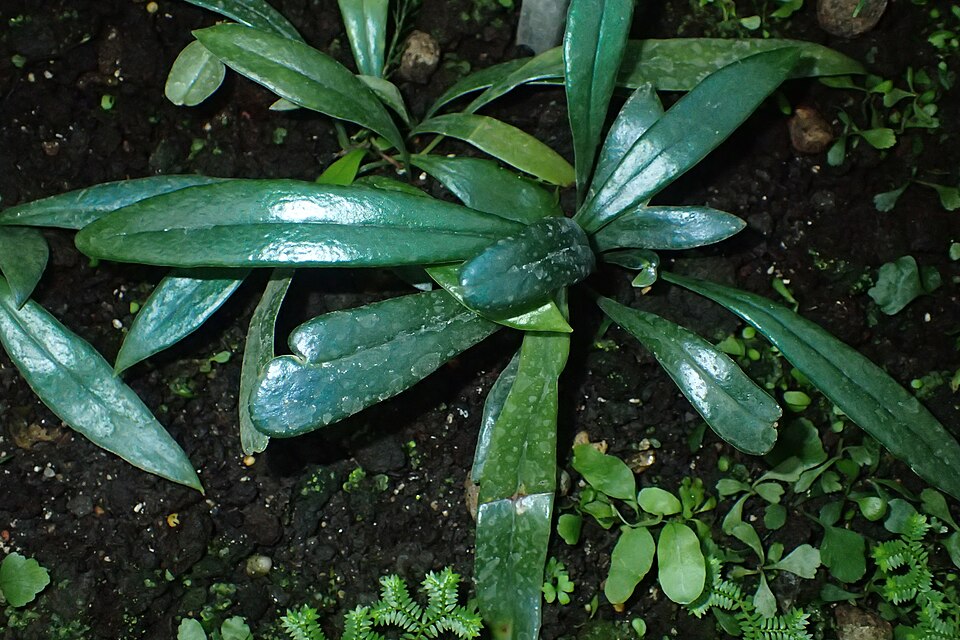
Microsorum, Genus, thailandicum, Species,
- Genus & species
blue oil fern
Limestone karst formations of eastern Thailand, southern Cambodia, northern Vietnam
Overview
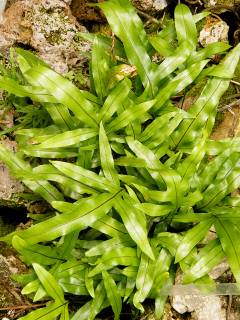
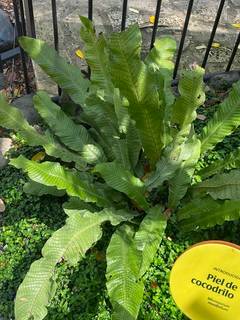
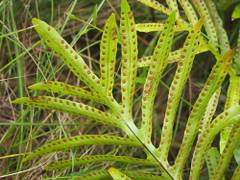
Blue oil fern is a small evergreen tropical fern with strap-shaped fronds 6-12 inches (15-30 cm) long and 0.5-1 inch (1.3-2.5 cm) wide growing from a creeping rhizome that runs along moist substrates. Fronds are simple, undivided, leathery, and dark green when viewed in direct light; under low or angled light the leaf surface displays vivid metallic blue iridescence created by structural coloration in the cell walls. The blue iridescence diminishes as fronds mature beyond 12-18 months, with older fronds appearing solid dark green. Rhizomes are 0.2-0.4 inch (5-10 mm) thick, scaly with golden-brown hairs, and root sparingly into the substrate. New fronds emerge bronze-pink before transitioning to green-blue. Spore-bearing sori develop in linear rows along the underside of mature fronds during summer months. The species was first described in 1989 from Khao Soi Dao Wildlife Sanctuary in eastern Thailand. Plants spread 8-12 inches (20-30 cm) per year by rhizome extension under optimal conditions. Foliage browns and drops below 55°F (13°C) within 1-2 weeks.
Native Range
Native to limestone karst formations of eastern Thailand, southern Cambodia, and northern Vietnam at elevations of 1,000-3,500 feet (300-1,070 m), where M. thailandicum grows as a lithophyte on shaded moss-covered rocks under closed-canopy rainforest.Suggested Uses
Grown indoors in 4-6 inch (10-15 cm) shallow pots, terrariums, or hanging mounts on cork or moss in fern cases and Wardian cabinets. Used in tropical conservatories where humidity exceeds 70 percent and temperatures stay between 70-80°F (21-27°C). Cultivated by fern collectors and indoor plant enthusiasts for the metallic blue iridescence; commercial availability remains limited due to slow propagation rates and specific humidity requirements.How to Identify
Appearance
Size & Dimensions
Height6" - 1'
Width/Spread8" - 1'
Bloom Information
As a fern, this species does not flower. Spore-bearing sori develop in linear rows along the underside of mature fronds during summer months under stable conditions of 70-80°F (21-27°C) and high humidity. Spores are minute, 30-50 micrometers in diameter, and dispersed in late summer.
Detailed Descriptions
Foliage Description
Dark green with metallic blue iridescence under low lightGrowing Conditions
Sun Requirements
Tolerates up to 3 hours of direct sunlight daily
• Full Sun: 6+ hours of direct sunlight
• Partial Shade: 3-6 hours of direct sunlight
• Full Shade: Less than 3 hours of direct sunlight
Care & Maintenance
Care Guide
Water when the top 0.5 inch (1.3 cm) of soil dries; the rhizome rots within 5-7 days under saturated conditions but suffers within 3-4 days under prolonged drought. Maintain bright indirect light at 800-1,500 foot-candles to develop blue iridescence; light above 2,000 foot-candles bleaches the structural color and direct sun burns fronds within hours. Hold temperatures of 70-80°F (21-27°C) and humidity above 70 percent; foliage browns at humidity below 50 percent. Fertilize monthly with balanced 20-20-20 at quarter strength during active growth from spring through fall. Repot every 2-3 years into chunky bark-based mix or sphagnum moss; the shallow rhizome system suits wide shallow pots. Slugs and snails feed on young fronds in greenhouse conditions.Pruning
Remove yellowed or browning fronds at the rhizome attachment year-round. Divide rhizomes in spring by cutting sections with at least 3-5 mature fronds and intact roots. New rhizome divisions establish within 6-10 weeks under high humidity above 70 percent.Container Growing
Suitable for container growing
Minimum container size: 1 gallons