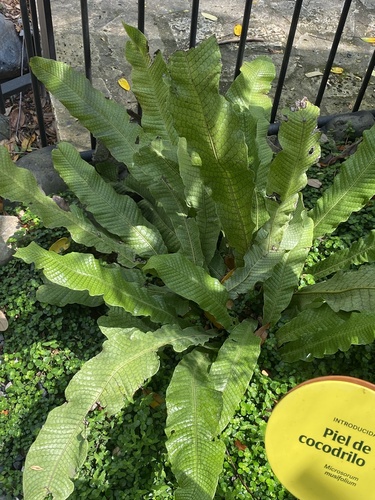
Microsorum, Genus, musifolium, Species,
- Genus & species
crocodile fern
Insular Southeast Asia (Philippines, Borneo, Sulawesi)
Overview
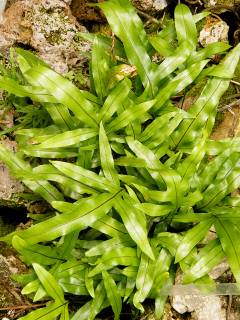
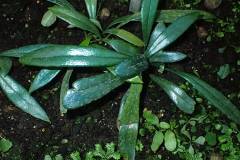
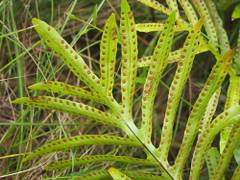
Microsorum musifolium is an epiphytic fern in the polypody family (Polypodiaceae), reaching 18-36 inches (45-90 cm) tall and 24-36 inches (60-90 cm) wide. Strap-shaped fronds are 12-30 inches (30-75 cm) long and 3-5 inches (8-13 cm) wide, with a glossy bright to medium green surface marked by a pattern of darker green netted veins that resembles crocodile skin or banana-leaf venation. Fronds are simple (undivided) and arise singly from a creeping rhizome covered with brown scales. Sori (spore clusters) are round, brown, and arranged in two rows on either side of the midrib on mature fronds. Native to humid lowland and mid-elevation rainforests of the Philippines, Borneo, Sulawesi, and other parts of insular Southeast Asia, where it grows on tree branches and rotting logs. Hardy outdoors only in zones 10-11; foliage damage occurs below 50°F (10°C). Indoor culture in any zone in bright indirect light, in a chunky bark-based mix or epiphyte mount. Slow-growing — 2-4 inches (5-10 cm) of new frond extension per season. Tolerates lower light at the cost of slower growth and paler venation patterns. Non-toxic to humans, dogs, and cats. Brown frond edges develop in dry indoor air below 40 percent relative humidity.
Native Range
M. musifolium is native to humid lowland and mid-elevation rainforests of the Philippines, Borneo, Sulawesi, and other parts of insular Southeast Asia, where it grows as an epiphyte on tree branches and decaying logs at 0-3,000 feet (0-900 m) elevation.Suggested Uses
Grown indoors as a foliage plant in any zone in bright indirect light, in 1-3 gallon (4-11 L) shallow pots or mounted on bark slabs. Used outdoors in zones 10-11 as a shaded understory or epiphytic specimen. Non-toxic to humans and pets.How to Identify
Appearance
Size & Dimensions
Height1'6" - 3'
Width/Spread2' - 3'
Bloom Information
Ferns reproduce by spores rather than flowers. Round brown sori in two rows along the midrib of mature fronds release spores year-round in tropical conditions, with peak release in summer. Spore production is rare on indoor specimens.
Detailed Descriptions
Foliage Description
Glossy bright to medium green with darker green netted vein patternGrowing Conditions
Sun Requirements
Needs bright indirect light. Keep it out of direct sun, which can scorch the leaves.
• Bright indirect light: a bright spot near a window, with no direct sun on the leaves
Care & Maintenance
Care Guide
Bright indirect light indoors; outdoors, dappled shade in zones 10-11. Direct sun scorches fronds and bleaches the green color within 2-4 weeks. Soil pH 5.5-6.5, in a chunky orchid-bark and perlite mix with the rhizome left at the surface; rhizome rot follows burial. Water when the top inch (2.5 cm) of medium dries; reduce frequency in winter. Brown frond margins develop below 40 percent relative humidity in heated indoor air. Non-toxic to humans, dogs, and cats.Pruning
Cut older damaged fronds at the rhizome with clean scissors as new fronds emerge. Older fronds yellow and dry naturally over 1-2 years. Divide overgrown rhizomes in spring by separating sections each carrying 3-5 fronds.Container Growing
Suitable for container growing
Minimum container size: 1 gallons