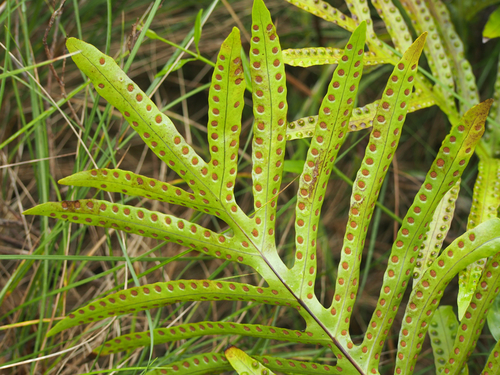
Microsorum, Genus, spp., Multiple species,
- Genus
- Multiple species
snakeferns
Tropical Asia, Australia, and the Pacific islands
Overview
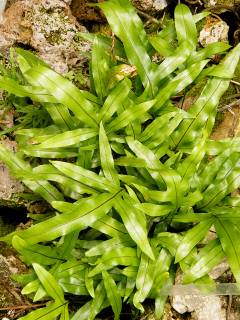
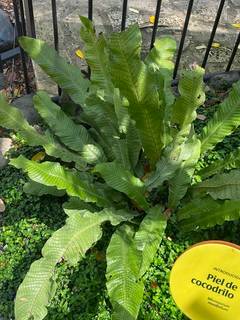
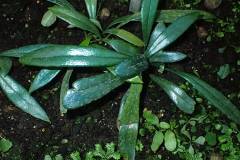
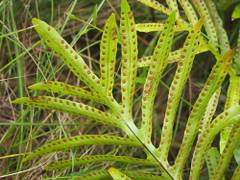
Microsorum is a genus of tropical ferns in the polypody family, native to Asia, Australia, and the islands of the Pacific. Most species are epiphytes or lithophytes, growing on tree trunks, rocks, and forest floors from a creeping, wiry rhizome that clings to surfaces by slender roots. The fronds vary widely between species, from simple, strap-shaped blades 1 to 4 feet (30 to 120 cm) long in M. punctatum to the broad, puckered, crocodile-skin foliage of M. musifolium and the lobed, branching fronds of the aquarium plant M. pteropus, or Java fern. New fronds unfurl from the rhizome, and the undersides carry rounded clusters of spore cases (sori) scattered across the blade or in rows. As tropical plants the genus is frost-tender and needs warmth and high humidity, browning quickly in dry air. Like other ferns, plants reproduce by spores rather than flowers.
Native Range
Microsorum is native to the tropics and subtropics of the Old World, ranging from tropical Asia and southern China through Malesia to Australia and the Pacific islands. Species grow in warm, humid forests as epiphytes on trees, as lithophytes on shaded rocks, and along streambanks. M. pteropus grows submerged or emergent along tropical watercourses.Suggested Uses
Grown as a houseplant, in shaded tropical and subtropical gardens, on mounted bark and in hanging baskets, and, in the case of M. pteropus, as an aquarium and pond plant. Epiphytic species are attached to trees, logs, and walls. Plants are set 12 to 24 inches (30 to 60 cm) apart as a shaded groundcover.How to Identify
Appearance
Size & Dimensions
Height1' - 4'
Width/Spread1' - 3'
Bloom Information
Ferns do not flower. Microsorum reproduces by spores borne in rounded sori on the underside of mature fronds, produced through the warm growing season. In cultivation plants are more often increased by dividing the creeping rhizome.
Detailed Descriptions
Foliage Description
greenGrowing Conditions
Sun Requirements
Needs bright indirect light. Keep it out of direct sun, which can scorch the leaves.
• Bright indirect light: a bright spot near a window, with no direct sun on the leaves
Care & Maintenance
Care Guide
Plants grow in bright, indirect light to shade and need warmth, steady moisture, and high humidity; cold drafts and dry air cause browning of the frond margins. Epiphytic species are grown on bark, in coarse, free-draining mixes of bark and peat, or in containers, rather than in dense garden soil. The rhizome is left sitting on the surface, as burying it leads to rot. Watering keeps the medium evenly moist but not waterlogged, easing off in cool weather. M. pteropus grows attached to wood or rock in aquariums and slow streams. Scale and mealybugs are the main pests.Pruning
Pruning is limited to removing old, browned, or damaged fronds at the rhizome. The creeping rhizome is divided to propagate plants and to limit their spread. No woody pruning applies.Container Growing
Suitable for container growing
Minimum container size: 2 gallons