Micranthes, Genus, virginiensis, Species,
- Genus & species
Virginia saxifrage
Overview
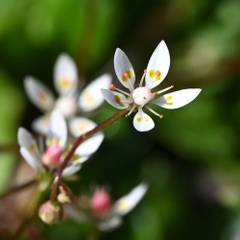
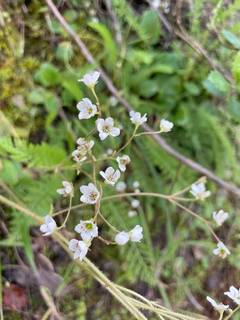
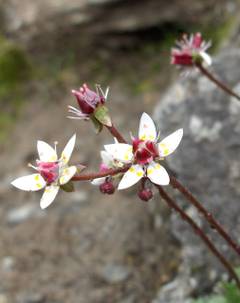
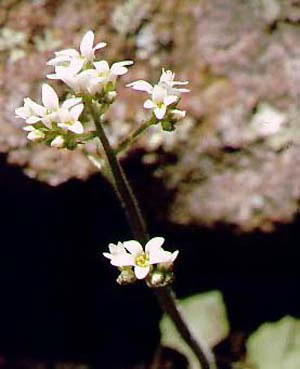
Micranthes virginiensis is a low perennial in the saxifrage family, forming a basal rosette of spoon-shaped to oval leaves 1-3 inches (2.5-7.5 cm) long with toothed margins. In early spring it sends up a leafless, hairy flowering stalk 4-12 inches (10-30 cm) tall that branches into an open cluster of small white flowers. Each bloom is about 0.25 inch (6 mm) across with five white petals and ten orange-tipped stamens. As the season warms the flower stalk elongates and the rosette persists at ground level. The plant grows from a short rhizome and roots into thin soil over rock. Native to eastern North America, it occupies moist ledges, cliff seeps, rocky woodland slopes, and stream banks, often where little else takes hold. It tolerates shallow, rocky soils but needs spring moisture and cool conditions. Foliage may go semi-dormant in summer heat. Plants spread slowly into small colonies and self-sow into rock crevices.
Native Range
Native to eastern North America, from eastern Canada south to Georgia and west toward the Great Plains. It grows on moist rock ledges, cliff seeps, woodland slopes, and stream banks.Suggested Uses
Micranthes virginiensis is grown in shaded rock gardens, crevice gardens, and native woodland plantings, and naturalizes on stone walls and ledges. Its early flowers draw small bees and other spring pollinators.How to Identify
Appearance
Size & Dimensions
Height4" - 1'
Width/Spread4" - 8"
Bloom Information
Flowers open from March to May, among the earliest blooms of spring. The cluster opens over two to three weeks as the stalk lengthens. Small dry capsules follow, releasing seed in early summer.
Detailed Descriptions
Foliage Description
greenGrowing Conditions
Sun Requirements
Requires 2-6 hours of direct sunlight daily
• Full Sun: 6+ hours of direct sunlight
• Partial Shade: 3-6 hours of direct sunlight
• Full Shade: Less than 3 hours of direct sunlight
Care & Maintenance
Care Guide
Micranthes virginiensis grows in part shade to full shade in cool, moist, rocky or gravelly soils with sharp drainage. It needs steady spring moisture but tolerates summer dryness once the rosette hardens off. The plant suits shaded rock gardens, crevices, and woodland edges. It needs little feeding and declines in heavy, wet soils in winter. Division of established clumps in fall or early spring renews vigor.Pruning
No pruning is needed. Spent flower stalks can be removed after seed drops for a tidier look. Damaged or dead leaves can be cleared from the rosette in spring.Container Growing
Suitable for container growing
Minimum container size: 1 gallons