Micranthes, Genus, spp., Multiple species,
- Genus
- Multiple species
early saxifrages
Arctic and temperate northern hemisphere
Overview
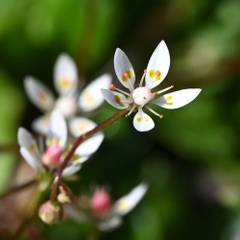
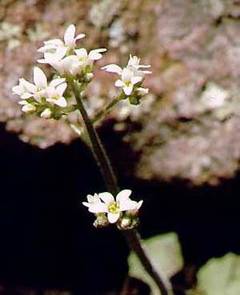
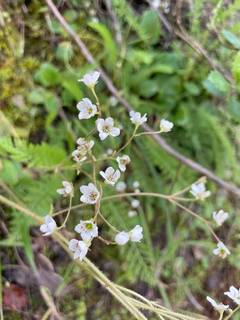
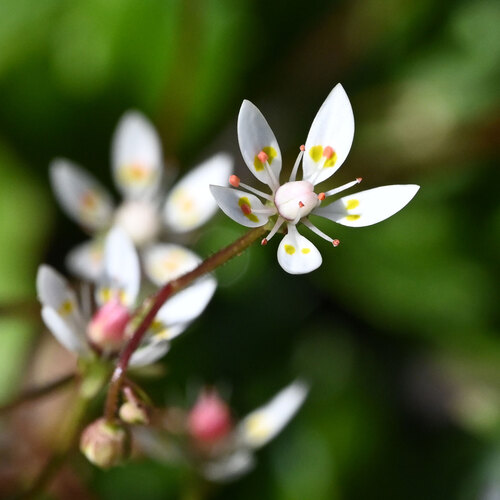
Micranthes is a genus of roughly 70 to 80 species of perennial herbs in the saxifrage family Saxifragaceae, recently separated from the broader genus Saxifraga. The genus is spread across the cooler regions of the northern hemisphere, from arctic tundra and alpine ledges to woodland and moist rocky slopes in North America and Asia. Plants form a basal rosette of fleshy or leathery leaves 1-6 in (2.5-15 cm) long, with toothed or scalloped margins and little or no leaf on the flowering stem. A single leafless scape rises 4-16 in (10-40 cm) and carries an open branched cluster of small five-petalled flowers, usually white and sometimes flushed with green, yellow, or purple, with conspicuous orange or red anthers. Flowering comes early in the season, often among the first blooms after snowmelt, which gives the group the name early saxifrage. The genus grows in thin, gritty, moisture-retentive soils over rock and is intolerant of heat and prolonged drought. Many species are arctic or high-alpine and need cool summers to persist. M. virginiensis of eastern North America is one of the species occasionally grown in rock and woodland gardens.
Native Range
The genus is distributed across the arctic and temperate northern hemisphere, with centres of diversity in North America and eastern Asia. Species occupy tundra, alpine rock ledges, montane meadows, and moist woodland from the Arctic south to the mountains of the United States and China.Suggested Uses
Micranthes is grown in alpine troughs, scree beds, shaded rock gardens, and woodland edges in cool-climate gardens. Plants are spaced 4-8 in (10-20 cm) apart in groups. The early white flowers combine with other spring alpines and dwarf bulbs.How to Identify
Appearance
Size & Dimensions
Height4" - 1'4"
Width/Spread4" - 10"
Bloom Information
Micranthes flowers early, often immediately after snowmelt in spring or early summer depending on altitude and latitude. The flowering cluster opens over two to four weeks. Dry capsules follow and release small seeds.
Detailed Descriptions
Flower Description
white, sometimes tinged green, yellow, or purpleFoliage Description
greenGrowing Conditions
Sun Requirements
Requires 3-6 hours of direct sunlight daily
• Full Sun: 6+ hours of direct sunlight
• Partial Shade: 3-6 hours of direct sunlight
• Full Shade: Less than 3 hours of direct sunlight
Care & Maintenance
Care Guide
Grow Micranthes in part shade to full sun in cool climates, in gritty, humus-rich soil that stays moist but drains freely, with a pH of 5.5-7.0. The genus needs cool summers and steady moisture and declines quickly in heat, humidity, and drought. Top-dress around the rosettes with grit to keep the crown dry and prevent rot. Most species are fully cold-hardy and tolerate hard frost and snow cover. Division in early spring or sowing of fresh seed are the usual means of increase. The genus suits alpine troughs, raised beds, and shaded rock gardens rather than warm lowland borders.Pruning
Micranthes needs no pruning. Spent flowering stalks are cut or pulled away after the seed is shed. Dead or rotted leaves are removed from the rosette to limit fungal problems.Container Growing
Suitable for container growing
Minimum container size: 1 gallons