Metzgeria, Genus, furcata, Species,
- Genus & species
forked veilwort
Europe and temperate-to-tropical regions worldwide
SunPart Shade – Full Shade
WaterHigh
Overview
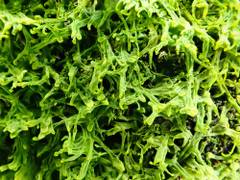
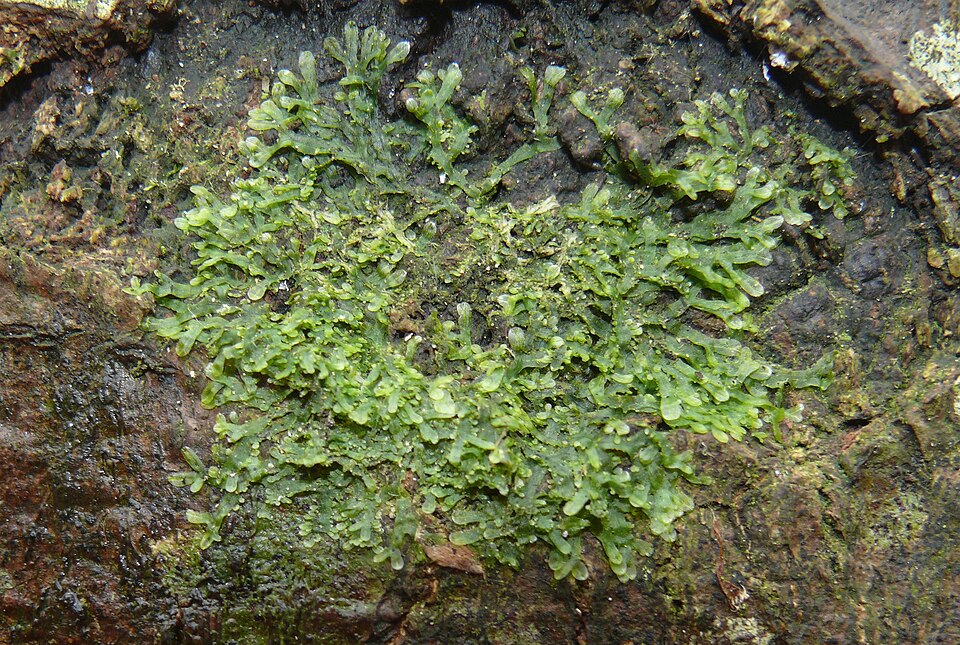
Metzgeria furcata is a thallose liverwort of the family Metzgeriaceae that forms flat, pale to mid-green ribbons pressed against bark and rock. Each thallus is about 0.02-0.04 inch (0.5-1 mm) wide, strap-shaped with a distinct central midrib, and branches repeatedly in a regular forked pattern that gives the plant its name. The margins and underside of the midrib carry scattered slender bristles, and the plant attaches by colourless rhizoids along the midrib rather than by roots. It spreads outward into thin, lace-like mats and also reproduces by marginal gemmae and, less often, by spores from short-stalked capsules. It grows on the trunks and branches of trees, on shaded rocks, and on walls in humid, sheltered places, drawing moisture from rain and damp air. Native across Europe and widespread elsewhere in temperate and tropical regions, it is a frequent thallose liverwort on bark in the British Isles. It is sensitive to drought and air pollution, thinning where bark dries out or where air quality is poor.
Native Range
Metzgeria furcata is native to Europe and occurs widely across temperate and tropical regions of the world. It is a frequent epiphyte on trees and shaded rock throughout the British Isles.Suggested Uses
Forms part of bark and rock epiphyte communities and is used in bryophyte surveys as an indicator of humid, unpolluted conditions. The thin mats hold surface moisture and shelter micro-invertebrates.How to Identify
Appearance
Bloom Information
As a liverwort it reproduces by spores and by marginal gemmae rather than flowers. Spore capsules are infrequent, borne on short, pale stalks mainly in spring, while gemmae form along the thallus margins through the year.
Detailed Descriptions
Foliage Description
pale to mid-greenGrowing Conditions
Sun Requirements
• Full Sun: 6+ hours of direct sunlight
• Partial Shade: 3-6 hours of direct sunlight
• Full Shade: Less than 3 hours of direct sunlight
Water & Climate
Water Needs