Mertensia, Genus, platyphylla, Species,
- Genus & species
broadleaf bluebell
Overview
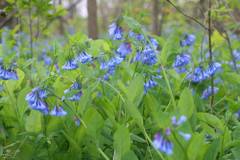
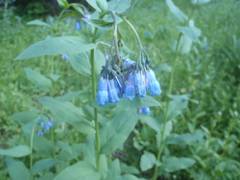
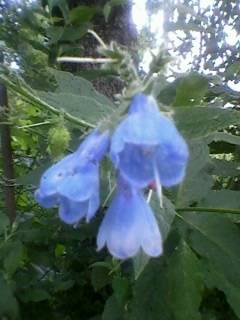
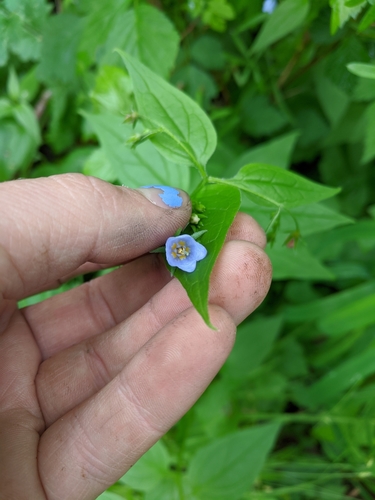
Mertensia platyphylla is a herbaceous perennial in the borage family, reaching 18-36 inches (45-90 cm) tall and 18-30 inches (45-75 cm) wide from a stout rhizome. Stems erect, branching above, smooth or sparsely hairy. Leaves alternate, broadly ovate to elliptic, 3-6 inches (7.5-15 cm) long, medium green and slightly rough above with prominent venation; lower leaves stalked, upper leaves sessile and clasping. Flowers tubular-funnelform, 0.4-0.6 inch (10-15 mm) long, opening pink in bud and turning sky blue when open, borne in nodding terminal cymes from April through June. Stamens project from the corolla mouth, separating this genus from Pulmonaria. Foliage is summer-deciduous in dry sites and persists through August in moist conditions. Plants spread slowly by short rhizomes to form clumps 2-3 feet (60-90 cm) wide in 5-7 years; established stands can be slow to recolonize after disturbance.
Native Range
Native to moist coniferous and mixed forests, streambanks, and shaded riparian terraces in the Pacific Northwest from southwestern British Columbia south through western Washington to northwestern Oregon, primarily west of the Cascade crest at elevations from sea level to 3,500 feet (1,070 m).Suggested Uses
Planted in shaded woodland borders, native plant gardens, and moist rain garden margins at 18-24 inch (45-60 cm) spacing in zones 6-9. Combines with native ferns, Tiarella trifoliata, and Trillium ovatum in PNW woodland plantings. Grows in containers of at least 3 gallons (11 L) with consistently moist humus-rich potting mix; struggles in conventional bagged mixes that dry quickly between waterings.How to Identify
Appearance
Size & Dimensions
Height1'6" - 3'
Width/Spread1'6" - 2'6"
Bloom Information
April through June across the species range, with peak bloom in May. In low-elevation western Washington and Oregon, bloom may begin in mid-March; in higher-elevation Cascade foothills, bloom may extend into July. Individual cymes open over 2-3 weeks; total stand bloom lasts 6-8 weeks. The pink-to-blue color shift occurs as flowers age, producing two-tone inflorescences during peak bloom.
Detailed Descriptions
Flower Description
Pink in bud, opening sky blueFoliage Description
Medium green, slightly roughGrowing Conditions
Sun Requirements
Requires 2-4 hours of direct sunlight daily
• Full Sun: 6+ hours of direct sunlight
• Partial Shade: 3-6 hours of direct sunlight
• Full Shade: Less than 3 hours of direct sunlight
Care & Maintenance
Care Guide
Establishes within 1-2 growing seasons in deep humus-rich woodland soil with weekly water through the first summer. Mature plants tolerate 2-3 weeks without rain but go dormant earlier in dry summers; foliage may disappear by July in xeric sites. Powdery mildew develops on lower leaves in late summer in still-air sites; affected leaves are removed at the base. Slugs and snails feed on emerging spring shoots. Plants do not transplant well after their second year due to deep rhizome attachment; division is most successful in autumn after foliage senescence. Self-sown seedlings appear at 2-5 per parent plant per year in moist garden soil.Pruning
Cut spent flowering stems at the base after seed has dispersed in July. Yellowing summer foliage is left to die back naturally; removal before complete senescence reduces nutrient return to the rhizome. Divide congested clumps in early autumn every 5-7 years if flowering declines.Pruning Schedule
Prune: July
summer
Container Growing
Suitable for container growing
Minimum container size: 3 gallons