Mertensia, Genus, virginica, Species,
- Genus & species
Virginia bluebells
Eastern North America from Quebec south to Georgia and west to Kansas
Overview
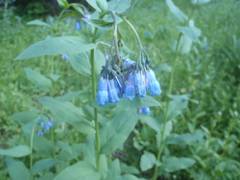
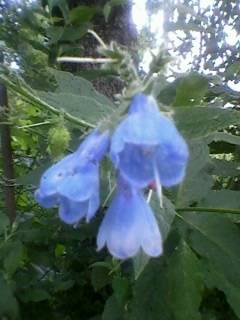
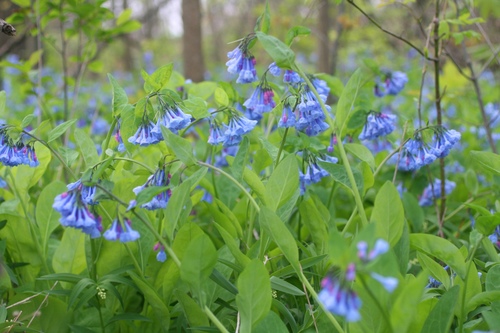
Mertensia virginica is a clump-forming herbaceous perennial reaching 18-24 inches (45-60 cm) tall and 18-24 inches (45-60 cm) wide at peak spring growth. The plant is a spring ephemeral: it emerges in late March, flowers in April and early May, and goes fully dormant by late June. Stems are fleshy and slightly arching, holding alternate leaves 2-4 inches (5-10 cm) long, oval, blue-green with smooth surfaces. Flowers open in nodding terminal clusters of 8-15 buds; pink in bud, opening to clear sky-blue, trumpet-shaped, 0.75-1 inch (19-25 mm) long. Pink-bud and blue-flower stages overlap during the 2-3 week peak bloom period. Plants self-seed moderately under suitable woodland conditions and form colonies over 5-10 years. Foliage yellows and dies back by mid-June; the bare patch left in the garden is large enough to need companion plantings of summer-emerging perennials. Plants are slow to grow from seed, taking 3-4 years to first flower; division of dormant rhizomes in late summer typically produces flowers in the following spring.
Native Range
Mertensia virginica is native to rich moist woods, floodplains, and bottomland forests of eastern North America from Quebec south to Georgia and west to Kansas, with greatest abundance in the Appalachian and Ohio River valleys. The species is a true spring ephemeral, completing its annual life cycle before tree canopies leaf out.Suggested Uses
Used in shaded woodland gardens, naturalized native plant collections, and dappled shade beneath deciduous trees, spaced 12-18 inches (30-45 cm) apart. Companion plantings of summer-emerging hostas, ferns, or Astilbe fill the bare ground left by mid-June dormancy. Container culture is workable in 3-gallon (11 L) pots with consistent moisture during spring; container plants typically follow the same dormancy pattern as in-ground specimens.How to Identify
Appearance
Size & Dimensions
Height1'6" - 2'
Width/Spread1'6" - 2'
Bloom Information
Flowers open from early April through early May in zones 5-7, with peak bloom over 2-3 weeks. In zones 3-4, bloom may begin in late April and finish by late May. In zones 8, bloom may begin in mid-March and finish by mid-April. Pink-bud and blue-flower stages overlap across the bloom period.
Detailed Descriptions
Flower Description
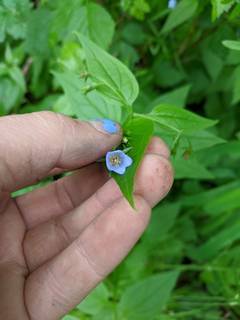
pink in bud opening to clear sky-blueFoliage Description
smooth blue-greenGrowing Conditions
Sun Requirements
Requires 2-6 hours of direct sunlight daily
• Full Sun: 6+ hours of direct sunlight
• Partial Shade: 3-6 hours of direct sunlight
• Full Shade: Less than 3 hours of direct sunlight
Care & Maintenance
Care Guide
Water deeply at least once weekly during active spring growth; once dormant in late June, supplemental watering is unnecessary. Mature plants tolerate spring flooding for short periods and grow under woodland conditions with deep leaf-mold soils. Apply 1-2 inches (2.5-5 cm) of leaf compost in early spring as new shoots emerge to mimic the natural duff layer. Slugs and snails feed on emerging shoots in cool wet springs in zones 5-7. Crown rot can develop in heavy clay or persistently wet soils outside the spring growing season. The location of dormant rhizomes is typically marked at planting, since the bare ground gives no indication of crown placement during summer.Pruning
No pruning is required. Yellowing foliage in late spring is left in place to senesce naturally; cutting it back early reduces storage reserves for the following spring's bloom. Spent flower stems can be removed after seed set in late May to reduce self-seeding in formal plantings.Pruning Schedule
Prune: June
summer
Container Growing
Suitable for container growing
Minimum container size: 3 gallons