Melaleuca, Genus, quadrifida, Species,
- Genus & species
one-sided bottlebrush
Overview
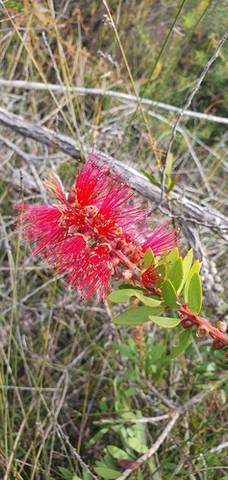
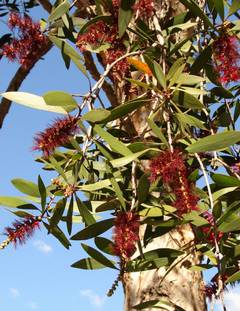
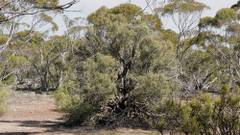
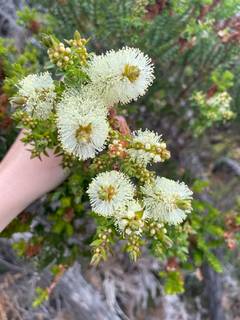
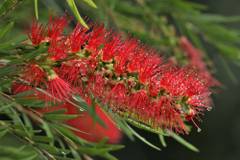
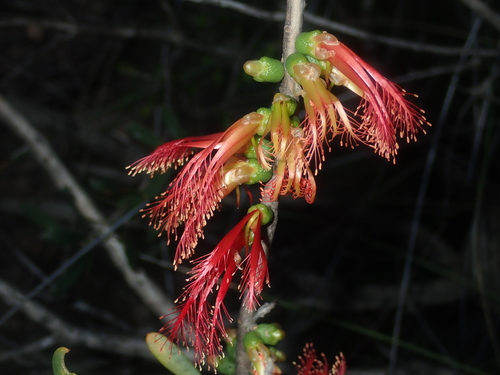
Melaleuca quadrifida (formerly Calothamnus quadrifidus) is an evergreen shrub 3-10 feet (1-3 m) tall and 5-8 feet (1.5-2.4 m) wide, with a bushy, sometimes spreading habit. The crowded grey-green leaves are needle-like and 0.4-1.6 inches (1-4 cm) long, ending in a slender point. Red flowers appear mainly in spring, grouped along one side of the older stems in claw-shaped clusters; each flower is made of bundles of red stamens 0.8-1.2 inches (2-3 cm) long rather than broad petals. The nectar-rich flowers draw honeyeaters and other birds. Woody cup-shaped fruit cluster along the stems and can stay on the plant for years. It is native to southwestern Western Australia, where it grows on sandy and gravelly soils in heath and open woodland. Established plants tolerate drought, wind, and poor soil but are damaged by hard frost and can grow woody and open at the base with age.
Native Range
Melaleuca quadrifida is native to southwestern Western Australia, where it grows on sandy, gravelly, and lateritic soils in heath, shrubland, and open woodland.Suggested Uses
Grown as an informal screen or windbreak, in dry-climate and coastal gardens, and in bird-attracting and habitat plantings for its spring nectar flowers. Suited to low-water and native gardens on free-draining soils.How to Identify
Appearance
Size & Dimensions
Height3' - 10'
Width/Spread5' - 8'
Colors
Bloom Information
Flowering is heaviest in spring, mainly August to November in its native range, with scattered flowers at other times. The red claw-like flower clusters form on the older wood along one side of the stems. Woody fruits develop after flowering and remain for several years.
Detailed Descriptions
Foliage Description
grey-greenGrowing Conditions
Sun Requirements
Requires 6-12 hours of direct sunlight daily
• Full Sun: 6+ hours of direct sunlight
• Partial Shade: 3-6 hours of direct sunlight
• Full Shade: Less than 3 hours of direct sunlight
Care & Maintenance
Care Guide
Melaleuca quadrifida grows in full sun in well-drained sandy, gravelly, or loamy soil and tolerates lime as well as acid ground. Once established it withstands drought, coastal wind, and long dry spells with little or no watering. It accepts light frost but is damaged by hard freezes. Plants can grow woody and open at the base over time, and pruning after flowering keeps them denser. It is propagated from seed or from semi-hardwood cuttings.Pruning
Pruning after flowering, cutting into the leafy growth rather than bare wood, keeps the shrub compact and brings on new flowering stems. Plants tolerate fairly hard trimming while still carrying foliage but are slow to reshoot from leafless old wood. Light yearly pruning prevents the open, woody base that develops on neglected plants.Container Growing
Suitable for container growing
Minimum container size: 7 gallons