Melaleuca, Genus, linearis, Species,
- Genus & species
narrow-leaved bottlebrush
Overview
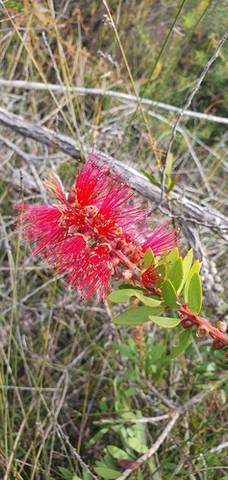
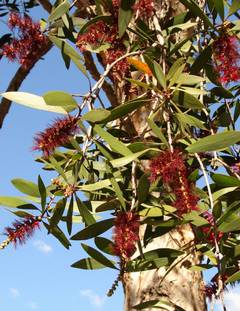
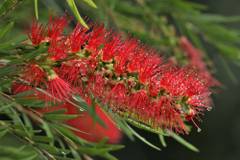
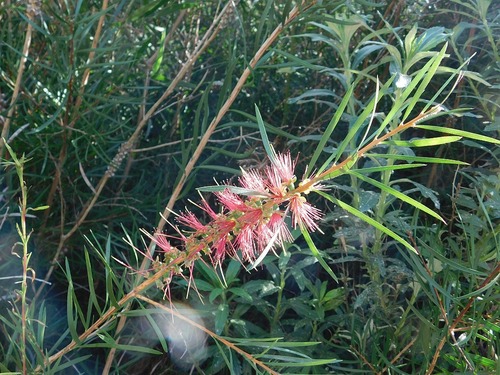
Melaleuca linearis (formerly Callistemon linearis) is an evergreen shrub 5-10 feet (1.5-3 m) tall and wide, with stiff, narrow linear leaves 1.6-5 inches (4-13 cm) long and about 0.04-0.08 inch (1-2 mm) wide, ending in a sharp point. In late spring and early summer it produces cylindrical bottlebrush flower spikes 2-5 inches (5-13 cm) long, made up of red stamens, that ring the stem. New growth continues from the tip of the spike after flowering. Small woody cup-shaped capsules form along the stems and stay on the plant for years. The nectar-rich flowers draw honeyeaters and other birds. It is native to eastern Australia, where it grows in heath, woodland, and on sandy flats, often in seasonally damp ground. Established plants tolerate wet soils, drought, and light frost, but can grow open and woody at the base without pruning.
Native Range
Melaleuca linearis is native to eastern Australia, in New South Wales and southern Queensland, where it grows in heath, open woodland, and on sandy flats, often on seasonally moist or poorly drained ground.Suggested Uses
Grown as an informal screen, hedge, or specimen in native, low-water, and damp-ground gardens, and in bird-attracting plantings for its spring nectar. Its tolerance of wet soil suits it to rain garden and creekside plantings.How to Identify
Appearance
Size & Dimensions
Height5' - 10'
Width/Spread5' - 10'
Bloom Information
Flowering occurs mainly in late spring and early summer, from October to December in its native range. The red bottlebrush spikes open along the stems, after which the shoot grows on past the spike. Woody capsules form afterward and remain for several years.
Detailed Descriptions
Foliage Description
greenGrowing Conditions
Sun Requirements
Requires 6-10 hours of direct sunlight daily
• Full Sun: 6+ hours of direct sunlight
• Partial Shade: 3-6 hours of direct sunlight
• Full Shade: Less than 3 hours of direct sunlight
Care & Maintenance
Care Guide
Melaleuca linearis grows in full sun to part shade in a wide range of soils, including clay and seasonally wet ground, and tolerates both damp sites and dry spells once established. It withstands light frost and needs little feeding. Plants can become open and woody at the base over time, and pruning straight after flowering keeps them dense and brings more flowers. It is propagated from seed held in the woody capsules or from semi-hardwood cuttings. Some scale and sawfly larvae can feed on the foliage but rarely cause lasting harm.Pruning
Pruning straight after flowering, cutting just below the spent flower spikes into leafy wood, keeps the shrub compact and encourages new flowering shoots. The plant tolerates regular trimming and light hedging but reshoots slowly from bare old wood. Yearly pruning prevents the open, woody base that develops on unpruned plants.Container Growing
Suitable for container growing
Minimum container size: 10 gallons