Medicago, Genus, lupulina, Species,
- Genus & species
black medic
Europe, western Asia, and northern Africa; lawns, roadsides, pastures, and waste ground from sea level to approximately 7,000 feet (2,100 m).
SunFull Sun – Part Shade
Overview
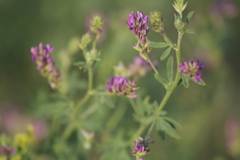
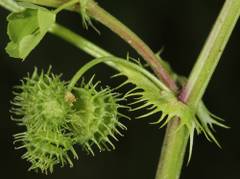
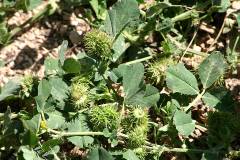
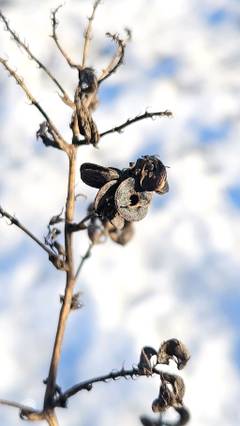
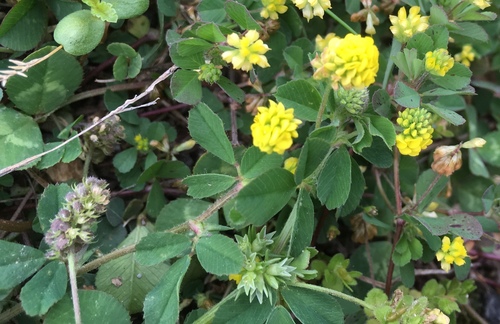
Medicago lupulina is a prostrate to ascending annual or short-lived perennial legume reaching 4-18 inches (10-45 cm) tall and 12-36 inches (30-90 cm) wide, with hairy stems freely branching from the base. Leaves are trifoliate with obovate leaflets 0.2-0.6 inch (5-15 mm) long; each leaflet carries a mucronate tip where the midrib extends beyond the leaf margin as a short abrupt point, and the central leaflet is borne on a petiolule (leaflet stalk) longer than those of the two lateral leaflets. Very small bright yellow flowers 0.08-0.1 inch (2-3 mm) long open from April through September in dense spherical to ovoid heads of 10-50 flowers on peduncles 0.4-1 inch (10-25 mm) long from the leaf axils. Fruit is a kidney-shaped single-seeded pod 0.06-0.1 inch (1.5-2.5 mm) long that turns black at maturity, the source of the common name. A single plant produces 500-6,000 seeds. Plants form the standard legume-Rhizobium root-nodule symbiosis and fix atmospheric nitrogen, which means populations tolerate low-nitrogen soils that limit grass establishment. The species is widespread in Pacific Northwest lawns, pastures, and roadsides, and plants are frequently confused with clover (Trifolium) on casual inspection. Tolerates low-fertility, compacted, and droughty soils.
Native Range
Medicago lupulina is native to Europe, western Asia, and northern Africa, where it grows in lawns, roadsides, pastures, and waste ground from sea level to approximately 7,000 feet (2,100 m). The species has naturalized across all 50 U.S. states and all Canadian provinces and is widespread as a lawn legume in the Pacific Northwest, where it thrives in low-nitrogen turf.Suggested Uses
The species is used in lawn weed identification courses for teaching the Medicago versus Trifolium distinction through the mucro, the stalked central leaflet, and the pod type. The black kidney-shaped pods are used as a diagnostic teaching feature in the field. Dominance of black medic in a turf stand is used as a soil-fertility indicator (low nitrogen) in site assessment for landscape managers. Nitrogen fixation through Rhizobium nodulation is taught in legume biology and soil microbiology, and the species is included in Fabaceae morphology exercises for the small papilionaceous flower and the single-seeded pod.How to Identify
Appearance
Size & Dimensions
Height4" - 1'6"
Width/Spread1' - 3'
Bloom Information
Dense spherical to ovoid heads of 10-50 bright yellow flowers 0.08-0.1 inch (2-3 mm) long open from April through September, with each head blooming for 3-5 days and new heads produced continuously in the leaf axils over a total span of 12-16 weeks. In the Pacific Northwest, flowering occurs nearly year-round in mild winters. Flowers are self-pollinating and insect-pollinated, with bees working the heads during bloom. Pods mature 3-4 weeks after flowering and turn black.
Detailed Descriptions
Flower Description
Bright yellow; very small flowers 0.08-0.1 inch (2-3 mm) long carried in dense spherical to ovoid heads of 10-50 flowers on peduncles 0.4-1 inch (10-25 mm) long from the leaf axilsFoliage Description
Medium green; trifoliate with obovate leaflets 0.2-0.6 inch (5-15 mm) long, each carrying a small mucronate tip (mucro) at the apex where the midrib extends beyond the leaf margin as a short abrupt point; central leaflet borne on a short stalk (petiolule) longer than those of the lateral leafletsGrowing Conditions
Sun Requirements
Requires 4-10 hours of direct sunlight daily
• Full Sun: 6+ hours of direct sunlight
• Partial Shade: 3-6 hours of direct sunlight
• Full Shade: Less than 3 hours of direct sunlight