Maianthemum, Genus, stellatum, Species,
- Genus & species
star-flowered false Solomon's seal
Widespread across North America (Alaska to Newfoundland, south to California and Virginia) and northern Europe and Asia; moist open woodlands, forest edges, dry meadows, prairies, and shrubby slopes; sea level to 9,000 ft (2,700 m)
Overview
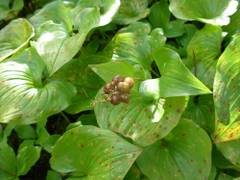
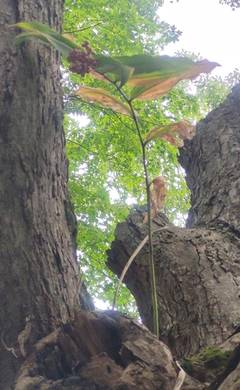
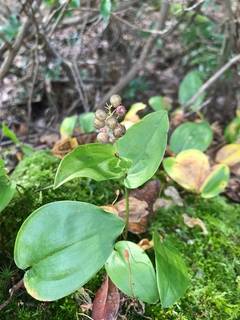
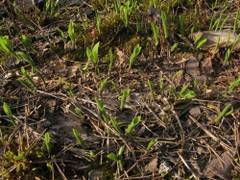
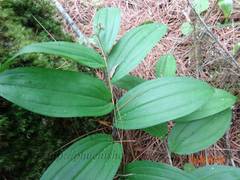
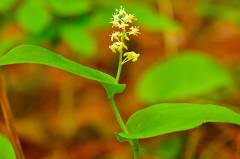
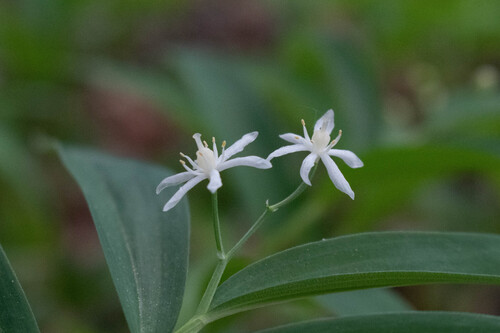
Maianthemum stellatum is a spreading rhizomatous perennial growing 8-24 inches (20-60 cm) tall and 12-24 inches (30-60 cm) wide per plant, forming loose colonies as the rhizome extends through surrounding soil. The species is widespread across North America and Eurasia in a range of habitats from moist open woodlands to dry meadows. Stems are slightly zigzag and arching with 5-12 alternate narrowly lance-shaped leaves 2-5 inches (5-12.5 cm) long, blue-green to medium green, with parallel veins and sessile clasping bases. A simple (unbranched) erect terminal raceme of 5-15 white flowers 0.4-0.6 inch (10-15 mm) across opens April through June; each flower has 6 narrow spreading petals, giving a star-like form — the specific epithet stellatum means 'star-like'. Berries 0.25-0.4 inch (6-10 mm) start green with dark longitudinal stripes in summer and ripen to dark red to black by September. The simple unbranched raceme separates the species from M. racemosum (false Solomon's seal), which bears a branched panicle of smaller flowers. Hardy zones 3-9. In Asparagaceae.
Native Range
Widespread across North America from Alaska south through British Columbia, Washington, Oregon, and California east across most of the continent to Quebec and Newfoundland, and also across northern Europe and Asia. Grows in moist open woodlands, forest edges, dry meadows, prairies, and shrubby slopes from sea level to 9,000 feet (2,700 m) elevation.Suggested Uses
Grown in woodland gardens, shaded borders, dry shade plantings, rock gardens, naturalistic native plantings, and containers of 2 gallons (7.5 L) or more, spaced 12-18 inches (30-45 cm). The rhizomatous colonial habit suits mass plantings under deciduous trees where the colony can spread. Hardy zones 3-9.How to Identify
Appearance
Size & Dimensions
Height8" - 2'
Width/Spread1' - 2'
Bloom Information
Spring through early summer (April-June). Simple (unbranched) erect terminal raceme of 5-15 white six-petaled star-like flowers 0.4-0.6 inch (10-15 mm) across. 6 weeks. Lightly fragrant. Visited by small native bees and flies. Berries 0.25-0.4 inch (6-10 mm) start green with diagnostic dark longitudinal stripes in summer and ripen to dark red to black by September, feeding birds and small mammals.
Detailed Descriptions
Flower Description
White six-petaled star-like flowers 0.4-0.6 inch (10-15 mm) across in a simple (unbranched) erect terminal raceme of 5-15 flowers in April-JuneFoliage Description
Blue-green to medium green; 5-12 alternate narrowly lance-shaped parallel-veined leaves 2-5 inches (5-12.5 cm) long with sessile clasping bases on arching slightly zigzag stems; fall foliage yellows before senescenceGrowing Conditions
Sun Requirements
Requires 2-8 hours of direct sunlight daily
• Full Sun: 6+ hours of direct sunlight
• Partial Shade: 3-6 hours of direct sunlight
• Full Shade: Less than 3 hours of direct sunlight
Care & Maintenance
Care Guide
Plant in well-drained loam, sand, or rocky soil pH 5.0-7.5 in 2-8 hours of sun. Water weekly during the first growing season; established colonies tolerate short dry periods and short summer drought better than other Pacific Northwest Maianthemum species. Rhizomes spread slowly to form expanded colonies over several years. Foliage yellows and senesces by late summer in dry shade and persists into September in consistently moist shade. Hardy zones 3-9.Pruning
No pruning required during the growing season. Cut back senesced foliage in February before new growth emerges if it has not broken down naturally. Dig out unwanted rhizome sections in early spring to limit colony spread.Pruning Schedule
Prune: February
early spring
Container Growing
Suitable for container growing
Minimum container size: 2 gallons