Image 1 of 13
1 / 13
Plant Reference
Maianthemum, Genus, racemosum, Species,
- Genus & species
false Solomon's seal
North America — Alaska south through British Columbia, Washington, Oregon, California; across most of the continent; moist to dry woodlands, forest edges, and shaded slopes
Overview
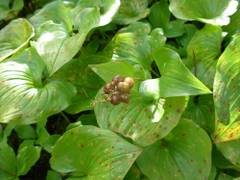
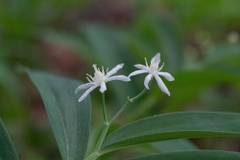
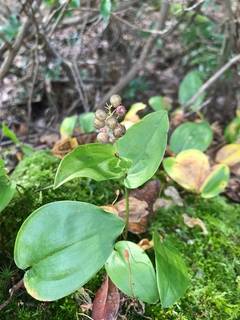
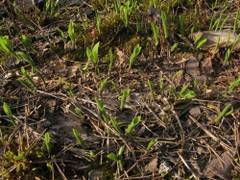
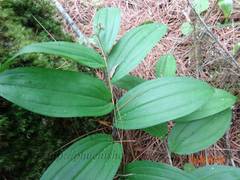
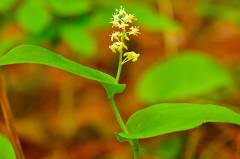
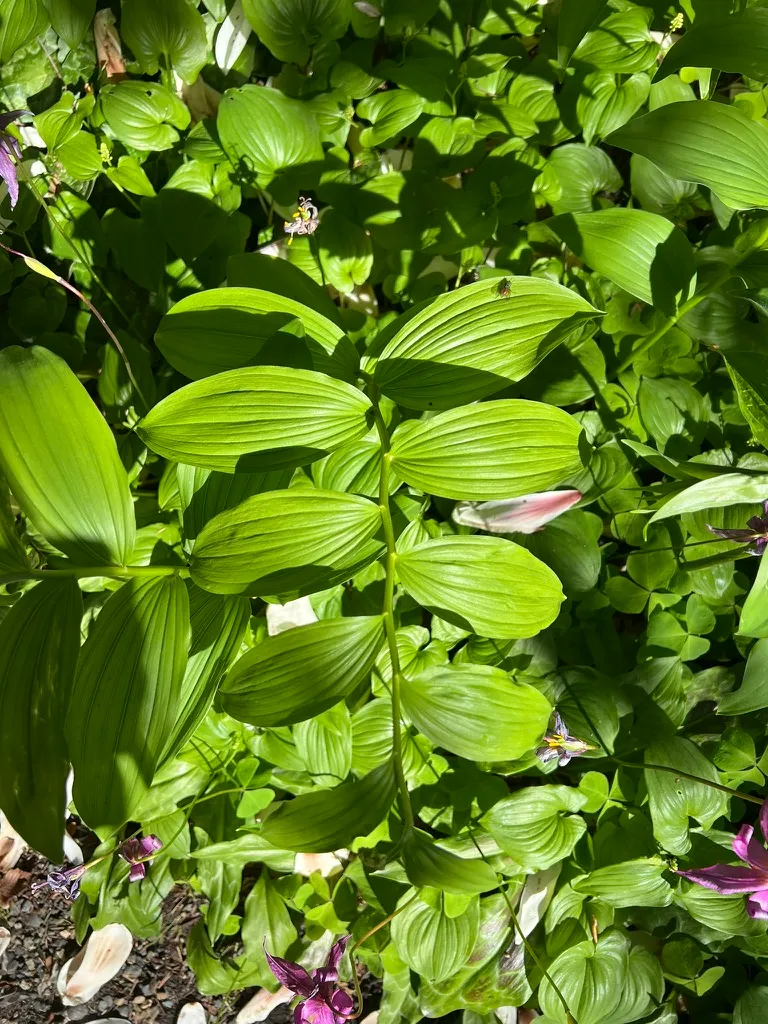
Maianthemum racemosum is false Solomon's seal (feathery false lily of the valley), a spreading deciduous perennial growing 18-36 inches (45-90 cm) tall and 18-30 inches (45-75 cm) wide. Creamy white sweetly fragrant 6-tepaled flowers in a large branched feathery pyramidal panicle 2-5 inches (5-13 cm) at the stem tip in May-June (5 weeks). Bright red berries in August-September. Bright green lance-shaped to elliptic leaves 3-6 inches (7-15 cm) with prominent parallel veins on arching unbranched stems. In Asparagaceae. Formerly Smilacina racemosa. Native across most of North America in moist to dry woodlands. The branched feathery pyramidal panicle distinguishes M. racemosum from M. stellatum (simple raceme) and M. dilatatum (cylindrical raceme with 4 tepals). Spreads slowly by rhizomes — less aggressive than M. dilatatum. More drought-tolerant than M. dilatatum. Deer browse the foliage. Berries toxic to humans (contain saponins causing nausea). Yellow-orange fall color. Zones 3-9. Part shade to full shade. Growth rate is moderate.
Native Range
Native across most of North America — Alaska south through British Columbia, Washington, Oregon, California, and across the continent. Found in moist to dry woodlands, forest edges, and shaded slopes.Suggested Uses
Grown in woodland gardens, shade borders, and native plant gardens, spaced 18-30 inches (45-75 cm). Fragrant feathery flower panicle. Red berries. Arching form. Native to North America. Berries toxic. Zones 3-9.How to Identify
Appearance
Size & Dimensions
Height1'6" - 3'
Width/Spread1'6" - 2'6"
Bloom Information
Late spring (May-June). Creamy white 6-tepaled flowers in branched feathery pyramidal panicle 2-5 inches (5-13 cm). Sweetly fragrant. 5 weeks. Bee-visited. Bright red berries follow in August-September.
Detailed Descriptions
Flower Description
Creamy white, small, 6-parted (6 tepals), in a large branched feathery pyramidal panicle 2-5 inches (5-13 cm) at the stem tip; sweetly fragrantFoliage Description
Bright green, lance-shaped to elliptic, 3-6 inches (7-15 cm), with prominent parallel veins; 7-15 alternate leaves on arching unbranched stems; clasping (amplexicaul) leaf bases in the PNW subspeciesGrowing Conditions
Sun Requirements
Requires 1-4 hours of direct sunlight daily
• Full Sun: 6+ hours of direct sunlight
• Partial Shade: 3-6 hours of direct sunlight
• Full Shade: Less than 3 hours of direct sunlight
Care & Maintenance
Care Guide
Part shade to full shade (1-4 hours). Moist to moderately dry soil pH 5.0-7.0. More drought-tolerant than M. dilatatum. Spreads slowly by rhizomes. Remove dead stems in late winter (February-March). Berries toxic (saponins). Deer browse. Zones 3-9.Pruning
Remove old dead stems in late winter (February-March) before new growth. No other pruning needed.Pruning Schedule
Prune: February–March
early spring