Overview
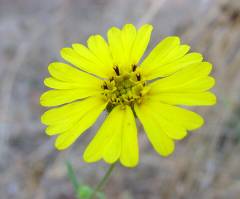
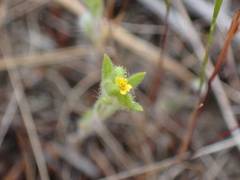
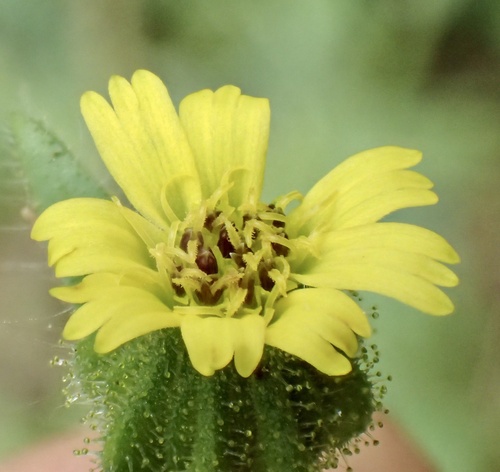
Madia gracilis is an annual in the sunflower family, native to western North America. It grows 8-36 inches (20-90 cm) tall on slender, often single stems that branch toward the top, with narrow grass-like leaves 1-4 inches (2.5-10 cm) long. The stems and leaves are covered in sticky, glandular hairs that give off a strong scent and make the plant feel tacky, the reason for the name tarweed. Small yellow daisy heads about 0.25-0.5 inch (6-12 mm) across open near the stem tips, each with a few short ray florets, sometimes red-tinged at the base, around a yellow disk. The heads open in the morning and often close by midday in heat. Flowering runs from late spring into summer. The plant grows in open grassland, disturbed ground, roadsides, and woodland clearings, frequently on dry soils. As an annual it completes its life in one season, sets seed, and dies, and it can self-sow into open ground the next year.
Native Range
Madia gracilis is native to western North America, from British Columbia south through Washington, Oregon, and California and into the interior west. It grows in grasslands, open woods, and disturbed ground at low to middle elevations.Suggested Uses
Madia gracilis is used in native wildflower meadows, restoration seed mixes, and naturalized grassland plantings. Its flowers are visited by native bees and other insects, and its seeds are eaten by birds. It suits informal and wild areas rather than formal beds.How to Identify
Appearance
Size & Dimensions
Height8" - 3'
Width/Spread4" - 1'
Bloom Information
Detailed Descriptions
Foliage Description
greenGrowing Conditions
Sun Requirements
Requires 6-12 hours of direct sunlight daily
• Full Sun: 6+ hours of direct sunlight
• Partial Shade: 3-6 hours of direct sunlight
• Full Shade: Less than 3 hours of direct sunlight
Water & Climate
Water Needs
Drought Tolerance
Drought tolerant when established
Care & Maintenance
Care Guide
Madia gracilis grows in full sun in dry, average to poor soils and tolerates drought as the season warms. As an annual it depends on seed sown or self-sown on open ground, germinating with cool-season moisture. Sow seed in fall or early spring where the plants are to grow. It needs no fertilizer and little water beyond seasonal rainfall in its climate. It completes its cycle in one season and dies after setting seed. It self-sows and can return year to year where soil stays open.Pruning
No pruning is needed. Plants can be left to set and drop seed, or pulled once dry if self-sowing is not wanted.Toxicity
Non-toxicPlanting Guide
Planting Methods & Timing
Planting Method
direct sow
Direct Sow Timing
fall
Days to Maturity
60–100 days
Plant Spacing
8 inches