Overview
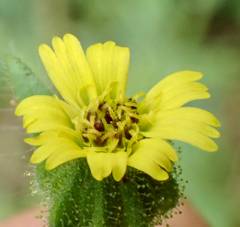
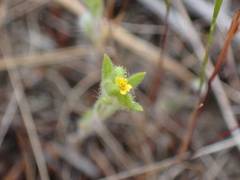
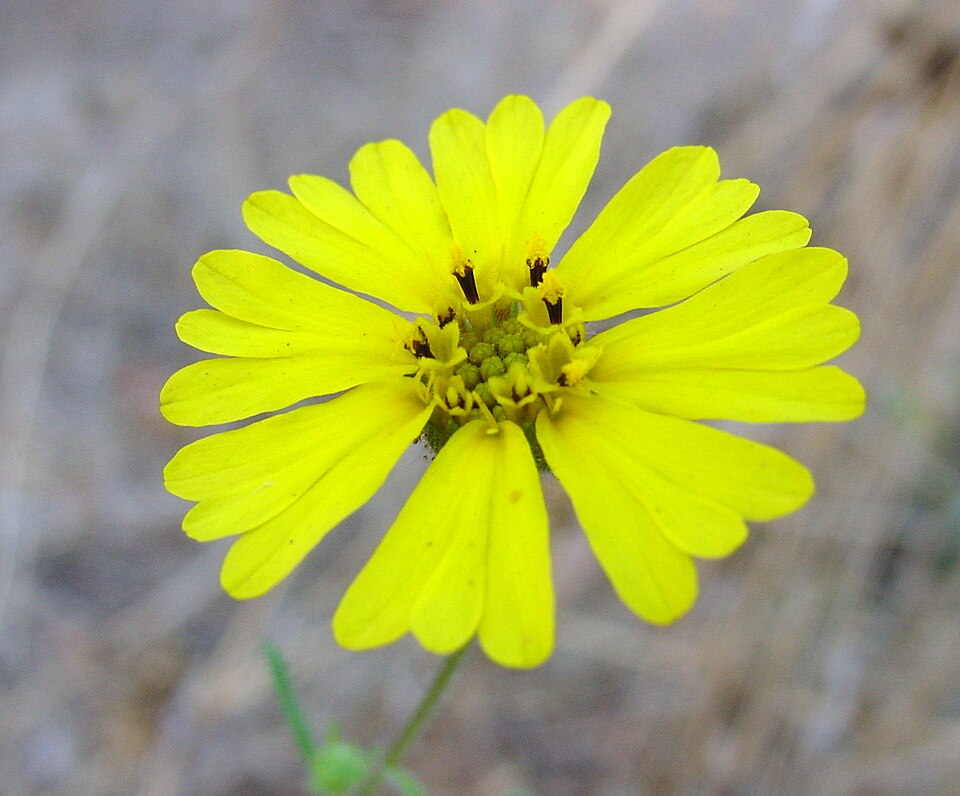
Madia elegans, common madia or tarweed, is an aromatic annual of the daisy family growing 1-4 feet (30-120 cm) tall on erect, glandular, often reddish stems that release a sweet, resinous scent. The narrow, hairy leaves are 1-6 inches (2.5-15 cm) long, the lower ones toothed and the upper ones reduced and sticky. From summer into autumn the branch tips carry daisy heads 1-2.5 inches (2.5-6 cm) across, each with golden-yellow ray florets often marked with a maroon or red spot at the base, around a yellow to dark disc. The heads open in late afternoon and evening and again in early morning, closing in the midday heat, a habit shared with other tarweeds. The flowers ripen into small dry seeds once gathered for their oil by Indigenous peoples. Native to grasslands, open woodland, roadsides, and disturbed slopes of California and the western United States, M. elegans grows on dry to seasonally moist soils and flowers well into the dry season. The sticky heads draw bees, butterflies, and other insects. One limitation is the strongly scented, glandular foliage, which clings to hands and clothing. It self-sows freely on open ground.
Native Range
Madia elegans is native to the western United States, centred on California and extending into Oregon, Nevada, and Baja California. It grows in grasslands, open oak and pine woodland, roadsides, and disturbed slopes on dry to seasonally moist soils.Suggested Uses
Madia elegans is grown in native wildflower meadows, pollinator plantings, and habitat restoration across the West, where it extends bloom into the dry season. It suits dry, sunny banks and unirrigated borders. Its evening-opening flowers add late-season color to native gardens.How to Identify
Appearance
Size & Dimensions
Height1' - 4'
Width/Spread8" - 1'6"
Bloom Information
Flowering runs from late spring through autumn, roughly May to October, peaking in summer and extending into the dry season. The yellow heads open in evening and early morning and close in midday heat, drawing bees and butterflies during cooler hours. Small dry seeds ripen and shed through late summer and autumn.
Detailed Descriptions
Flower Description
golden-yellow with maroon basal spotFoliage Description
greenGrowing Conditions
Sun Requirements
Requires 6-10 hours of direct sunlight daily
• Full Sun: 6+ hours of direct sunlight
• Partial Shade: 3-6 hours of direct sunlight
• Full Shade: Less than 3 hours of direct sunlight
Water & Climate
Water Needs
Drought Tolerance
Drought tolerant when established
Care & Maintenance
Care Guide
Madia elegans grows in full sun on dry to seasonally moist, well-drained sandy, loamy, or clay soils across a pH of about 6.0 to 7.5. As an annual it germinates with autumn or winter rain and flowers through the following summer and autumn with little water. It tolerates heat, drought, and poor soil but declines in deep shade or wet ground. The seed is surface-sown on open soil and self-sows where the ground stays bare. Plants vary from compact to tall depending on moisture. Rich, irrigated soil produces lush growth with fewer flowers.Pruning
As an annual, M. elegans is not pruned. Leaving the spent heads lets it reseed, while cutting before seed drop limits self-sowing. The sticky, scented stems coat hands and tools when cut.Toxicity
Non-toxicPlanting Guide
Planting Methods & Timing
Planting Method
direct sow
Plant Spacing
10 inches