Lysichiton, Genus, spp., Multiple species,
- Genus
- Multiple species
skunk cabbage
Western North America and northeastern Asia
Overview
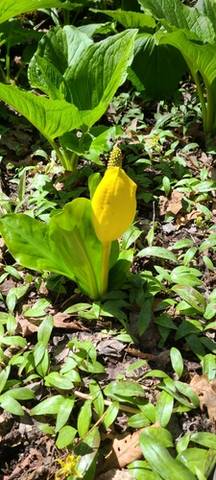
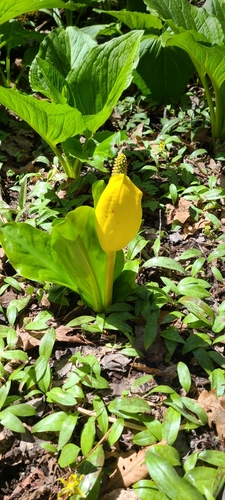
Lysichiton is a genus of two species of large bog perennials in the arum family (Araceae): L. americanus of western North America and L. camtschatcensis of northeastern Asia. Both grow from stout rhizomes in wet ground and produce, in early spring, a showy spathe that wraps around a club-shaped spadix of tiny flowers; the spathe is bright yellow in L. americanus and white in L. camtschatcensis. Large paddle-shaped leaves expand after flowering, reaching 16 to 60 inches (40 to 150 cm) long and forming bold clumps. The yellow species releases a musky, skunk-like odor that attracts pollinating flies and beetles, the basis for the common name skunk cabbage. Plants grow in standing water, seeps, and stream margins in full sun to shade. All parts contain calcium oxalate crystals, which cause intense burning and irritation if eaten. The genus is slow to establish from seed but long-lived once settled, and large plants are hard to divide because of their deep rhizomes.
Native Range
Native to wetlands of two widely separated regions: L. americanus ranges along the Pacific coast of North America from Alaska to California, and L. camtschatcensis occurs in Kamchatka, Japan, Korea, and the Russian Far East. Both grow in swamps, bogs, wet woodlands, and stream banks.Suggested Uses
Grown in bog gardens, pond and stream margins, and wet woodland, where the early spathes and large leaves create a bold spring display. It suits rain gardens and the wettest, shadiest parts of the garden where few other large perennials grow. Plants combine with ferns, Primula, and other bog and streamside species.How to Identify
Appearance
Size & Dimensions
Height1'6" - 4'
Width/Spread2' - 4'
Bloom Information
Flowering occurs in early spring, often February to May, as one of the first wetland plants to bloom, sometimes pushing the spathe up through receding snow or ice. Each spathe lasts two to three weeks. Leaves follow and persist through summer, dying back in autumn.
Detailed Descriptions
Foliage Description
greenGrowing Conditions
Sun Requirements
Requires 2-8 hours of direct sunlight daily
• Full Sun: 6+ hours of direct sunlight
• Partial Shade: 3-6 hours of direct sunlight
• Full Shade: Less than 3 hours of direct sunlight