Lyonia, Genus, ligustrina, Species,
- Genus & species
He-huckleberry
Overview
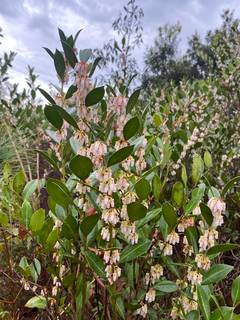
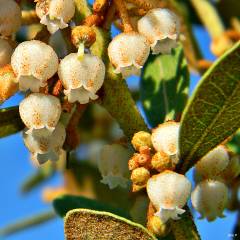
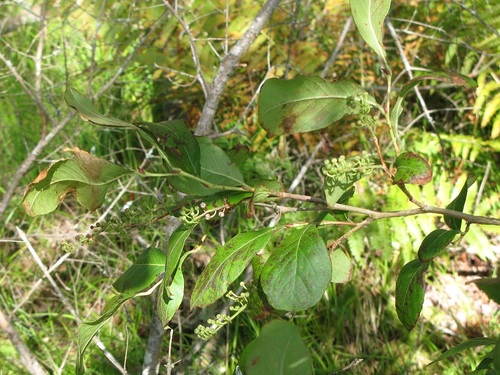
Lyonia ligustrina is a deciduous shrub growing 3-12 feet (0.9-3.7 m) tall, with many slender, upright to arching branches forming a dense, rounded crown. The leaves are oval to elliptic, 1-3 inches (2.5-8 cm) long, with finely toothed or smooth edges, turning yellow to dull red in autumn. Small white, urn-shaped flowers about 0.2 inch (5 mm) long hang in dense, branched clusters along the previous year's wood in late spring and early summer. The flowers are followed by small, hard, dry, rounded capsules that persist on the branches through winter, unlike the soft, edible fruit of the true huckleberries it resembles. The shrub grows in moist to wet, acidic soils of swamps, bog edges, streambanks, and damp woods across the eastern United States. It spreads slowly by suckers into thickets. A limitation in the garden is the dry, inedible fruit and the shrub's eventual size, which can crowd smaller plants in a confined bed.
Native Range
Lyonia ligustrina, called maleberry or he-huckleberry, is native to the eastern United States, from Maine and the Great Lakes south to Florida and Texas. It grows in moist to wet, acidic ground in swamps, bogs, and damp woodland.Suggested Uses
Grown in rain gardens, bog gardens, pond and stream margins, and naturalised shrub borders on acidic, moist ground, spaced 4-6 feet (1.2-1.8 m) apart. Suited to wet, sunny to lightly shaded sites and wildlife plantings. The flowers draw bees, and the dense branches shelter nesting birds.How to Identify
Appearance
Size & Dimensions
Height3' - 12'
Width/Spread3' - 8'
Bloom Information
Detailed Descriptions
Foliage Description
greenGrowing Conditions
Sun Requirements
Requires 4-10 hours of direct sunlight daily
• Full Sun: 6+ hours of direct sunlight
• Partial Shade: 3-6 hours of direct sunlight
• Full Shade: Less than 3 hours of direct sunlight
Care & Maintenance
Care Guide
Lyonia ligustrina grows in full sun to part shade and moist to wet, acidic soils high in organic matter. It is grown from seed or softwood cuttings and establishes in damp, peaty ground. The shrub tolerates wet soil, seasonal flooding, and boggy sites where many shrubs fail, but needs acidic conditions and declines in alkaline soil. It spreads by suckers into broad thickets over time. Drier soils slow its growth and thin the foliage.Pruning
Thinning in late winter removes crowded stems and limits spread, with older branches cut to the base. Suckers are removed to keep the shrub in bounds. No detailed shaping is needed for a natural, twiggy form.Pruning Schedule
Prune: February
winter