Lycium, Genus, andersonii, Species,
- Genus & species
anderson thornbush
Southwestern United States and northern Mexico
Overview
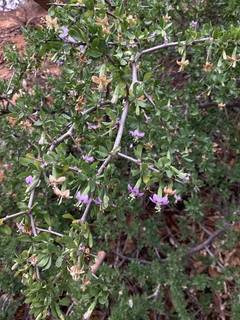
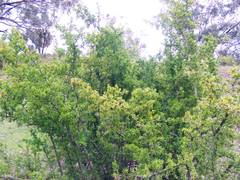
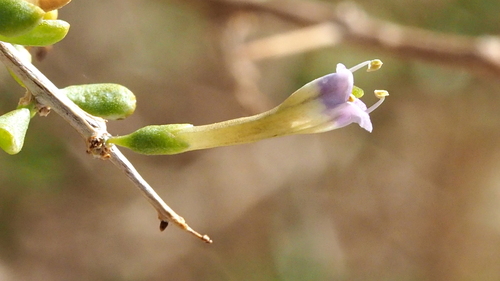
Lycium andersonii is a rounded, densely twiggy desert shrub reaching 1 to 8 feet (0.3 to 2.4 m) tall and wide, with rigid, gray branches that taper into stout spines. The small, fleshy leaves are narrow and club-shaped, 0.2 to 0.6 inch (5 to 15 mm) long, clustered along the stems, and drop during drought and heat. In late winter and spring it bears small tubular flowers about 0.4 inch (10 mm) long in pale lavender to white, sometimes pink-tinged. Pollinated flowers ripen into small, juicy red berries that birds and other wildlife eat. The shrub grows on dry slopes, washes, and flats across the southwestern deserts and tolerates extreme drought, heat, and alkaline soil. It loses its leaves and goes dormant during the driest months, leafing out again after rain. The spiny branches make close work awkward, and the plant needs full sun and sharp drainage. It declines in wet, rich, or shaded conditions.
Native Range
Native to the Mojave, Sonoran, and Chihuahuan deserts of the southwestern United States and northern Mexico. It grows on dry slopes, desert flats, and along washes, often on rocky or alkaline soils.Suggested Uses
Used in desert and xeriscape gardens, native plantings, and habitat restoration on dry sites. The flowers supply nectar for native bees and the berries feed birds and small mammals. The spiny form serves as protective cover and an informal barrier hedge.How to Identify
Appearance
Size & Dimensions
Height1' - 8'
Width/Spread3' - 6'
Bloom Information
Flowering occurs mainly in late winter and spring, generally February through May, and can repeat after summer rains. Small tubular flowers in pale lavender to white open along the leafy twigs. Bloom lasts a few weeks per flush. Red berries ripen several weeks after flowering.
Detailed Descriptions
Flower Description
pale lavender to whiteFoliage Description
gray-greenGrowing Conditions
Sun Requirements
Requires 6-12 hours of direct sunlight daily
• Full Sun: 6+ hours of direct sunlight
• Partial Shade: 3-6 hours of direct sunlight
• Full Shade: Less than 3 hours of direct sunlight
Care & Maintenance
Care Guide
Grow in full sun in sandy, gravelly, or rocky soil with sharp drainage. Lycium andersonii tolerates extreme drought, heat, and alkaline soil up to a pH near 8.5, and needs little to no supplemental water once established. It drops its leaves in drought and re-leafs after rain, which is normal seasonal behavior. The shrub is hardy in USDA zones 8 through 10. Overwatering and wet, heavy soil cause root rot and decline. Little feeding is needed in native desert soils.Pruning
Prune lightly in late winter to remove dead or crossing branches. The naturally dense, rounded form needs little shaping. Spent or damaged growth can be thinned at any time. Hard cutting into bare old wood is slow to resprout.Pruning Schedule
Prune: February
winter