Luzula, Genus, campestris, Species,
- Genus & species
field woodrush
Overview
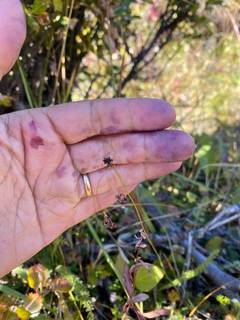
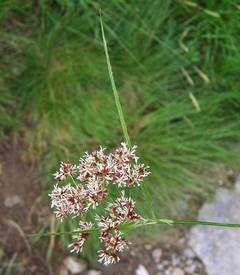
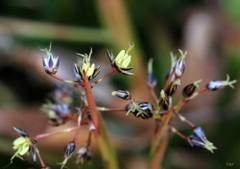
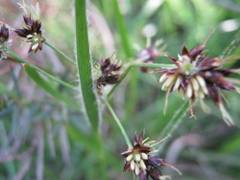
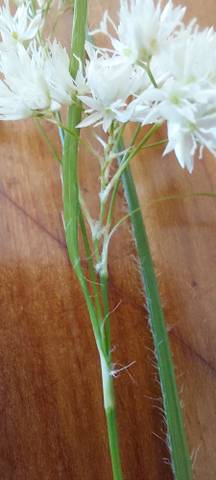
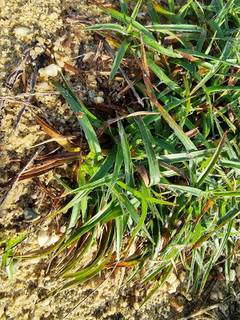
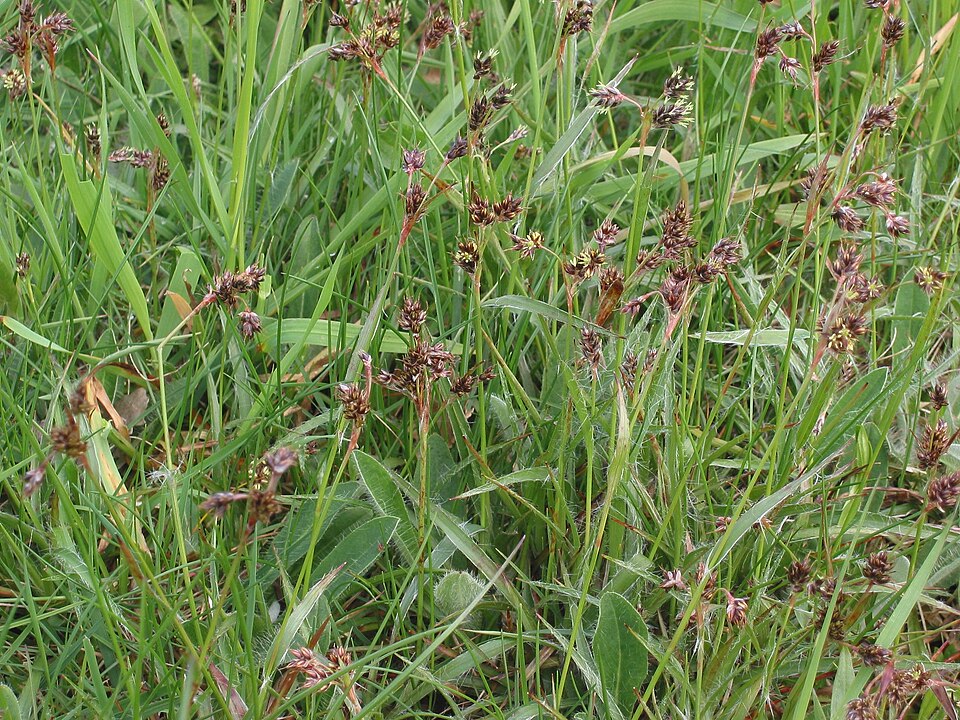
Luzula campestris is a low, tuft-forming perennial in the rush family (Juncaceae), reaching 4-12 inches (10-30 cm) tall in flower and forming loose mats that spread slowly by short stolons. Despite a grass-like look, it is a woodrush: the flat, deep green leaves are 0.1-0.2 inch (2-5 mm) wide and fringed with scattered long white hairs along their margins. In early spring it produces clusters of chestnut-brown flowers, each cluster carrying conspicuous bright yellow anthers and a tuft of brownish bristles. The flowering stems are short and stiff, holding several stalked and stalkless clusters in a loose head. It grows in short, well-drained grassland, lawns, heaths, and open woodland on acid to neutral soils, and tolerates close mowing and trampling. Spread is gradual, and the plant rarely becomes aggressive, though it can persist as a lawn component where grass is thin. The foliage stays green through winter, and old leaf bases build into a low tussock over time. It is wind-pollinated and sets small three-seeded capsules by early summer.
Native Range
Native across Europe, extending into western Asia and North Africa, where it is a common plant of unimproved grassland, heaths, and hill pastures. It has naturalized in parts of North America and other temperate regions through introduced grass seed and turf.Suggested Uses
Used in wildflower and tapestry lawns, on green roofs, and in naturalistic grassland plantings where a low, evergreen, grass-like texture is wanted. Grown along path edges and in containers as ground texture. Suited to meadow restoration and conservation seed mixes on acid soils.How to Identify
Appearance
Size & Dimensions
Height4" - 1'
Width/Spread6" - 1'
Bloom Information
Flower clusters open from March through May, giving the plant its country name of Good Friday grass for its Easter-period flowering. The yellow anthers and pale bristles are shed within a few weeks as the brown capsules ripen. Flowering stems persist for a time before collapsing into the leaf tuft.
Detailed Descriptions
Flower Description
chestnut-brown with yellow anthersFoliage Description
deep green with white marginal hairsGrowing Conditions
Sun Requirements
Requires 4-8 hours of direct sunlight daily
• Full Sun: 6+ hours of direct sunlight
• Partial Shade: 3-6 hours of direct sunlight
• Full Shade: Less than 3 hours of direct sunlight
Care & Maintenance
Care Guide
Grow in full sun to partial shade on free-draining, acid to neutral soil of low to moderate fertility. Once established the plant tolerates dry spells, drawing on its tufted root system, and needs no routine watering. It withstands mowing and is often left in place as a feature of unimproved and wildflower lawns. Rich, heavily fertilised ground favours vigorous grasses that crowd it out. No feeding is needed, and the plant maintains itself with little attention. Division of the tufts in spring or autumn propagates it.Pruning
No pruning is needed. Where it grows in a lawn, normal mowing keeps it low without harm, though cutting before April removes the flower display. Tired tufts can be sheared over in late summer to refresh the foliage.Container Growing
Suitable for container growing
Minimum container size: 1 gallons