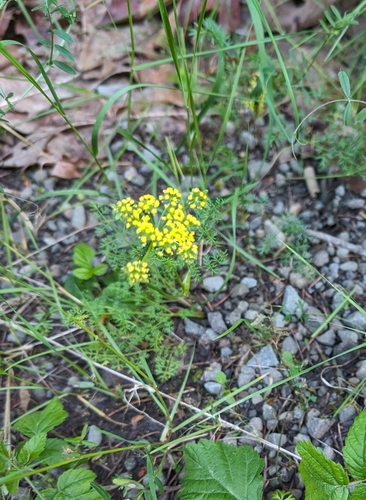
Lomatium, Genus, utriculatum, Species,
- Genus & species
spring gold biscuitroot
Overview
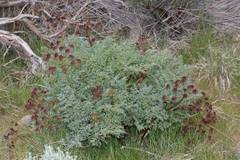
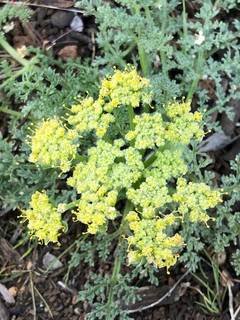
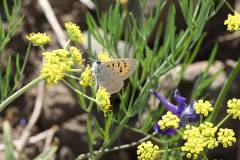
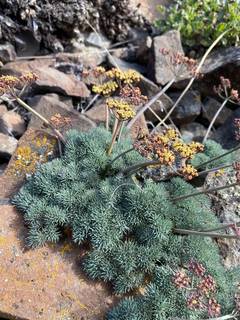
Lomatium utriculatum is a herbaceous perennial in the carrot family (Apiaceae), reaching 4-16 inches (10-40 cm) tall and 8-12 inches (20-30 cm) wide from a deep woody taproot. Leaves basal and stem-borne, finely dissected into thread-like segments 0.04-0.1 inch (1-3 mm) wide, dull blue-green with a short bristle on each lobe tip. Flowers bright yellow in compound umbels 1.5-3 inches (4-7.5 cm) across, with 7-15 unequal rays bearing dense clusters of small flowers; bloom from late February through May. Fruit a flattened oblong schizocarp 0.3-0.5 inch (8-13 mm) long with thickened lateral wings. Foliage emerges in late winter and dies back completely by early summer; plants are dormant from June through October. Taproot reaches 12-30 inches (30-75 cm) deep and resists transplanting; container stock requires deep tubes and establishes only when roots are undisturbed.
Native Range
Native to grasslands, oak woodlands, rocky balds, and coastal bluffs in western North America from southern British Columbia south through Washington and Oregon to southern California, generally west of the Cascade-Sierra crest at elevations from sea level to 5,500 feet (1,675 m).Suggested Uses
Used in restoration plantings, dry meadow gardens, and rock gardens at 8-12 inch (20-30 cm) spacing in zones 5-9. Planted with native bunchgrasses such as Festuca roemeri and other early-blooming meadow species. Containers require deep narrow pots (tree tubes 18-24 inches / 45-60 cm deep) for the taproot; plants in shallow conventional containers fail within 2-3 years.How to Identify
Appearance
Size & Dimensions
Height4" - 1'4"
Width/Spread8" - 1'
Bloom Information
Late February through May across most of the species range, with peak bloom from mid-March through April. Bloom timing tracks soil temperature; cool wet springs delay onset by 2-3 weeks. Individual umbels open over 2-3 weeks; total stand bloom lasts 6-8 weeks. Plants flower in their third or fourth year from seed.
Detailed Descriptions
Foliage Description
Dull blue-green, finely dissectedGrowing Conditions
Sun Requirements
Requires 6-10 hours of direct sunlight daily
• Full Sun: 6+ hours of direct sunlight
• Partial Shade: 3-6 hours of direct sunlight
• Full Shade: Less than 3 hours of direct sunlight