Lomatium, Genus, dissectum, Species,
- Genus & species
fernleaf biscuitroot
Western North America (British Columbia to California, east to Colorado); dry rocky slopes, grasslands, sagebrush steppe; 500-7000 ft (150-2100 m)
Overview
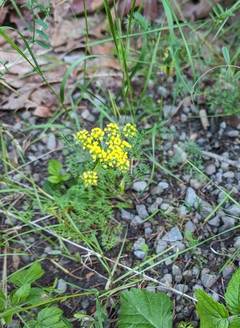
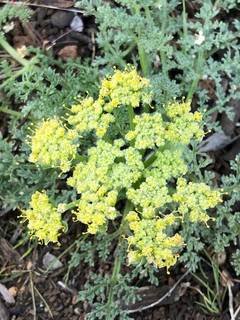
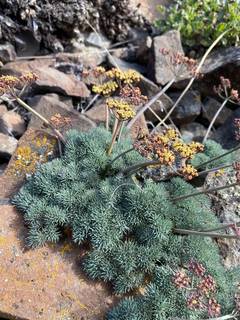
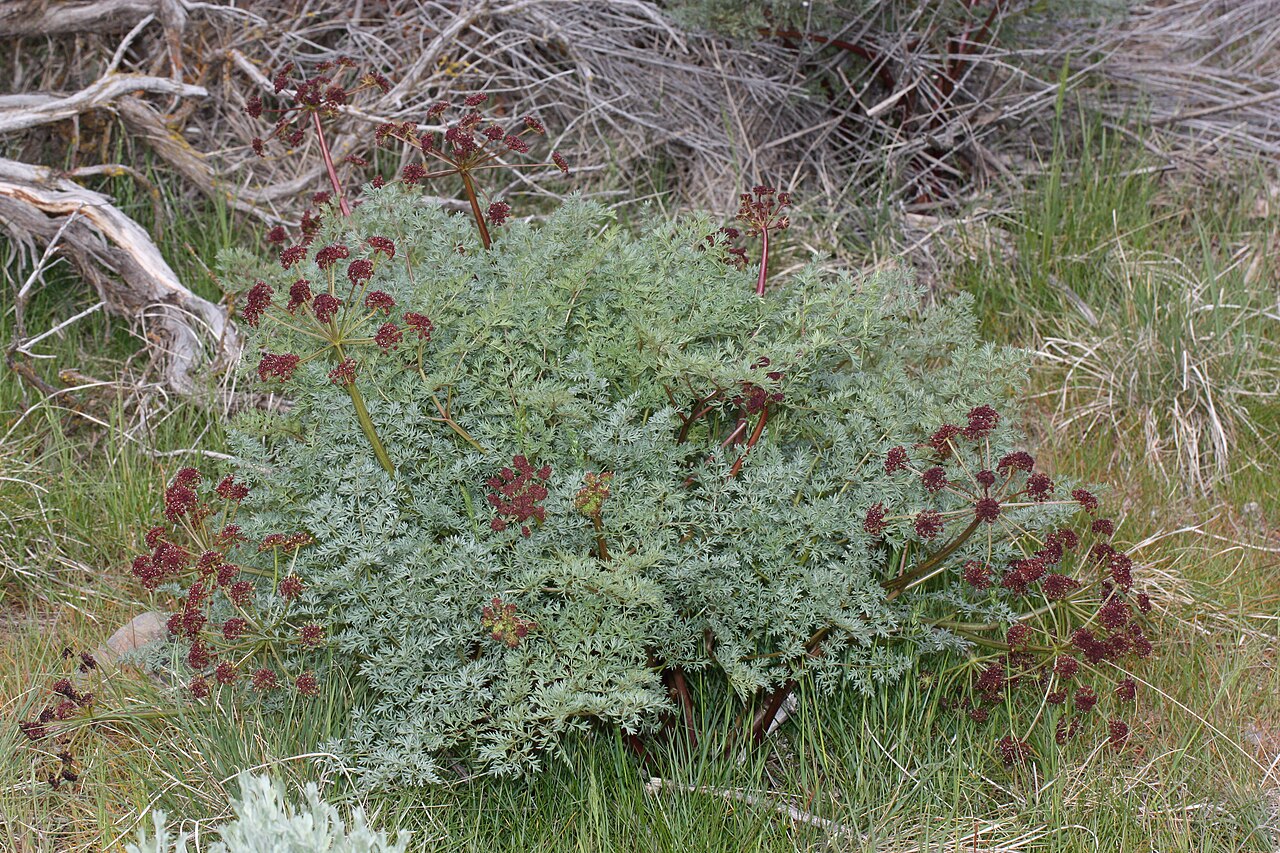
Lomatium dissectum is a herbaceous, tap-rooted perennial in the carrot family (Apiaceae) reaching 24-48 inches (60-120 cm) tall with a spread of 18-24 inches (45-60 cm). The basal rosette is made up of finely dissected, fern-like leaves 12-24 inches (30-60 cm) long; individual ultimate segments are 1-3 mm wide, and the overall leaf is divided three to four times pinnately. Compound umbels 3-6 inches (8-15 cm) across are carried on stout, hollow stems from March through May. Flower color varies between the two recognized varieties: var. dissectum is yellow, and var. multifidum is purple-maroon. Both varieties carry the same umbel structure and bloom window of 4-6 weeks. Flat, winged fruits 10-15 mm long follow the flowers. The taproot is fleshy, aromatic, 12-24 inches (30-60 cm) deep, and 2-4 inches (5-10 cm) in diameter at the crown. Summer dormancy begins in July across most of the native range — the foliage dies back completely and the crown remains below ground until the following spring. Growth rate is slow, 3-5 years to flowering size. Hardy to USDA zone 4. Non-toxic. The species was a food and medicinal plant for Indigenous peoples across the Intermountain West.
Native Range
Lomatium dissectum is native to western North America, from British Columbia south to California and east to Colorado, in dry rocky slopes, grasslands, sagebrush steppe, and ponderosa pine understory at 500-7,000 feet (150-2,100 m).Suggested Uses
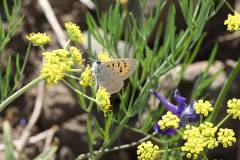
Used in native plant gardens, dryland rock gardens, meadow plantings, and xeric borders in zones 4-9 at 18-24 inch (45-60 cm) spacing. The finely dissected foliage carries a soft texture in spring, and the compound umbels feed native bees and other pollinators. The species has cultural value to Indigenous peoples of the Intermountain West as a food and medicine plant. Summer dormancy leaves bare ground from July onward and the taproot makes the plant difficult to move once sited. Not suited to wet soils, irrigated perennial beds, or formal borders requiring year-round foliage.How to Identify
Appearance
Size & Dimensions
Height2' - 4'
Width/Spread1'6" - 2'
Bloom Information
Compound umbels 3-6 inches (8-15 cm) across carried on stout hollow scapes above the foliage from March through May. Flower color varies between varieties: yellow (var. dissectum) or purple-maroon (var. multifidum). Bloom duration is 4-6 weeks. Flat winged fruits 10-15 mm long ripen through June.
Detailed Descriptions
Flower Description
Yellow (var. dissectum) or purple-maroon (var. multifidum); compound umbels 3-6 inches (8-15 cm) across on stout hollow stemsFoliage Description
Medium green, finely dissected, fern-like basal leaves 12-24 inches (30-60 cm) long; aromatic when crushedGrowing Conditions
Sun Requirements
Requires 6-10 hours of direct sunlight daily
• Full Sun: 6+ hours of direct sunlight
• Partial Shade: 3-6 hours of direct sunlight
• Full Shade: Less than 3 hours of direct sunlight