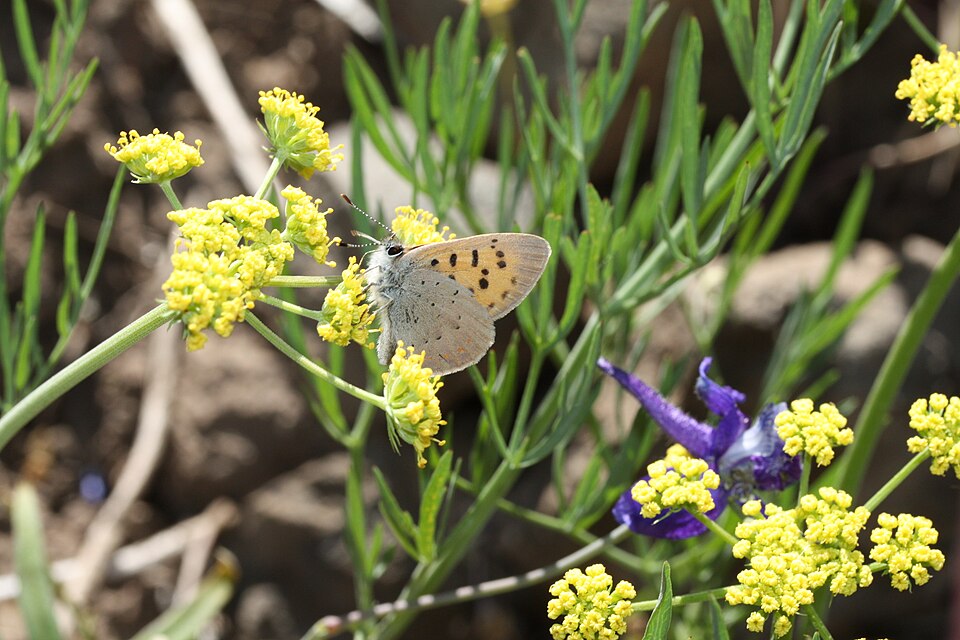
Lomatium, Genus, spp., Multiple species,
- Genus
- Multiple species
biscuitroots
Overview
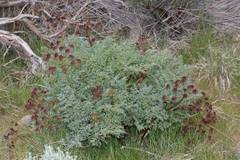
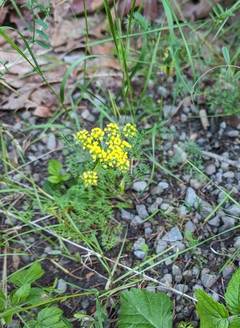
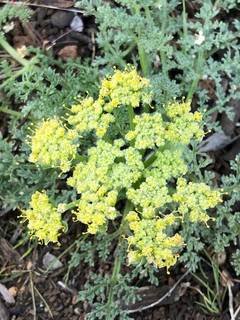
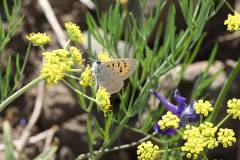
Lomatium is a genus of roughly 80 to 100 species of perennial herbs in the carrot family (Apiaceae), native to western North America. Plants grow from a thick taproot or tuber and form low basal clumps of finely dissected, fern-like or carrot-like leaves that are green to gray-green or blue-green. Above the foliage rise leafless stalks bearing compound umbels of many small flowers, yellow in most species and purple or white in others. Across the genus, plants range from 4 to 48 inches (10 to 120 cm) tall and 6 to 24 inches (15 to 60 cm) wide. Lomatium flowers very early in the season, often from March to May, supplying nectar for emerging native bees and other insects before most other prairie and sagebrush plants bloom. The flat, winged fruits ripen by early summer, after which many species go dormant and die back to the root. The genus is closely tied to dry, open habitats including sagebrush steppe, rocky slopes, and grasslands. Several species, known collectively as biscuitroot, have edible roots that were a staple food for Indigenous peoples of the region. Lomatium is slow to establish from seed and difficult to transplant once the taproot has formed.
Native Range
Lomatium is restricted to western North America, ranging from British Columbia south to California and east to the Great Plains. The genus reaches its greatest diversity in the sagebrush steppe and dry intermountain regions of the western United States.Suggested Uses
Lomatium is used in rock gardens, native and pollinator plantings, sagebrush and steppe restorations, and gravel gardens. Its early bloom supports native bees in spring. The taprooted habit suits permanent, undisturbed plantings rather than containers.How to Identify
Appearance
Size & Dimensions
Height4" - 4'
Width/Spread6" - 2'
Bloom Information
Most Lomatium bloom from March through May, among the earliest flowers in their dry habitats. Flowering lasts roughly three to five weeks per plant. By early to midsummer, seed ripens and many species enter dormancy.
Detailed Descriptions
Flower Description
yellow, purple, or whiteFoliage Description
green to gray-green or blue-greenGrowing Conditions
Sun Requirements
Requires 6-12 hours of direct sunlight daily
• Full Sun: 6+ hours of direct sunlight
• Partial Shade: 3-6 hours of direct sunlight
• Full Shade: Less than 3 hours of direct sunlight