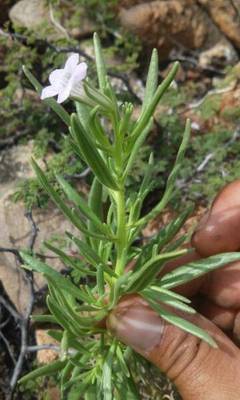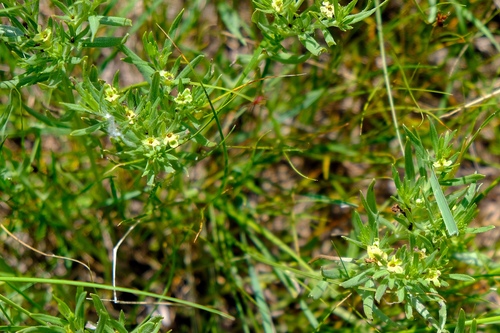
Lithospermum, Genus, ruderale, Species,
- Genus & species
western stoneseed
Overview
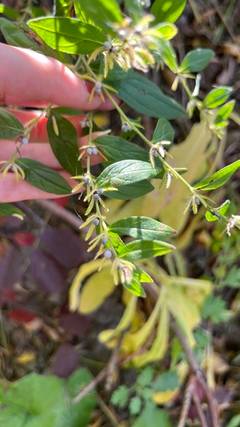
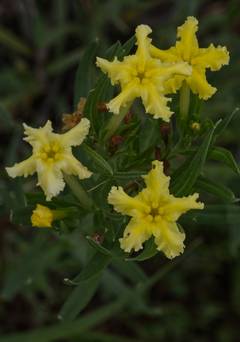
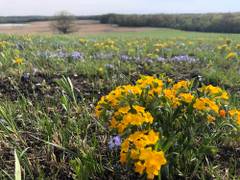
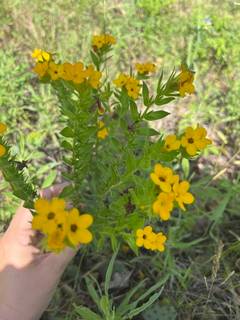
Lithospermum ruderale is a clump-forming herbaceous perennial in the borage family, sending up many leafy stems 8-20 inches (20-50 cm) tall from a stout, woody taproot. The numerous narrow, lance-shaped leaves are 1-4 inches (2.5-10 cm) long and covered with stiff hairs, giving the plant a grayish-green, rough texture. Small pale yellow to cream tubular flowers, each about 0.3 inch (8 mm) across with five lobes, cluster among the leaves near the stem tips from late spring into early summer. The flowers are partly hidden by the leafy bracts. The fruit is a hard, shiny, white to gray nutlet, the feature behind the common name stoneseed. It grows on dry slopes, sagebrush flats, grasslands, and open woodland across western North America. The deep taproot makes established plants drought tolerant but also hard to transplant or divide.
Native Range
Lithospermum ruderale is native to western North America, from British Columbia south through the Great Basin and Rocky Mountains to California, Colorado, and New Mexico. It grows on dry slopes, sagebrush steppe, grasslands, and open forest.Suggested Uses
Used in rock gardens, dry native plantings, and restoration of sagebrush and grassland sites on well-drained soil. The spring flowers draw bees. It is usually grown from seed sown in place, since the taproot resists transplanting.How to Identify
Appearance
Size & Dimensions
Height8" - 1'8"
Width/Spread8" - 1'4"
Bloom Information
Detailed Descriptions
Flower Description
pale yellow to creamFoliage Description
grayish-greenGrowing Conditions
Sun Requirements
Requires 6-12 hours of direct sunlight daily
• Full Sun: 6+ hours of direct sunlight
• Partial Shade: 3-6 hours of direct sunlight
• Full Shade: Less than 3 hours of direct sunlight