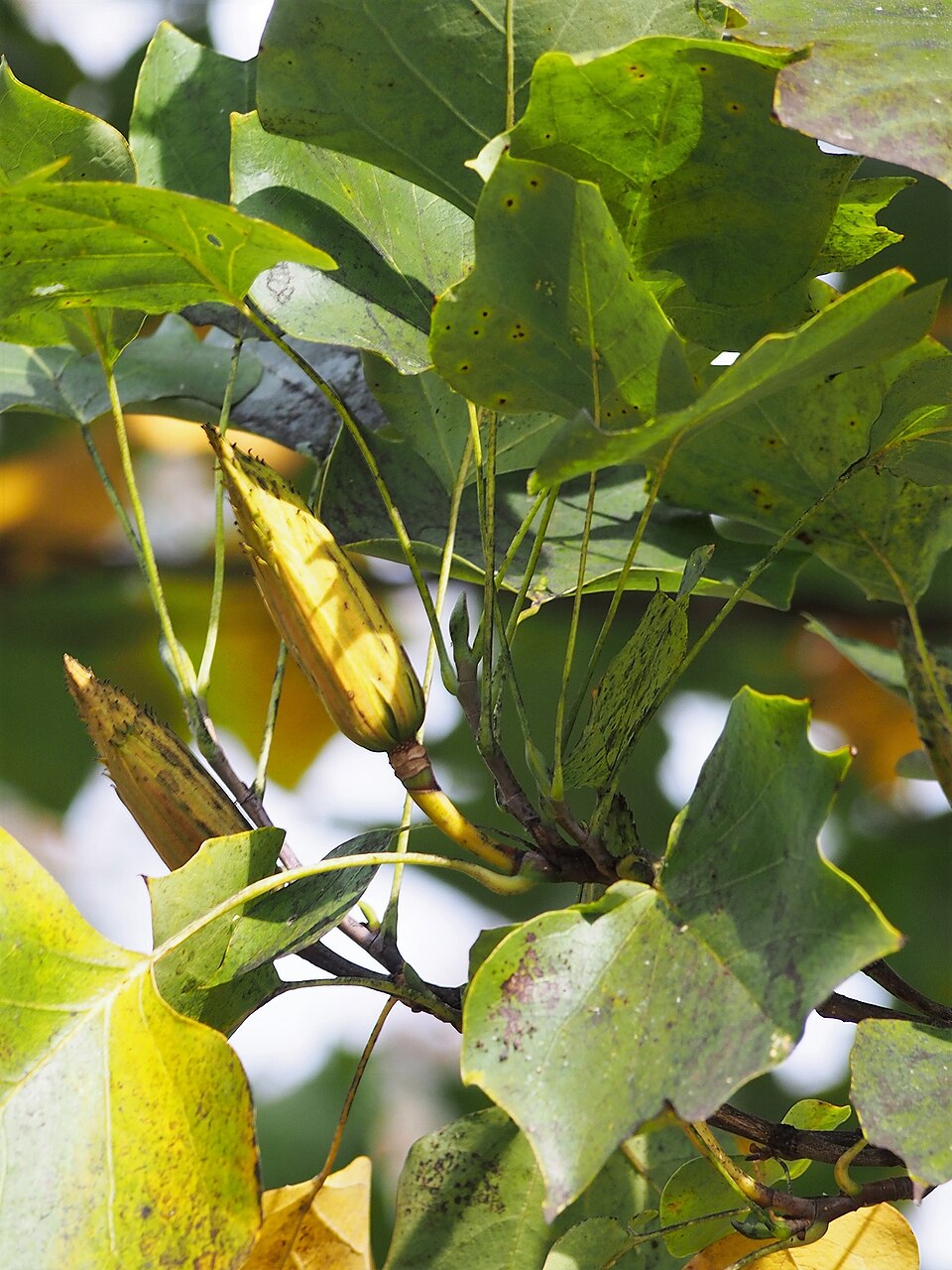
Liriodendron, Genus, tulipifera, Species, 'Fastigiatum', Cultivar,
- Genus & species
- Cultivar
fastigiate tulip tree
E North America (species: S Ontario/New England to Florida, west to Louisiana; moist rich bottomlands, cove forests); 'Fastigiatum' cultivar selection
Overview
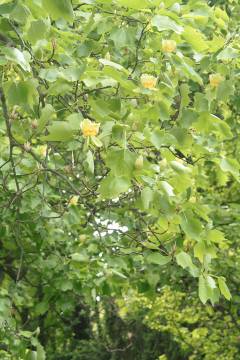
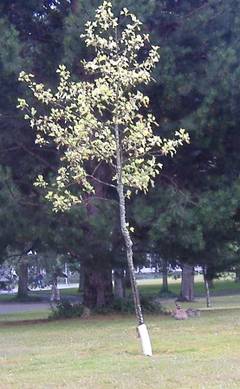
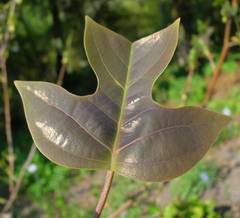
Liriodendron tulipifera 'Fastigiatum' is a large deciduous tree reaching 50–70 feet (15–21 m) tall with a spread of only 15–25 feet (4.5–7.5 m) and a narrow upright columnar to fastigiate crown. Branches ascend at steep angles rather than spreading horizontally, which produces a mature silhouette roughly one-third the width of the straight species type. Four-lobed tulip-shaped leaves 4–8 inches (10–20 cm) across run medium to dark green through the growing season, and the leaf shape—with the flat truncated apex—is found only in the genus Liriodendron among temperate broadleaf trees. Foliage turns golden-yellow in autumn before drop. Tulip-shaped flowers 2–2.5 inches (5–6 cm) across open in May–June, greenish-yellow with an orange band at the base of the inner petals, borne high in the canopy on trees generally 10 years or older from planting. Growth rate runs fast—comparable to the straight species and carrying the cultivar to full mature height within 15–20 years. The narrow columnar profile positions the cultivar as taller than most columnar deciduous trees available in North American commerce. Brittle wood is susceptible to storm damage, and the steep branch angles concentrate loading at weak branch unions. Hardy to zone 5.
Native Range
Liriodendron tulipifera is native to eastern North America, with a range extending from southern Ontario and New England south to Florida and west to Louisiana, growing in moist rich bottomlands and cove forests. The species is one of the tallest eastern North American hardwoods and reaches 150 feet or more in optimal wild habitat. 'Fastigiatum' is a columnar cultivar selection that has been propagated through European and North American nursery grafting for most of the 20th century.Suggested Uses
Planted as a street tree, windbreak component, or vertical landscape accent in parks and large properties at 15–20 foot (4.5–6 m) spacing in zone-5-and-warmer gardens. Narrow columnar form fits garden positions where the straight species is too wide—median strips, narrow residential lots, allée plantings, and space-constrained urban street positions all suit the cultivar. Mature size reaches 50–70 feet tall with only 15–25 feet spread, which carries significant vertical impact in a compact footprint. Brittle wood breaks in storms and creates falling-branch risk over structures or walkways. Aphid honeydew drip coats parked cars and patios beneath the summer canopy. Small gardens, compacted urban soils, alkaline soils, and sites where falling branches pose a hazard are poor fits for the cultivar.How to Identify
Appearance
Size & Dimensions
Height50' - 70'
Width/Spread15' - 25'
Bloom Information
Tulip-shaped flowers 2–2.5 inches (5–6 cm) across open in May–June, greenish-yellow with an orange band at the inner petal bases. Flowers are borne high in the canopy on trees typically 10–15 years old from planting, which means young garden specimens carry no visible bloom for the first decade after planting. Active bloom duration is 3–4 weeks.
Detailed Descriptions
Flower Description
Greenish-yellow with orange band at inner petal base; tulip-shaped 2-2.5 inches; high in canopyFoliage Description
Medium to dark green, four-lobed tulip-shaped 4-8 inches; golden-yellow autumn colorGrowing Conditions
Sun Requirements
Requires 6-10 hours of direct sunlight daily
• Full Sun: 6+ hours of direct sunlight
• Partial Shade: 3-6 hours of direct sunlight
• Full Shade: Less than 3 hours of direct sunlight
Care & Maintenance
Care Guide
Full sun in moist deep well-drained slightly acidic soil (pH 5.5–6.5) matches the cultivar's cultivation needs. Hardy to zone 5 (−20°F / −29°C). Deep soil is required—the fleshy root system does not tolerate soil compaction or poor drainage, and urban positions with compacted backfill typically fail within a few years of planting. Growth runs fast, comparable to the straight species, and the cultivar reaches full mature height within 15–20 years. Aphid honeydew drip beneath the canopy coats surfaces below during summer. Brittle wood is susceptible to storm damage. The narrow columnar form concentrates tree-weight loading at steep ascending branch unions that can develop included bark and split under ice or wind loading; monitoring branch union strength through the tree's structural development supports long-term structural integrity.Pruning
Single central leader is maintained—competing leaders are removed while young to preserve the columnar form. Pruning is done in late winter while the tree is dormant. Branch union strength requires active monitoring on mature specimens because the steep ascending branch angles develop included bark conditions that lead to splitting. Dead, crossing, or weakly attached branches are removed as they appear. Topping cuts produce weak regrowth and are avoided.Pruning Schedule
Prune: February–March
winter